


do uou have difficultity understanding my post #399?RSV- Catholic Edition say HE shall bruise -- not SHE
Always changing your Bibles to suit changing trends/beliefs/backpeddling in the Vatican
15 I will put enmity between you and the woman,
and between your seed and her seed;
he shall bruise your head,
and you shall bruise his heel.”
A Textual Challenge to the “Mary and Joseph Had Later Relations” Position
- Thread starter Moonwood
- Start date
-
Welcome to Christian Forums, a Christian Forum that recognizes that all Christians are a work in progress.
You will need to register to be able to join in fellowship with Christians all over the world.
We hope to see you as a part of our community soon and God Bless!
You are using an out of date browser. It may not display this or other websites correctly.
You should upgrade or use an alternative browser.
You should upgrade or use an alternative browser.
Catholic Bible RSV writes HEdo uou have difficultity understanding my post #399?
Vulgate Catholic Bible write SHE
So which Catholic Bible gets it right oh wise one ? winky winky :)
Genesis 3:15 - Revised Standard Version Catholic Edition
I will put enmity between you and the woman, and between your seed and her seed; he shall bruise your head, and you shall bruise his heel.”
Genesis 3:15 | Latin Vulgate
St. Jerome’s Latin Vulgate — Latin Vulgate › Genesis
“I will put enmities between you and the woman, and between your offspring and her offspring: she shall crush your head, and you shall lie in ...

Mary was a normal girl, betrothed to a normal guy, and they expected to have sex as a married couple, but hadn't yet because they weren't yet in the consummation phase. The interval between betrothal and consummation was up to 12 months. So they were somewhere in that waiting period. She hadn't had sex yet ("I know not a man") but expected to, so when Gabriel said she's going to get pregnant, her natural response was (because she assumed this would happen before her marriage was consummated), how is this possible since I haven't had sex? And Gabriel affirms this by saying, look Mary, God is the God of the miraculous. Joseph didn't know this, so when she got pregnant he was like, WHAT? And he thought she committed adultery, which is why he wanted to divorce her until the angel said hold off there brother. He kept her a virgin until Jesus was born (Matt 1:25). Later she and Joseph had other children. (Matt. 12:46; 13:55; Mark 6:3; John 2:12; 7:3, 5, 10; Acts 1:14; 1 Cor. 9:5; Gal. 1:19).
I appreciate that you've finally laid out your entire interpretation in one place. That makes it easier to identify where our disagreement actually lies.
However, I don't think you've answered the central difficulty of the challenge. Rather, you've offered a possible scenario that depends on several assumptions that Luke himself never provides.
You propose that Mary expected a normal marriage with Joseph, including sexual relations; that She understood Gabriel's announcement to mean She would conceive before their marriage was consummated; and that this explains why She asked, "How will this occur, since I know not man?"
But notice what your explanation requires us to assume. You assume Mary understood Gabriel to be announcing an immediate conception, or at least one that would occur before the consummation of her marriage. Yet Gabriel never says that. He says, "You will conceive and bear a Son."
You suggest that perhaps it was Gabriel's tone or the suddenness of the announcement that led Mary to that conclusion. But neither of those explanations is actually supplied by Luke. They are possibilities you are introducing to make your interpretation work. And this brings us back to the question: Why should we give greater interpretive weight to an assumed tone and an assumed timetable than to the actual words Mary speaks?
Mary doesn't ask when She will conceive. She asks HOW She will conceive, grounding Her question in the fact that She does not know a man.
You also say that Mary would naturally have expected sexual relations because She was betrothed to Joseph and intended to have a normal marriage. I understand the cultural argument. Ordinarily, a betrothed woman would expect her marriage to proceed to consummation. But that general cultural expectation does not explain why Mary responds to Gabriel's announcement as She does.
If She simply understood Gabriel to be announcing that She would eventually have a child through the ordinary marital relations She anticipated with Joseph, what exactly was the difficulty? You say the difficulty was that She thought conception would occur before those relations. But that is precisely the assumption that needs to be established, not simply repeated.
Consider Gabriel's actual response. He doesn't merely reassure Mary that She will eventually conceive through Joseph. He explains: "The Holy Spirit will come upon you, and the power of the Most High will overshadow you." Then he introduces Elizabeth: "Behold, your kinswoman Elizabeth in her old age has also conceived a son..." And concludes: "For with God nothing will be impossible."
Elizabeth's natural obstacle is explicit: she is barren and advanced in age. But what is Mary's corresponding obstacle? Under your interpretation, Mary is young, fertile, betrothed, and anticipating ordinary marital relations with Joseph.
You identify Her virginity as the obstacle, but then explain that obstacle away by saying it was merely temporary and that She expected it to end through ordinary marital relations. That still leaves the question: Why does Gabriel answer Her by describing a miraculous conception through the Holy Spirit and invoking Elizabeth's otherwise impossible pregnancy?
The comparison seems much more natural if Mary's difficulty is not simply that She has not yet reached the customary time for marital relations, but that the conception being announced will occur without a man.
I'm not claiming that Luke 1:34, taken in isolation, mathematically proves every aspect of Mary's lifelong virginity. I'm pointing out that the passage presents a genuine interpretive difficulty for the position you are defending.
Now, regarding the rest of your response, you appeal to Matthew 1:25, saying Joseph kept Mary a virgin until She gave birth, and then conclude that they subsequently had relations. But the word "until" does not necessarily establish a change of circumstances after the specified event. Scripture uses similar constructions without implying that the situation subsequently changed. Matthew's statement establishes that Joseph did not have relations with Mary before Jesus' birth. It does not explicitly tell us what happened afterward. I recommend checking out my thread Does "Until" Mean What You Think It Means? (Matthew 1:25).
Likewise, the references to Jesus' brothers and sisters establish that these relatives existed, but they do not, by themselves, establish that they were Mary's biological children. That is another interpretive conclusion, not an explicit statement of the passages. I recommend checking out my thread Jesus’s Adelphoi: Scripture and Early Christian Testimony.
So now you should know that what @Crazy Ivan put up here #17Catholic Bible RSV writes HE
Vulgate Catholic Bible write SHE
So which Catholic Bible gets it right oh wise one ? winky winky :)
Genesis 3:15 - Revised Standard Version Catholic Edition
I will put enmity between you and the woman, and between your seed and her seed; he shall bruise your head, and you shall bruise his heel.”
Genesis 3:15 | Latin Vulgate
St. Jerome’s Latin Vulgate — Latin Vulgate › Genesis
“I will put enmities between you and the woman, and between your offspring and her offspring: she shall crush your head, and you shall lie in ...
Do Catholics Worship Mary? What Does Scripture Actually Say?
Many people claim Catholics worship Mary. But worship and honor are not the same thing. Scripture commands worship of God alone: "You shall worship the Lord your God, and Him only shall you serve." (Matthew 4:10) Catholics agree completely. God alone is Creator. God alone is Almighty. God...
 www.christianityboard.com
The posture of the Mary's statue is just to follow an old translation of the scripture genesis 3:15.
So which Catholic Bible is correct, the HE version or the SHE ?So now you should know that what @Crazy Ivan put up here #17
is not to elevate Mary above Jesus.Do Catholics Worship Mary? What Does Scripture Actually Say?
Many people claim Catholics worship Mary. But worship and honor are not the same thing. Scripture commands worship of God alone: "You shall worship the Lord your God, and Him only shall you serve." (Matthew 4:10) Catholics agree completely. God alone is Creator. God alone is Almighty. God...
The posture of the Mary's statue is just to follow an old translation of the scripture genesis 3:15.
Genesis 3:15 - Revised Standard Version Catholic Edition
I will put enmity between you and the woman, and between your seed and her seed; he shall bruise your head, and you shall bruise his heel.”
Genesis 3:15 | Latin Vulgate
St. Jerome’s Latin Vulgate — Latin Vulgate › Genesis
“I will put enmities between you and the woman, and between your offspring and her offspring: she shall crush your head, and you shall lie in ...
Crazy Ivan
Member
I appreciate that you've finally laid out your entire interpretation in one place. That makes it easier to identify where our disagreement actually lies.
However, I don't think you've answered the central difficulty of the challenge. Rather, you've offered a possible scenario that depends on several assumptions that Luke himself never provides.
The question in the OP is: Why would Mary respond the way she does. The text doesn't SAY, one way or another, WHY she responded the way she did. All we are left with is trying to put the pieces of the puzzle together. You just as much as me.
You propose that Mary expected a normal marriage with Joseph, including sexual relations; that She understood Gabriel's announcement to mean She would conceive before their marriage was consummated; and that this explains why She asked, "How will this occur, since I know not man?"
Correct. That, to me, makes the most sense of all the available data.
But notice what your explanation requires us to assume. You assume Mary understood Gabriel to be announcing an immediate conception, or at least one that would occur before the consummation of her marriage.
Correct. Your explanation requires assumptions too. Namely, the assumption that Mary, unique to all the other young women in Israel, expected to go into marriage never to have sex with Joseph. Probably not something Joseph was too keen on, I'd imagine.
Yet Gabriel never says that. He says, "You will conceive and bear a Son."
Correct. But if Mary DID assume this, and here's the part that you guys never, ever address, she would have been 100% correct. Because that is, in fact, precisely what happened.
You suggest that perhaps it was Gabriel's tone or the suddenness of the announcement that led Mary to that conclusion. But neither of those explanations is actually supplied by Luke. They are possibilities you are introducing to make your interpretation work. And this brings us back to the question: Why should we give greater interpretive weight to an assumed tone and an assumed timetable than to the actual words Mary speaks?
Because her question - given all the other available data - is best explained that for some reason in her mind, she thought he meant that she would be pregnant before consummating the marriage.
Mary doesn't ask when She will conceive. She asks HOW She will conceive, grounding Her question in the fact that She does not know a man.
Right. Which makes total sense in my explanation. Do you agree that IF she thought she would have normal sexual relations with Joseph, and IF she thought Gabriel meant she would get pregnant before consummating the marriage, that her question makes 100% perfect sense?
You also say that Mary would naturally have expected sexual relations because She was betrothed to Joseph and intended to have a normal marriage. I understand the cultural argument. Ordinarily, a betrothed woman would expect her marriage to proceed to consummation. But that general cultural expectation does not explain why Mary responds to Gabriel's announcement as She does.
Oh it absolutely does. It explains why, if she thought she would be pregnant before consummating the marriage, she responded to Gabriel the way she did. It makes absolutely perfect sense.
If She simply understood Gabriel to be announcing that She would eventually have a child through the ordinary marital relations She anticipated with Joseph, what exactly was the difficulty? You say the difficulty was that She thought conception would occur before those relations. But that is precisely the assumption that needs to be established, not simply repeated.
It makes the most sense of the entire exchange. You for some crazy reason, think that the best explanation for this is that Mary was going into the marriage committed to abstinence - something completely out of the ordinary for a married couple in those days. (in the present too of course)
Consider Gabriel's actual response. He doesn't merely reassure Mary that She will eventually conceive through Joseph.
Right. Because this particular conversation isn't about having OTHER kids. It's about having the SAVIOR. And she will NOT be pregnant with Jesus through normal sexual relations with Joseph. So why would he reassure Mary that this pregnancy would come through sex with Joseph when, in fact, it wouldn't?
He explains: "The Holy Spirit will come upon you, and the power of the Most High will overshadow you." Then he introduces Elizabeth: "Behold, your kinswoman Elizabeth in her old age has also conceived a son..." And concludes: "For with God nothing will be impossible."
Right. He explains that this will be miraculous. You're getting it!
Elizabeth's natural obstacle is explicit: she is barren and advanced in age. But what is Mary's corresponding obstacle? Under your interpretation, Mary is young, fertile, betrothed, and anticipating ordinary marital relations with Joseph.
Mary's corresponding obstacle is that - get this - she hasn't had sex with Joseph! Pretty hard, unless God does something miraculous, for a girl who has never had sex to get pregnant! Pretty significant obstacle.
You identify Her virginity as the obstacle,
Well, actually, MARY herself identifies this as her obstacle.
but then explain that obstacle away by saying it was merely temporary and that She expected it to end through ordinary marital relations.
Right. She most likely assumed she would have normal sexual relations with Joseph starting when they consummated the marriage by having sex the first time, something that was still quite some time away.
...to be continued in next post...
Crazy Ivan
Member
That still leaves the question: Why does Gabriel answer Her by describing a miraculous conception through the Holy Spirit and invoking Elizabeth's otherwise impossible pregnancy?
DUDE. Like, seriously. Gabriel answers her this way because - again, get this - IT WOULD TAKE A MIRACLE BY GOD for her to be pregnant BEFORE she consummates the marriage, since she's still a virgin.
How you think this is some difficulty is just beyond my comprehension. It's, like, so ridiculously easy to understand.
The comparison seems much more natural if Mary's difficulty is not simply that She has not yet reached the customary time for marital relations, but that the conception being announced will occur without a man.
It's both. Mary has not been with a man, so it would require some act of God for her to get pregnant.
I'm not claiming that Luke 1:34, taken in isolation, mathematically proves every aspect of Mary's lifelong virginity.
Good. Because that would be dumb beyond dumb.
I'm pointing out that the passage presents a genuine interpretive difficulty for the position you are defending.
But it really doesn't. Like, at all. You keep WANTING it to be difficult, but it's really super duper easy. It's only difficult for you because you are committed to one particular view and it's clouding your ability to see something so simple right in front of you.
Now, regarding the rest of your response, you appeal to Matthew 1:25, saying Joseph kept Mary a virgin until She gave birth, and then conclude that they subsequently had relations. But the word "until" does not necessarily establish a change of circumstances after the specified event. Scripture uses similar constructions without implying that the situation subsequently changed. Matthew's statement establishes that Joseph did not have relations with Mary before Jesus' birth. It does not explicitly tell us what happened afterward. I recommend checking out my thread Does "Until" Mean What You Think It Means? (Matthew 1:25).
Likewise, the references to Jesus' brothers and sisters establish that these relatives existed, but they do not, by themselves, establish that they were Mary's biological children. That is another interpretive conclusion, not an explicit statement of the passages. I recommend checking out my thread Jesus’s Adelphoi: Scripture and Early Christian Testimony.
Yeah, yeah, yeah, you guys twist everything and manipulate the texts to take them out of their ordinary context and understanding because you're committed to the bit. I do appreciate people being committed to a bit, but that's all this is. The most natural and normal reading of those texts support the idea that Mary was a normal young woman, who God chose for this incredible duty, so God intervened in her life so she became pregnant with Jesus, then after he was born, she and Joseph consummated the marriage and she had other kids. You gotta do a lot of hocus-pocus to make all this something it's not.
You guys took this and turned Mary into essentially a deity, declaring that her own conception was immaculate, that she was free from all sin, that she was assumed into heaven, that she is co-redemptrix with Christ, and that she has all these titles (and more), including: Queen of Heaven, Queen of all Creation, Most Pure, Immaculate, Salus Populi Romani (Salvation of the People of Rome).
She went from this humble young girl that God - much to her surprise - used her for an eternally significant purpose and turned her into this deified character.
Because her question - given all the other available data - is best explained that for some reason in her mind, she thought he meant that she would be pregnant before consummating the marriage.
Do you agree that IF she thought she would have normal sexual relations with Joseph, and IF she thought Gabriel meant she would get pregnant before consummating the marriage, that her question makes 100% perfect sense?
Yes. If those two premises are granted, then Her question would make perfect sense. But that is precisely the point under discussion.
The first premise is something you've argued for:
Mary expected a normal marriage with Joseph, including ordinary marital relations.
The second premise is the one I've been asking about from the beginning:
Mary thought Gabriel meant she would become pregnant before consummating the marriage.
You say:
"for some reason in her mind, she thought he meant that she would be pregnant before consummating the marriage."
And I think that statement identifies the precise point at issue.
My question is simply:
What in Luke's text establishes that assumption rather than merely presupposing it?
If that's really the case, then care to address the arguments themselves?Yeah, yeah, yeah, you guys twist everything and manipulate the texts to take them out of their ordinary context and understanding because you're committed to the bit.
- Does "Until" Mean What You Think It Means? (Matthew 1:25).
- Jesus’s Adelphoi: Scripture and Early Christian Testimony.
In both threads, I laid out specific textual arguments and examples.
Simply asserting that Catholics "twist the text" doesn't actually engage the evidence presented. If you believe the arguments are wrong, then show where they're wrong.
Which examples in the Matthew 1:25 thread are being misread?
Which arguments regarding the adelphoi are being mishandled?
I'm happy to discuss either thread, but "that's hocus-pocus" is not a textual rebuttal.
Last edited:
Crazy Ivan
Member
Yes. If those two premises are granted, then Her question would make perfect sense. But that is precisely the point under discussion.
But we are trying to come up with the best explanation that makes the most sense of what we do have.
The first premise is something you've argued for:
Mary expected a normal marriage with Joseph, including ordinary marital relations.
Right. Which has to be the default position since that's normal for virtually every young couple in human history barring some catastrophe. You need evidence to demonstrate why they'd not fit into their cultural norm.
The second premise is the one I've been asking about from the beginning:
Mary thought Gabriel meant she would become pregnant before consummating the marriage.
Right. And my explanation makes tons of sense for why she'd think that.
You say:
"for some reason in her mind, she thought he meant that she would be pregnant before consummating the marriage."
Right. We aren't told why she thought that, but it makes 100% sense that she did think that. And again - I've brought this up numerous times now and you haven't even addressed it...you've just slid past this like I never said it - if she thought this, SHE WOULD HAVE BEEN 100% CORRECT, since this is, in fact, PRECISELY what happened.
And I think that statement identifies the precise point at issue.
My question is simply:
What in Luke's text establishes that assumption rather than merely presupposing it?
It doesn't presuppose it. We are seeking an explanation for why she would have asked the question she did. This explanation makes far, far, FAR more sense than anything you've offered. By country miles, in fact.
Crazy Ivan
Member
It's like you're doing this, @Moonwood :
You: Why is that apple on the table?
Me: I would imagine that someone put it there.
You: Why are you just ASSUMING or PRESUPPOSING that someone put it there? That's the very thing we're trying to find out.
Me: I didn't *assume* someone put it there. You're asking for the best explanation for how the apple got there. I'm suggesting that the best explanation is because someone put it there.
You: STOP PRESUPPOSING THE VERY THING WE ARE ASKING ABOUT!
Me: ....... -__-
It doesn't presuppose it. We are seeking an explanation for why she would have asked the question she did. This explanation makes far, far, FAR more sense than anything you've offered. By country miles, in fact.
The point of disagreement is not whether an explanation is needed, but how that explanation is derived. You explain Mary's question by proposing that She thought Gabriel meant She would become pregnant before consummating the marriage. My question has been:
What in Luke's text establishes that understanding?
When I ask that, I'm not asking whether you think your explanation is the most reasonable. I'm asking what in the text leads you to that conclusion. So far, the reasons you've offered are:
- Gabriel's presumed tone,
- the suddenness of the announcement,
- Mary's inference that conception would occur before consummation.
What Luke actually records is:
"How will this occur, since I know not man?"
So the issue is not whether your explanation is possible. The issue is whether Luke provides the premise upon which your explanation depends.
If the answer is that Luke does not explicitly provide it, and that you infer it because you believe it best explains the exchange, then fair enough. But that is a different claim from saying the text itself establishes it.
Yeah, yeah, yeah, you guys twist everything and manipulate the texts to take them out of their ordinary context and understanding because you're committed to the bit.
If that's really the case, then care to address the arguments themselves?
- Does "Until" Mean What You Think It Means? (Matthew 1:25).
- Jesus’s Adelphoi: Scripture and Early Christian Testimony.
In both threads, I laid out specific textual arguments and examples.
Simply asserting that Catholics "twist the text" doesn't actually engage the evidence presented. If you believe the arguments are wrong, then show where they're wrong.
Which examples in the Matthew 1:25 thread are being misread?
Which arguments regarding the adelphoi are being mishandled?
I'm happy to discuss either thread, but "that's hocus-pocus" is not a textual rebuttal.
Last edited:
Crazy Ivan
Member
If that's really the case, then care to address the arguments themselves?
- Does "Until" Mean What You Think It Means? (Matthew 1:25).
- Jesus’s Adelphoi: Scripture and Early Christian Testimony.
In both threads, I laid out specific textual arguments and examples.
Simply asserting that Catholics "twist the text" doesn't actually engage the evidence presented. If you believe the arguments are wrong, then show where they're wrong.
Which examples in the Matthew 1:25 thread are being misread?
Which arguments regarding the adelphoi are being mishandled?
I'm happy to discuss either thread, but "that's hocus-pocus" is not a textual rebuttal.
The point of disagreement is not whether an explanation is needed, but how that explanation is derived. You explain Mary's question by proposing that She thought Gabriel meant She would become pregnant before consummating the marriage. My question has been:
What in Luke's text establishes that understanding?
When I ask that, I'm not asking whether you think your explanation is the most reasonable. I'm asking what in the text leads you to that conclusion. So far, the reasons you've offered are:
But those are all explanatory inferences.
- Gabriel's presumed tone,
- the suddenness of the announcement,
- Mary's inference that conception would occur before consummation.
What Luke actually records is:
"How will this occur, since I know not man?"
So the issue is not whether your explanation is possible. The issue is whether Luke provides the premise upon which your explanation depends.
If the answer is that Luke does not explicitly provide it, and that you infer it because you believe it best explains the exchange, then fair enough. But that is a different claim from saying the text itself establishes it.
If that's really the case, then care to address the arguments themselves?
- Does "Until" Mean What You Think It Means? (Matthew 1:25).
- Jesus’s Adelphoi: Scripture and Early Christian Testimony.
In both threads, I laid out specific textual arguments and examples.
Simply asserting that Catholics "twist the text" doesn't actually engage the evidence presented. If you believe the arguments are wrong, then show where they're wrong.
Which examples in the Matthew 1:25 thread are being misread?
Which arguments regarding the adelphoi are being mishandled?
I'm happy to discuss either thread, but "that's hocus-pocus" is not a textual rebuttal.
The NATURAL and NORMAL reading of Matthew's words in Matt 1:25, "but knew her not until she had given birth to a son. And he called his name Jesus" is that Joseph didn't consummate their marriage until after Jesus was born. I know "until" *can* be understood differently, but the natural context of a young couple getting married is that they're going to have sex to consummate the marriage. So Mary's words, "I know not a man" so how can I get pregnant and then Matthew's comment that Joseph "knew her not until she had given birth" are best, most naturally, understood to mean that he waited to consummate the marriage until after Jesus was born. You have to have very specific reasons why this most natural and normal reading of the text doesn't actually mean that.
As far as Jesus' siblings are concerned, again, the natural and normal reading of all those texts is that Jesus, you know, actually had siblings. Because that's normal for a healthy man and woman who have sex to produce - kids.
My view: Mary and Joseph were, for all intents and purposes, a normal couple, two normal people, whom God chose for a very special role. They had no idea until Gabriel showed up that they were going to be THOSE GUYS that God chose. So yeah, they naturally expected to consummate the marriage and have children. So when Gabriel showed up they were like, whoa that the heck? And Joseph put sex on pause until Jesus was born, and then they went back to being a normal couple - him a tradesman and her a mom - and they had other kids and Mary suffered greatly when her son was put on a Roman cross.
Your view: Mary was immaculately conceived and never sinned her whole life. She was betrothed to Joseph expecting to never have sex, and Joseph was okay with that. So when the angel appeared, she was like, I'm never having sex ever in my life so how can this happen, and Gabriel was like, it's a miracle dear. So once Jesus was born, she and Joseph, despite being a healthy young couple, decided to never have sex their whole lives, for some unknown reason. As if having sex as a married couple would defile her or something. Anyway, and Jesus was an only child, so when the countless times the Bible refers to his siblings, they just meant "relatives" when they could have used better language to refer to them as such. And then Mary, upon living her perfect life, was assumed into heaven, and rightfully is declared to be the Queen of heaven, the co-redemptrix, the Immaculate One, and we rightfully make statues of her crushing the head of the serpent (a role reserved for the Messiah Himself), and we rightfully pray to her nine times more than we pray to the Father during the rosary.
My view is simple, fits the context, makes sense of all the actual Bible passages, and fits their cultural context. Yours requires a host of extraordinary explanations and rewording of Scripture and adding in tons of stuff that's simply never even remotely hinted at in Scripture.
You protestants here know Mary only from the gospel where you were told her brothel to Joseph. The life of Mary before that you know not.
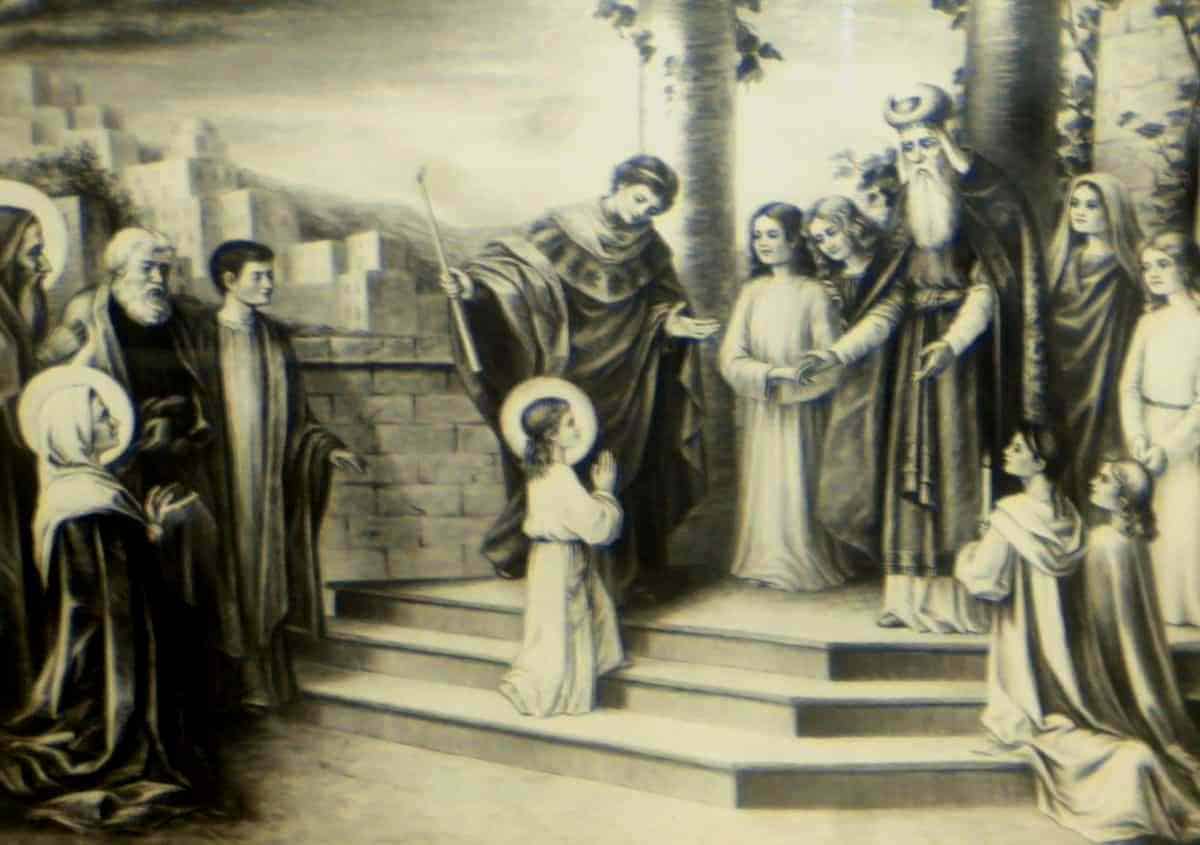
A tradition told us that Mary's birth was prophesied, her Mother, St. Anne, vowed that she would devote the child to the service of the Lord, as Samuel had been by his mother (1 sam 1:11), as daughter of Jephthah, as the captured 32 virgins from the Midianites (Number 31).
The life of these devoted girls at the temple mean that they would not be able to live the ordinary life of child-rearing mothers, rather were vowed to a life of perpetual virginity.
With this tradition in mind, the whole dialogue between Gabriel and Mary would make sense.
'I know not man' did not refer to child-bearing before marriage to Joseph or after. That's why Mary was surprised with the assignment God put on her.
go back hereSo which Catholic Bible is correct, the HE version or the SHE ?
#37
Do Catholics Worship Mary? What Does Scripture Actually Say?
Many people claim Catholics worship Mary. But worship and honor are not the same thing. Scripture commands worship of God alone: "You shall worship the Lord your God, and Him only shall you serve." (Matthew 4:10) Catholics agree completely. God alone is Creator. God alone is Almighty. God...
www.christianityboard.com
HE, SHE, IT, THEY are all used in different translations.
Each carries theological value.
Crazy Ivan
Member
You protestants here know Mary only from the gospel where you were told her brothel to Joseph. The life of Mary before that you know not.
A tradition told us that Mary's birth was prophesied, her Mother, St. Anne, vowed that she would devote the child to the service of the Lord, as Samuel had been by his mother (1 sam 1:11), as daughter of Jephthah, as the captured 32 virgins from the Midianites (Number 31).
The life of these devoted girls at the temple mean that they would not be able to live the ordinary life of child-rearing mothers, rather were vowed to a life of perpetual virginity.
With this tradition in mind, the whole dialogue between Gabriel and Mary would make sense.
'I know not man' did not refer to child-bearing before marriage to Joseph or after. That's why Mary was surprised with the assignment God put on her.
LOL yeah, ok. That "tradition" that comes from the "Infancy Gospel of James", written around 150 AD, and was never remotely considered part of Scripture.
You'd think if Mary was THAT important, THAT set apart, THAT special, then Scripture SOMEWHERE would have mentioned it. I mean, that's a pretty big deal.
Alas......
Full disclosure: I grew up Roman Catholic. Don't think for a second that I'm unaware of Catholic theology or tradition or history. I certainly don't know ALL of it, but I'm not some Baptist who has never been taught any of this growing up.

Ronald Nolette
Well-Known Member
Well I missed that rebuke. I am waiting for the proof that adelphos in the setting of Jesus half brothers and sisters means cousins when adelphos was not used of far kinsfolk (cousins uncles etc.) in the greek of the day. Scripture uses anepsios and syngenes to show cousins and aunts etc.Goto here:
#41
Does "Until" Mean What You Think It Means? (Matthew 1:25)
Yes it does mean that! You are just so inculcated in your Catholic tradition that you have unconsciously redefined the word until. Example: we did not go outside until it stopped raining. Based on that sentence- they did go outside. There is not modifier saying they changed their mind or...
You was rebuked before, come back with new argument!
Juust because it was used by the Hebrew translators of the Septuagint (as it was the best word available at the time), does not make it a standard, especially when the Bible uses syngenes several times!
Ronald Nolette
Well-Known Member
And every single part of the massive writings of Romanism that veer from the bible are wrong and to be resisted.Not forgetting that Vatic Catholic also have their Magisterium & Catechism to be used with the Bible simply being a reference tool
Magi&Cate more propaganda to push some of their nonsense
Things like sacramentals, praying for the dead in a non existent place called purgatory, limbo (though never codified it was an accepted teaching for many parts of Romanism), eating meat on Fridays,et. al. The inquisitions.
Ronald Nolette
Well-Known Member
Here is a Catholic site with 15 prayers to Mary with their unbiblical pronunciations.Not forgetting that Vatic Catholic also have their Magisterium & Catechism to be used with the Bible simply being a reference tool
Magi&Cate more propaganda to push some of their nonsense
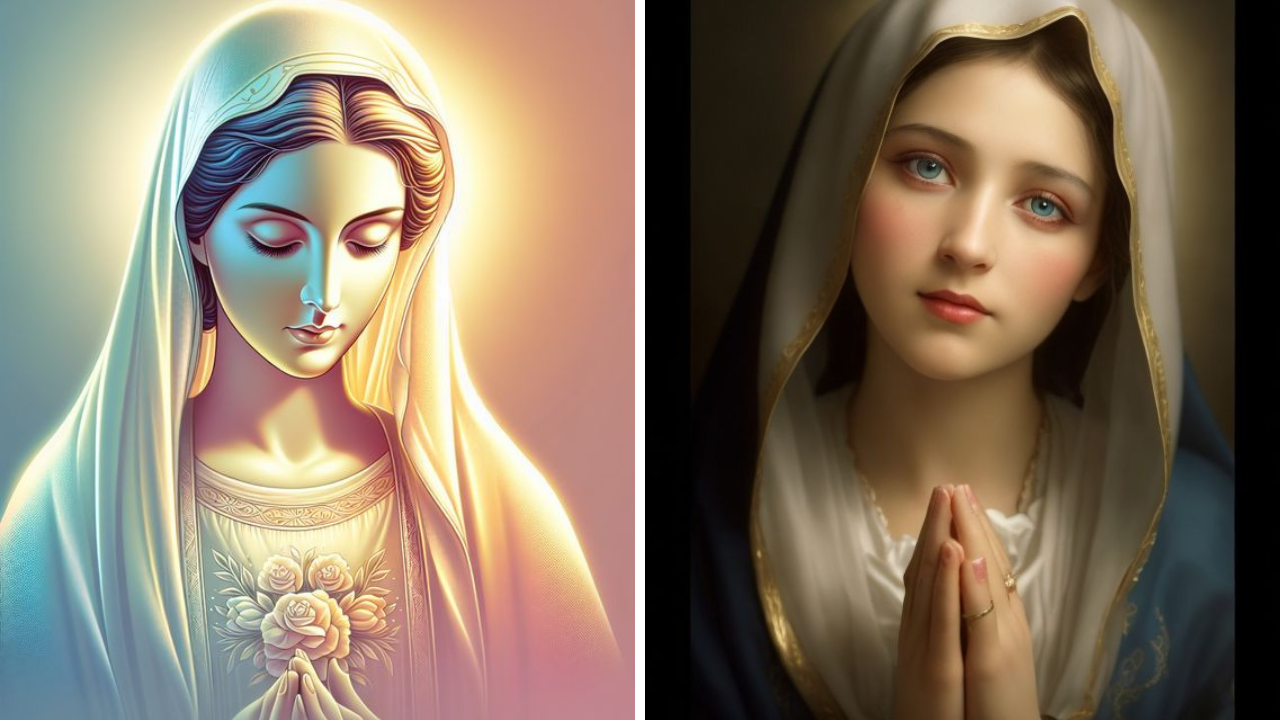
10 Powerful Prayers Every Catholic Must Say to the Virgin Mary Today
These prayers reflect the deep reverence and love that Catholics have for Mary, recognizing her unique role as the Mother of God and our spiritual mother.
 www.practicalfaiths.com
And one with 37 approved prayers!
37 Powerful Prayers To The Virgin Mary 2026 - PrayerLit
Discover 37 heartfelt prayers to the Virgin Mary, offering guidance, comfort, and intercession with Bible verses for spiritual growth.
 prayerlit.com
Remember the bible which even Romanism declares is the infallible word of God declares we have one mediator, one advocate and all the things these prayers to Mary are asking for are bibilically required to be presented to God the Father.
Ronald Nolette
Well-Known Member
I am a Souther Baptist and we have our own version of cathechism and Magisterium. But the bible clearly teaches Mary and Joseph abastained from sex until after Jesus was born. that is the meaning of the passage.Not forgetting that Vatic Catholic also have their Magisterium & Catechism to be used with the Bible simply being a reference tool
Magi&Cate more propaganda to push some of their nonsense
James, Joses, Simon and Judah as well as his sisters are called adelphos and adeplphoi when the well known and near universally used terms for cusins was either syngens or anepsios. It is you and worm wood that need to produce empirical evidence for her perpetual virginity, and support it from the Inspired and infallible Word of God!
Yes, you are speaking of Greek.Well I missed that rebuke. I am waiting for the proof that adelphos in the setting of Jesus half brothers and sisters means cousins when adelphos was not used of far kinsfolk (cousins uncles etc.) in the greek of the day. Scripture uses anepsios and syngenes to show cousins and aunts etc.
Juust because it was used by the Hebrew translators of the Septuagint (as it was the best word available at the time), does not make it a standard, especially when the Bible uses syngenes several times!
But Matthew was written in Hebrew, and Hebrew does not have a word for 'cousins' to distingush defferent level of kinships, just the word 'adelphos'.
Similar threads

- Replies
- 64
- Views
- 1K

- Replies
- 86
- Views
- 696
- Replies
- 221
- Views
- 7K

- Replies
- 333
- Views
- 9K
- Replies
- 526
- Views
- 5K