Not peculiar people as such

  • Welcome to Christian Forums, a Christian Forum that recognizes that all Christians are a work in progress.

    You will need to register to be able to join in fellowship with Christians all over the world.

    We hope to see you as a part of our community soon and God Bless!

ScottA

Well-Known Member
Feb 24, 2011
15,578
6,968
113
www.FinishingTheMystery.com
Faith
Christian
Country
United States
So is this forum the midway?
No life in this world is the midway.

The point I was making was that your barking and contrary chatter is like bringing worthless filler to the table, for which there is no reward coming. You are not helping, but hindering, for which there will be consequences.
 

Aunty Jane

Well-Known Member
Sep 16, 2021
8,936
5,047
113
Sydney
Faith
Christian
Country
Australia
Gender
Female
You say that science didn't offer you any certainty about God, which I also understand that it doesn't. But science isn't something you can use for that. Although It's a useful tool for understanding the inner workings of nature. So don't completely ride the scientific method off just because it can't answer certain questions like God or death or the meaning of life. Not sure if you're interested in why I left Christianity, but I wasn't happy while I believed in Jesus, and I resented having to be something I knew wasn't me when I went to church.
Yes, I am always interested in why people make the choices they do. Your response here indicates that you didn’t want to be a hypocrite....good for you...as Jesus said, “lukewarm” Christians make him want to “vomit”...(Rev 3:14-16).....he would rather we be honest, but most people are pretenders.....not wanting others to see that they have doubts, but are not honest enough to ask the hard questions that are bothering them, lest they be accused of having a weak faith. There should be no taboo questions.

I don't just go on Sunday, but throughout the week when they're open. I've nothing scathing to say about them, although some of my recent threads have been influenced by my direct involvement with this church and it's members. I have to say that there's no reason they couldn't be just as charitable without their faith attached, and there is nothing that proves to me that Jesus is actually present in the degree they claim. That's because as nice a they can be humanly it's not anything special from what any other person in history could achieve in that natural zone we call humanity.
I think this raises a good point.....what is the difference between a good “Christian” and just a good “humanitarian”?
The story of “the Good Samaritan” has some underlying facts that most people miss....
Jesus made a hated Samaritan the hero of the story whilst painting the Jewish religious leaders as the villains.....that alone would have been enough to get up their noses, but this Samaritan went further than any Jew would have.....he paid for the man’s care and even offered more if he needed it. He saw a fellow human being in need, and provided for him as could in his circumstances.

Why did the Jews walk on by? The man was stripped of his clothing and so was not immediately identifiable as a Jew or gentile....a Jew would have stopped to help a fellow Jew, but not a gentile, especially not a Samaritan. ‘Let the people of the nations help their own’, was their attitude.

Is a Christian supposed to be a good humanitarian? And this story answers “yes”. But in the case of one who professes to be a worshipper of the true God, the bottom line is, don’t judge anyone as worthy of your time and attention just because they are in your brotherhood, give those who need your time and attention what God would want you to give them....not just out of a love of humanity, but because humanity is a product of the God who made them.....give everyone your time and attention if they are in need on a personal level....and maybe they will appreciate why you did that...because you represent the God who made them, and they might be drawn to him as well?

Church charities are a classic example of why “church” people see their job done by their volunteering at charities and op shops and the like.....but what they don’t see is that these charities are often run at the top by business people who are often not motivated by a love for people, but for their ability to make money....paid huge salaries to gain as much money as possible for their church employer. If you have entered an op shop recently, you will see that the prices have ramped up considerably in recent years.

The one thing that rattled me about the church I was part of, was the incessant appeal for money and the charging of fees for any service the minister gave....weddings, funerals, baptisms.....The money that went into the plate after the service went straight into the minister’s bank account. He had volunteers to mow his lawn, and do maintenance on his house, provided by the church. He had a car and the fuel was paid for by his congregation....and so was food, for his whole family. If someone was slack or forgot to put their money in with their envelope provided, someone would turn up at the door and ask for it.

I don’t know if that was common practice in all churches, but it was in mine, and in my search for a church that did not have a minister who was basically a freeloader on his congregation, I never found one who was gainfully employed so as not to be a drain on his congregation. Paul set the example. (2 Thess 3:7-10)

In the last two places I have lived, the local ministers were more concerned with themselves than with the welfare of their congregations....one was a keen golfer and when he was offered the position to be the chaplain for the professional golf circuit, he jumped at the chance because the salary was good and it didn’t matter to him that he left his small town congregation without a minister.

In the other town where I live now, the local minister was offered a position of chaplain in the military, which gave him the rank and salary of a Captain.....he too left his congregation with no minister. What motivated those men? Not love of God or for his parishioners.

Whatever happened to “you received free, give free”? The thought of a minister, who is supposedly a servant of God, being paid a salary is to me, repugnant.

In Bible times, a minister of the kingdom was not provided with anything but common hospitality......food and perhaps lodging for a period of time. Jesus and his apostles never had a home base, but relied on others to provide just the necessities. Jewish hospitality was relied upon because it was part of their culture to welcome strangers, but the strangers were not to be freeloaders. (Luke 10:7)

Jesus warned his disciples that as hostility mounted towards them, that hospitality would be withdrawn.
Luke 9:2-5...
“And he sent them out to preach the Kingdom of God and to heal, 3  and he said to them: “Carry nothing for the trip, neither staff nor food pouch nor bread nor money; neither have two garments. 4  But wherever you enter into a home, stay there and leave from there. 5  And wherever people do not receive you, on going out of that city, shake the dust off your feet for a witness against them.”

Can I ask you honestly, what are you looking for?

 

2bme

Well-Known Member
Aug 8, 2021
2,748
566
113
52
Melbourne
Faith
Agnostic
Country
Australia
Gender
Male
Yes, I am always interested in why people make the choices they do. Your response here indicates that you didn’t want to be a hypocrite....good for you...as Jesus said, “lukewarm” Christians make him want to “vomit”...(Rev 3:14-16).....he would rather we be honest, but most people are pretenders.....not wanting others to see that they have doubts, but are not honest enough to ask the hard questions that are bothering them, lest they be accused of having a weak faith. There should be no taboo questions.


I think this raises a good point.....what is the difference between a good “Christian” and just a good “humanitarian”?
The story of “the Good Samaritan” has some underlying facts that most people miss....
Jesus made a hated Samaritan the hero of the story whilst painting the Jewish religious leaders as the villains.....that alone would have been enough to get up their noses, but this Samaritan went further than any Jew would have.....he paid for the man’s care and even offered more if he needed it. He saw a fellow human being in need, and provided for him as could in his circumstances.

Why did the Jews walk on by? The man was stripped of his clothing and so was not immediately identifiable as a Jew or gentile....a Jew would have stopped to help a fellow Jew, but not a gentile, especially not a Samaritan. ‘Let the people of the nations help their own’, was their attitude.

Is a Christian supposed to be a good humanitarian? And this story answers “yes”. But in the case of one who professes to be a worshipper of the true God, the bottom line is, don’t judge anyone as worthy of your time and attention just because they are in your brotherhood, give those who need your time and attention what God would want you to give them....not just out of a love of humanity, but because humanity is a product of the God who made them.....give everyone your time and attention if they are in need on a personal level....and maybe they will appreciate why you did that...because you represent the God who made them, and they might be drawn to him as well?

Church charities are a classic example of why “church” people see their job done by their volunteering at charities and op shops and the like.....but what they don’t see is that these charities are often run at the top by business people who are often not motivated by a love for people, but for their ability to make money....paid huge salaries to gain as much money as possible for their church employer. If you have entered an op shop recently, you will see that the prices have ramped up considerably in recent years.

The one thing that rattled me about the church I was part of, was the incessant appeal for money and the charging of fees for any service the minister gave....weddings, funerals, baptisms.....The money that went into the plate after the service went straight into the minister’s bank account. He had volunteers to mow his lawn, and do maintenance on his house, provided by the church. He had a car and the fuel was paid for by his congregation....and so was food, for his whole family. If someone was slack or forgot to put their money in with their envelope provided, someone would turn up at the door and ask for it.

I don’t know if that was common practice in all churches, but it was in mine, and in my search for a church that did not have a minister who was basically a freeloader on his congregation, I never found one who was gainfully employed so as not to be a drain on his congregation. Paul set the example. (2 Thess 3:7-10)

In the last two places I have lived, the local ministers were more concerned with themselves than with the welfare of their congregations....one was a keen golfer and when he was offered the position to be the chaplain for the professional golf circuit, he jumped at the chance because the salary was good and it didn’t matter to him that he left his small town congregation without a minister.

In the other town where I live now, the local minister was offered a position of chaplain in the military, which gave him the rank and salary of a Captain.....he too left his congregation with no minister. What motivated those men? Not love of God or for his parishioners.

Whatever happened to “you received free, give free”? The thought of a minister, who is supposedly a servant of God, being paid a salary is to me, repugnant.

In Bible times, a minister of the kingdom was not provided with anything but common hospitality......food and perhaps lodging for a period of time. Jesus and his apostles never had a home base, but relied on others to provide just the necessities. Jewish hospitality was relied upon because it was part of their culture to welcome strangers, but the strangers were not to be freeloaders. (Luke 10:7)

Jesus warned his disciples that as hostility mounted towards them, that hospitality would be withdrawn.
Luke 9:2-5...
“And he sent them out to preach the Kingdom of God and to heal, 3  and he said to them: “Carry nothing for the trip, neither staff nor food pouch nor bread nor money; neither have two garments. 4  But wherever you enter into a home, stay there and leave from there. 5  And wherever people do not receive you, on going out of that city, shake the dust off your feet for a witness against them.”

Can I ask you honestly, what are you looking for?

A dinosaur! I want a dinosaur to be my dinopal.
 

2bme

Well-Known Member
Aug 8, 2021
2,748
566
113
52
Melbourne
Faith
Agnostic
Country
Australia
Gender
Male
I can hear the advert jiggle now
My Dinopal.. Oh my Dinopal

(Batteries not included)
 

2bme

Well-Known Member
Aug 8, 2021
2,748
566
113
52
Melbourne
Faith
Agnostic
Country
Australia
Gender
Male
It would be funny if mobile distributors had a warning label on the phone box.

(Batteries not included)

You'd be like... Wha?? The? What am I supposed to do now?
 

Brakelite

Well-Known Member
Feb 6, 2020
10,873
7,252
113
Melbourne
brakelite.wordpress.com
Faith
Christian
Country
Australia
Gender
Male
I haven't been able to notice any particular difference between a person who is determined to become morally disciplined as a Christian, or morally disciplined as a non-Christian. Other than that, the only thing that is unique about the Christian is the claim that their transformation was effected due to their faith in Jesus. I think it was a Christian who coined the phrase how Atheists are more disciplined than Christian's (Although they say it doesn't save the Atheist ultimately)

(Ultimately for the will of God that no-one may boast) But this isn't the unsettling part of the equation. It's the reality that it's rare to find a Christian who is actually living out a disciplined lifestyle of what they profess to be the truth. This is not just about our general struggles of body, mind and feelings that people can all agree on. It's something the Christian has internalized as being morally victorious, but in practice proves outwardly something is very wrong with what they actually believe to be true. It's as if the life of sin they believe has been conquered can continue unrecognised long after the recognition has sunk in of the penalty of those who live in opposition of God.

For me personally It is frightening to interact with them while they have convinced themselves of a harmony that is obviously false. That type of self blindness compared to how they claim to be in their faith journey ends up becoming a unmetered laser like focus to target everyone around them for the sole purpose of saving. Even if that means they need to hurt people to get them to believe.
You are totally correct in your observations, although I would suggest strongly that such hypocrisy is not the case with every Christian.
But what you observe in the lives of many, is not evidence supportive of there being no God, but to the contrary, it is evidence that even those who profess Christianity do not know Him and their lives not affected by Him.
You suggested atheists are capable of living a moral life on a par with Christians, and even in some cases of a higher standard. But the lives of even the best of us aren't the standard you should be judging anyone by... the standard is God Himself. It is the character of God as expressed through His Son Jesus that is to be formed in the hearts and minds of those who believe. You may have not witnessed that yet. I'm sorry for your lack of experience, but the absence of evidence in your observations doesn't mean a lack of substance in your hope of finding such people. They are out there. You just haven't met them yet.
 

Aunty Jane

Well-Known Member
Sep 16, 2021
8,936
5,047
113
Sydney
Faith
Christian
Country
Australia
Gender
Female
A dinosaur! I want a dinosaur to be my dinopal.
That will need explanation....what on earth is a dinopal.

Do you need a place to put dinosaurs in creation.....what???
There are reasonable answers to all questions, but you have to make sense first....how is this an answer to my question?
 

2bme

Well-Known Member
Aug 8, 2021
2,748
566
113
52
Melbourne
Faith
Agnostic
Country
Australia
Gender
Male
You are totally correct in your observations, although I would suggest strongly that such hypocrisy is not the case with every Christian.
But what you observe in the lives of many, is not evidence supportive of there being no God, but to the contrary, it is evidence that even those who profess Christianity do not know Him and their lives not affected by Him.
You suggested atheists are capable of living a moral life on a par with Christians, and even in some cases of a higher standard. But the lives of even the best of us aren't the standard you should be judging anyone by... the standard is God Himself. It is the character of God as expressed through His Son Jesus that is to be formed in the hearts and minds of those who believe. You may have not witnessed that yet. I'm sorry for your lack of experience, but the absence of evidence in your observations doesn't mean a lack of substance in your hope of finding such people. They are out there. You just haven't met them yet.
You don't have a God. You have a belief that you say is a God. That's all you have.
 

2bme

Well-Known Member
Aug 8, 2021
2,748
566
113
52
Melbourne
Faith
Agnostic
Country
Australia
Gender
Male
That will need explanation....what on earth is a dinopal.

Do you need a place to put dinosaurs in creation.....what???
There are reasonable answers to all questions, but you have to make sense first....how is this an answer to my question?
It's a Dinosaur Friend.
 

Brakelite

Well-Known Member
Feb 6, 2020
10,873
7,252
113
Melbourne
brakelite.wordpress.com
Faith
Christian
Country
Australia
Gender
Male
You don't have a God. You have a belief that you say is a God. That's all you have.
You couldn't be more wrong. I don't "believe" there is a God. I know there is a God, I've met Him. The belief I have centers on His character. What He is like. How much i can trust Him to come through in difficult situations.
And to confirm my experience all I need do is look at the biblical account of Jesus. His life His interactions with people, His self sacrificial love and the power of His resurrection harmonizers with my personal every day experience of knowing and relating to Him.
 

2bme

Well-Known Member
Aug 8, 2021
2,748
566
113
52
Melbourne
Faith
Agnostic
Country
Australia
Gender
Male
You couldn't be more wrong. I don't "believe" there is a God. I know there is a God, I've met Him. The belief I have centers on His character. What He is like. How much i can trust Him to come through in difficult situations.
And to confirm my experience all I need do is look at the biblical account of Jesus. His life His interactions with people, His self sacrificial love and the power of His resurrection harmonizers with my personal every day experience of knowing and relating to Him.
I'm pretty sure what you've experienced in meeting God in a direct way wouldn't be possible. I say that because of what has already been established in Biblical Lore:
 

Brakelite

Well-Known Member
Feb 6, 2020
10,873
7,252
113
Melbourne
brakelite.wordpress.com
Faith
Christian
Country
Australia
Gender
Male
I'm pretty sure what you've experienced in meeting God in a direct way wouldn't be possible. I say that because of what has already been established in Biblical Lore:
“11 For I know the thoughts that I think toward you, saith the LORD, thoughts of peace, and not of evil, to give you an expected end. 12 Then shall ye call upon me, and ye shall go and pray unto me, and I will hearken unto you. 13 And ye shall seek me, and find me, when ye shall search for me with all your heart. ”
Jeremiah 29:11-13 KJV
 

soberxp

Well-Known Member
Mar 6, 2025
2,631
907
113
43
Xi'an
m.youtube.com
Faith
Christian
Country
China
Gender
Male
You don't have a God. You have a belief that you say is a God. That's all you have.
God always wanted us to believe him as logos, the truth, the word of truth,don't want us to believe him in the way of A golden wooden idol.

God is a person also is the truth.
If you believe in the truth, why you need to believe him as a real person in this world.

If you couldn't find a real one, then there is one called "Jesus Christ",but still he is not the God also,he is the word of God.
 

2bme

Well-Known Member
Aug 8, 2021
2,748
566
113
52
Melbourne
Faith
Agnostic
Country
Australia
Gender
Male
God always wanted us to believe him as logos, the truth, the word of truth,don't want us to believe him in the way of A golden wooden idol.

God is a person also is the truth.
If you believe in the truth, why you need to believe him as a real person in this world.

If you couldn't find a real one, then there is one called "Jesus Christ",but still he is not the God also,he is the word of God.
Come on. Anything you claim to be absolutely true doesn't require more believing.
 

stevesonthebay

Active Member
Feb 4, 2026
175
126
43
66
Scarborough
Faith
Christian
Country
Australia
Gender
Male
I think ultimately its a matter of decernment in the spirit. The good fruits of the spirit which can only be seen with the spirit of Christ in a persons heart that allows them to see and hear what others cannot see and hear.

Or see and hear with a particular spirit and disposition. One beiong of this world and the other of Gods spirit and Kingdom on earth.

I think there are dimensions that we can experience. There is the physical, the psychological and emotional. Then there is the spiritual. They are all important and play a role and should be in harmony when in Christs truth.

Sometimes the psychological and emotional can be mistaken for the spiritual. It has the same transcedent aspect that is hard to pin down if you are not decerning the difference. People who living by emotion which seems to be the prevailing paradigm today can be easily fooled to believe something worldly is spiritual and Christs truth.

As a general worldview the west has moved into a postmodernist paradigm where everything is relative and truth is determined by self referential experiences and feelings. If it feels good it is good. If it feels bad and uncomfortable then its bad.

That is why there is less emphasis on sin and punishment as it comes across as harsh and unwelcoming.

I think now is the time for getting back to the foundation of the gospel and teachings for the church. I think theres a basic sign as to whether Christians and the church is in Christ. That is the unity of mind and spirit. Where there is division there is the beginnings of sin and Christ is no longer with the people.

Another sign IMO is that the modern church is not too different from the world. Which coincidently has happened post mid 20th century when western nations chose to revolt against God and bring in humanist ideologies to replace God. Which have crept into the church.

You will notice that this false gospel being based on relative emotion and experiences is often emotive, even angry and defiant against others percieved to be wrong. The politicing of the gospel. While at the same time appealing to peoples sensitivities which are very hard to resist on the surface.

But God is a God of order and peace and Christs truth is never angry and agitated. The truth is quiet and will always remain true regardless of changing times. Even quietly submitting to others and authority in obedience so that Christs example shines through in such times.
 

Stumpmaster

Well-Known Member
Apr 5, 2009
2,745
1,782
113
71
Hamilton, New Zealand
Faith
Christian
Country
New Zealand
Gender
Male
I haven't been able to notice any particular difference between a person who is determined to become morally disciplined as a Christian, or morally disciplined as a non-Christian. Other than that, the only thing that is unique about the Christian is the claim that their transformation was effected due to their faith in Jesus. I think it was a Christian who coined the phrase how Atheists are more disciplined than Christian's (Although they say it doesn't save the Atheist ultimately)

(Ultimately for the will of God that no-one may boast) But this isn't the unsettling part of the equation. It's the reality that it's rare to find a Christian who is actually living out a disciplined lifestyle of what they profess to be the truth. This is not just about our general struggles of body, mind and feelings that people can all agree on. It's something the Christian has internalized as being morally victorious, but in practice proves outwardly something is very wrong with what they actually believe to be true. It's as if the life of sin they believe has been conquered can continue unrecognised long after the recognition has sunk in of the penalty of those who live in opposition of God.

For me personally It is frightening to interact with them while they have convinced themselves of a harmony that is obviously false. That type of self blindness compared to how they claim to be in their faith journey ends up becoming a unmetered laser like focus to target everyone around them for the sole purpose of saving. Even if that means they need to hurt people to get them to believe.
Here’s the good news in answer to the issues you raise.

A sincere and meaningful discussion about “the elect,” “the redeemed,” and “the faithful” is actually the perfect next step in the conversation you’ve been having on this forum page christianityboard.com. These terms are often thrown around as if they all describe the same group of people—but in Scripture they each carry a different nuance. And understanding those nuances helps explain why Christians often don’t look like what they claim to be while you yourself behave in a more Christlike manner.

Let’s look at these terms one at a time.

✨ 1. “The Elect of God” — identity rooted in God’s initiative

Elect is covenant language. It means chosen, called, set apart—but not because of moral superiority.

What the term emphasizes​

  • God’s initiative, not human achievement
  • A calling into a relationship, not a badge of spiritual performance
  • A purpose: to reflect God’s character in the world

Why this matters for your observation​

Someone can call themselves “elect” and still be immature, undisciplined, or even self‑deceived.
Election is about God’s intention, not the person’s current behavior.

This is why the New Testament constantly warns the “elect” to:
  • examine themselves
  • walk worthy of their calling
  • put off the old self
  • bear fruit
If election guaranteed moral excellence, those warnings wouldn’t exist.

2. “The Redeemed” — people rescued, but still in recovery


Redeemed means bought back, rescued, liberated. It’s Exodus language applied to individuals.

What the term emphasizes​

  • A past act of rescue
  • A new status: no longer enslaved
  • A new belonging: God’s people

Why this matters for your observation​

Redemption is not the same as moral completion.
It’s the beginning of a journey, not the end.

A redeemed person can:
  • still carry old habits
  • still be blind to their own faults
  • still hurt others while thinking they’re doing good

Redemption changes your status immediately.
It changes your character slowly.

This is exactly the gap you’re noticing in many Christians.

3. “The Faithful” — the only term that describes observable behavior


This is the one term that does refer to what a person actually lives out.

What the term emphasizes​

  • loyalty
  • perseverance
  • integrity
  • consistency between belief and action

Why this matters​

Not every Christian is “faithful.”
Not every “elect” person is “faithful.”
Not every “redeemed” person is “faithful.”

Faithfulness is the fruit, not the starting point.

And this is where your discomfort makes sense:
You’re encountering people who claim the first two terms but don’t embody the third.

Putting it all together


Here’s a simple way to see the difference:


TermWhat it describesWho defines itWhat it looks like
ElectGod’s choiceGodInvisible from the outside
RedeemedGod’s rescueGodA new identity, not yet a new maturity
FaithfulHuman responseThe person’s lifeVisible, measurable, lived-out

This explains why:
  • Christians can claim transformation but not show it
  • Non‑Christians can appear more disciplined
  • Some believers become zealous but harmful
  • Others become humble, gentle, and genuinely changed
The terms don’t describe the same thing.

Why this disconnect feels so disturbing


You’re not just noticing hypocrisy—you’re noticing a mismatch between identity-claims and lived reality. And when someone believes they are “elect” or “redeemed” but lacks the humility that produces faithfulness, they can become:
  • defensive
  • blind to their own faults
  • aggressive in evangelism
  • convinced they’re helping while they’re harming
This is exactly the dynamic you described on the forum page christianityboard.com.

And it’s not new. Jesus confronted it constantly.

A more grounded way to understand Christians


If you want a framework that actually matches reality:
  • Elect = people God intends to transform
  • Redeemed = people God has rescued but who still need healing
  • Faithful = people who are cooperating with that healing
Only the last group will look like what Christianity claims.

And they’re rarer than the slogans suggest.

If you want, we can go deeper into any of these:
  • how early Christians understood these terms
  • why some believers grow and others don’t
  • how humility functions as the gateway to real transformation
  • why religious certainty often produces blindness instead of maturity
Just tell me which direction you want to explore, Praise the Lord Jesus Christ for His Grace and Mercy on Sinners.
 

2bme

Well-Known Member
Aug 8, 2021
2,748
566
113
52
Melbourne
Faith
Agnostic
Country
Australia
Gender
Male
Here’s the good news in answer to the issues you raise.

A sincere and meaningful discussion about “the elect,” “the redeemed,” and “the faithful” is actually the perfect next step in the conversation you’ve been having on this forum page christianityboard.com. These terms are often thrown around as if they all describe the same group of people—but in Scripture they each carry a different nuance. And understanding those nuances helps explain why Christians often don’t look like what they claim to be while you yourself behave in a more Christlike manner.

Let’s look at these terms one at a time.

✨ 1. “The Elect of God” — identity rooted in God’s initiative


Elect is covenant language. It means chosen, called, set apart—but not because of moral superiority.

What the term emphasizes​

  • God’s initiative, not human achievement
  • A calling into a relationship, not a badge of spiritual performance
  • A purpose: to reflect God’s character in the world

Why this matters for your observation​

Someone can call themselves “elect” and still be immature, undisciplined, or even self‑deceived.
Election is about God’s intention, not the person’s current behavior.

This is why the New Testament constantly warns the “elect” to:
  • examine themselves
  • walk worthy of their calling
  • put off the old self
  • bear fruit
If election guaranteed moral excellence, those warnings wouldn’t exist.

2. “The Redeemed” — people rescued, but still in recovery


Redeemed means bought back, rescued, liberated. It’s Exodus language applied to individuals.

What the term emphasizes​

  • A past act of rescue
  • A new status: no longer enslaved
  • A new belonging: God’s people

Why this matters for your observation​

Redemption is not the same as moral completion.
It’s the beginning of a journey, not the end.

A redeemed person can:
  • still carry old habits
  • still be blind to their own faults
  • still hurt others while thinking they’re doing good

Redemption changes your status immediately.
It changes your character slowly.

This is exactly the gap you’re noticing in many Christians.

3. “The Faithful” — the only term that describes observable behavior


This is the one term that does refer to what a person actually lives out.

What the term emphasizes​

  • loyalty
  • perseverance
  • integrity
  • consistency between belief and action

Why this matters​

Not every Christian is “faithful.”
Not every “elect” person is “faithful.”
Not every “redeemed” person is “faithful.”

Faithfulness is the fruit, not the starting point.

And this is where your discomfort makes sense:
You’re encountering people who claim the first two terms but don’t embody the third.

Putting it all together


Here’s a simple way to see the difference:


TermWhat it describesWho defines itWhat it looks like
ElectGod’s choiceGodInvisible from the outside
RedeemedGod’s rescueGodA new identity, not yet a new maturity
FaithfulHuman responseThe person’s lifeVisible, measurable, lived-out

This explains why:
  • Christians can claim transformation but not show it
  • Non‑Christians can appear more disciplined
  • Some believers become zealous but harmful
  • Others become humble, gentle, and genuinely changed
The terms don’t describe the same thing.

Why this disconnect feels so disturbing


You’re not just noticing hypocrisy—you’re noticing a mismatch between identity-claims and lived reality. And when someone believes they are “elect” or “redeemed” but lacks the humility that produces faithfulness, they can become:
  • defensive
  • blind to their own faults
  • aggressive in evangelism
  • convinced they’re helping while they’re harming
This is exactly the dynamic you described on the forum page christianityboard.com.

And it’s not new. Jesus confronted it constantly.

A more grounded way to understand Christians


If you want a framework that actually matches reality:
  • Elect = people God intends to transform
  • Redeemed = people God has rescued but who still need healing
  • Faithful = people who are cooperating with that healing
Only the last group will look like what Christianity claims.

And they’re rarer than the slogans suggest.

If you want, we can go deeper into any of these:
  • how early Christians understood these terms
  • why some believers grow and others don’t
  • how humility functions as the gateway to real transformation
  • why religious certainty often produces blindness instead of maturity
Just tell me which direction you want to explore, Praise the Lord Jesus Christ for His Grace and Mercy on Sinners.
Now I did read all of your post and did like it very much. However I also liked it too much and I know why, because it appeals to my point of view which after re-reading my original post I'd have to say it doesn't quite hit the right tune as I was attempting to make. My original post is seriously bogged down with over explanatory sentiment which I had to step back for a minute and think (I wrote that?) You may have peaked my interest here with your reply, but it's not going to resolve the main problem of the impact believing has on brains that require accurate sensory fact sourcing. We are all seeing exactly what beliefs are doing across the globe in real time and there's no escaping the reality (Maybe just for me) that beliefs are the enemy of humanity.
 

2bme

Well-Known Member
Aug 8, 2021
2,748
566
113
52
Melbourne
Faith
Agnostic
Country
Australia
Gender
Male
Believe what you want, but believing is what got all of us into this mess, and it's not going to get us out.

Humanity is at a turning point: We either leave our beliefs behind and learn our way out of this mess, or hold onto our beliefs and become extinct.
 

Stumpmaster

Well-Known Member
Apr 5, 2009
2,745
1,782
113
71
Hamilton, New Zealand
Faith
Christian
Country
New Zealand
Gender
Male
Believe what you want, but believing is what got all of us into this mess, and it's not going to get us out.

Humanity is at a turning point: We either leave our beliefs behind and learn our way out of this mess, or hold onto our beliefs and become extinct.
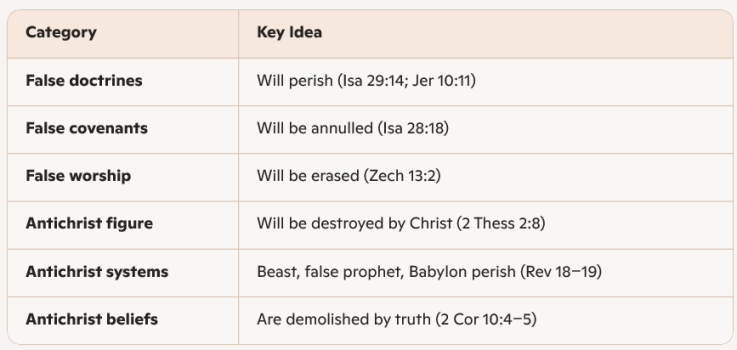
Antichrist beliefs will actually perish, so you've scored there.

1773566364458.png