Does "Until" Mean What You Think It Means? (Matthew 1:25)

  • Welcome to Christian Forums, a Christian Forum that recognizes that all Christians are a work in progress.

    You will need to register to be able to join in fellowship with Christians all over the world.

    We hope to see you as a part of our community soon and God Bless!

Moonwood

Member
Aug 24, 2026
690
99
28
Washington
Faith
Christian
Country
United States
Gender
Female
I never, not once, claimed that Matthew 1:25 "alone" settles this question.

I never said that you claimed Matthew 1:25 alone proves Joseph and Mary had marital relations after Jesus's birth, rather I said you agreed with me that it doesn't:

"Regarding the thread topic, you've already agreed with my main point:

"I agree with you - Matthew 1:25 alone... doesn't PROVE it."

I've made the comprehensive argument, and 1:25 is certainly an important piece of it.

You said:

"If you pulled Matthew 1:25 out all by itself and looked at it, even though the most natural reading would imply that after Jesus was born, they did in fact have sex."

So, I asked:

"What specifically in Matthew 1:25 creates that implication?"

You said:

"It's the context."

More specifically, you gave normal expectations of marriage, cultural considerations, Mary's expectation of pregnancy, Jesus' adelphoi, and the larger context as an answer to my question. But those are all arguments outside Matthew 1:25 itself, and I asked you what specifically in Matthew 1:25 creates the implication that Joseph and Mary had marital intercourse after Jesus' birth. So, unless you can identify what feature of Matthew 1:25 itself creates that implication, you haven't shown that your conclusion is implied by Matthew 1:25 itself.
 

Crazy Ivan

Member
Jun 23, 2026
202
61
28
56
Connecticut
Faith
Christian
Country
United States
Gender
Male
I never said that you claimed Matthew 1:25 alone proves Joseph and Mary had marital relations after Jesus's birth, rather I said you agreed with me that it doesn't:

"Regarding the thread topic, you've already agreed with my main point:

"I agree with you - Matthew 1:25 alone... doesn't PROVE it."


You said:

"If you pulled Matthew 1:25 out all by itself and looked at it, even though the most natural reading would imply that after Jesus was born, they did in fact have sex."

So, I asked:

"What specifically in Matthew 1:25 creates that implication?"

You said:

"It's the context."

More specifically, you gave normal expectations of marriage, cultural considerations, Mary's expectation of pregnancy, Jesus' adelphoi, and the larger context as an answer to my question. But those are all arguments outside Matthew 1:25 itself, and I asked you what specifically in Matthew 1:25 creates the implication that Joseph and Mary had marital intercourse after Jesus' birth. So, unless you can identify what feature of Matthew 1:25 itself creates that implication, you haven't shown that your conclusion is implied by Matthew 1:25 itself.

I'm not trying to show that Matthew 1:25 alone proves my case. You repeating that I haven't shown that it is kind of silly, because it appears that you think I'm trying to show that, but I'm not.
 

Moonwood

Member
Aug 24, 2026
690
99
28
Washington
Faith
Christian
Country
United States
Gender
Female
I'm not trying to show that Matthew 1:25 alone proves my case.

Correct, because you know it doesn't, which is why you said this:

"I agree with you - Matthew 1:25 alone... doesn't PROVE it."

I've made the comprehensive argument, and 1:25 is certainly an important piece of it.

You said:

"If you pulled Matthew 1:25 out all by itself and looked at it, even though the most natural reading would imply that after Jesus was born, they did in fact have sex."

So, I asked:

"What specifically in Matthew 1:25 creates that implication?"

You said:

"It's the context."

More specifically, you gave normal expectations of marriage, cultural considerations, Mary's expectation of pregnancy, Jesus' adelphoi, and the larger context as an answer to my question. But those are all arguments outside Matthew 1:25 itself, and I asked you what specifically in Matthew 1:25 creates the implication that Joseph and Mary had marital intercourse after Jesus' birth. So, unless you can identify what feature of Matthew 1:25 itself creates that implication, you haven't shown that your conclusion is implied by Matthew 1:25 itself.
 

Crazy Ivan

Member
Jun 23, 2026
202
61
28
56
Connecticut
Faith
Christian
Country
United States
Gender
Male
Correct, because you know it doesn't, which is why you said this:

"I agree with you - Matthew 1:25 alone... doesn't PROVE it."


You said:

"If you pulled Matthew 1:25 out all by itself and looked at it, even though the most natural reading would imply that after Jesus was born, they did in fact have sex."

So, I asked:

"What specifically in Matthew 1:25 creates that implication?"

You said:

"It's the context."

More specifically, you gave normal expectations of marriage, cultural considerations, Mary's expectation of pregnancy, Jesus' adelphoi, and the larger context as an answer to my question. But those are all arguments outside Matthew 1:25 itself, and I asked you what specifically in Matthew 1:25 creates the implication that Joseph and Mary had marital intercourse after Jesus' birth. So, unless you can identify what feature of Matthew 1:25 itself creates that implication, you haven't shown that your conclusion is implied by Matthew 1:25 itself.

So. Stop. Saying. That. I. Haven't. Proven. My. Point. From. Matthew. 1:25. Alone.
 

Moonwood

Member
Aug 24, 2026
690
99
28
Washington
Faith
Christian
Country
United States
Gender
Female
So. Stop. Saying. That. I. Haven't. Proven. My. Point. From. Matthew. 1:25. Alone.

I never said that you claimed Matthew 1:25 alone proves that Joseph and Mary had marital intercourse after Jesus' birth. In fact, I quoted you agreeing with me that it does not:

"I agree with you - Matthew 1:25 alone... doesn't prove it."

Regarding this different claim of yours:

"If you pulled Matthew 1:25 out all by itself and looked at it...the most natural reading would imply that after Jesus was born, they did in fact have sex,"

w
hen I asked:

"What specifically in Matthew 1:25 creates that implication?,"

you gave normal expectations of marriage, cultural considerations, Mary's expectation of pregnancy, Jesus' adelphoi, and the larger context as an answer to my question.

But those are all considerations outside Matthew 1:25 itself. I asked what specifically in Matthew 1:25 creates the implication that Joseph and Mary had marital relations after Jesus' birth.

So unless you can identify what feature of Matthew 1:25 itself creates that implication, you have not shown that the implication comes from Matthew 1:25 itself rather than from the broader contextual considerations you've appealed to.
 

beechan

Member
Oct 28, 2026
225
20
18
Zion
Faith
Christian
Country
Greenland
Gender
Male
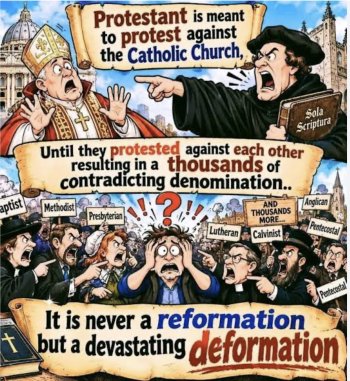
Early Protestant reformers like Martin Luther and John Calvin also defended the doctrine of perpetual virginity of Mary.
How come just 500years passed, the Reform is so Deformed in doctrines?
IMG_0634.jpeg
 

Moonwood

Member
Aug 24, 2026
690
99
28
Washington
Faith
Christian
Country
United States
Gender
Female
You're making a comparison with words translated from two different languages.

That objection would only work if I were comparing the meanings of Hebrew and Greek words directly. I'm not.

My point is about the Greek word heos ("until") in Matthew 1:25. The example from 2 Samuel 6:23 is relevant because the Septuagint (LXX), the ancient Greek translation of the Old Testament, uses the same Greek construction: Michal had no child until the day of her death. The point is that heos by itself does not require a reversal of the previous condition afterward.

Even apart from 2 Samuel, the linguistic argument remains the same: "until" marks what is true up to a certain point, but the word itself does not tell us what happened after that point. Context determines whether a change occurred.

So the question is not whether Matthew 1:25 says Joseph abstained before Jesus' birth. It clearly does. The question is whether the word "until" proves marital relations afterward. Grammatically, it does not. That conclusion must come from other evidence, not from heos alone.
 

Moonwood

Member
Aug 24, 2026
690
99
28
Washington
Faith
Christian
Country
United States
Gender
Female
Whast in Matthews context? The very sentence inspired. The normal reaction is they had sex afterwards. You need to prve they didn't. The Scripture speaks against your hypothesis. Try again.

That's exactly the point at issue. Saying "the normal reaction is they had sex afterwards" is not an argument from Matthew's context; it's an appeal to what you think a reader would normally infer.

I've already acknowledged that until can sometimes imply a change afterward. You've acknowledged that it does not always do so and that context determines its force.

Therefore, the question is not what a modern reader's first reaction is. The question is what Matthew intended to communicate.

Matthew's stated concern throughout the passage is the origin of Jesus' conception:
  • Mary was found with child "of the Holy Spirit" (1:18).
  • Joseph is told not to fear taking Mary as his wife because the child is "conceoved in her is of the Holy Spirit" (1:20).
  • Matthew cites Isaiah to support the virginal conception (1:22-23).
  • Then he says Joseph "knew her not until she had borne a son" (1:25).
Every statement in the immediate context is focused on establishing that Joseph was not responsible for Jesus' conception.

So when you say, "The Scripture speaks against your hypothesis," you still haven't shown that. You haven't identified anything in Matthew's context that requires verse 25 to inform the reader about the couple's later marital relations.

My claim remains modest: Matthew 1:25 does not, by itself, prove perpetual virginity. But neither does it, by itself, prove that Joseph and Mary had sexual relations afterward.

If you think it does, then the burden is to show what in Matthew's context makes that conclusion necessary rather than merely possible.
 

Ronald Nolette

Well-Known Member
Aug 24, 2020
17,009
5,028
113
72
South Carolina
Faith
Christian
Country
United States
Gender
Male
Matthew's stated concern throughout the passage is the origin of Jesus' conception:
  • Mary was found with child "of the Holy Spirit" (1:18).
  • Joseph is told not to fear taking Mary as his wife because the child is "conceoved in her is of the Holy Spirit" (1:20).
  • Matthew cites Isaiah to support the virginal conception (1:22-23).
  • Then he says Joseph "knew her not until she had borne a son" (1:25).
Every statement in the immediate context is focused on establishing that Joseph was not responsible for Jesus' conception.
Yeah? But that is not the issue. I agree with what you say.

The issue is Jospeh having sex with Mary after Jesus was born like the passage says!
 

Moonwood

Member
Aug 24, 2026
690
99
28
Washington
Faith
Christian
Country
United States
Gender
Female
Yeah? But that is not the issue. I agree with what you say.

The issue is Jospeh having sex with Mary after Jesus was born like the passage says!

If you agree that the immediate context is focused on establishing that Joseph was not responsible for Jesus' conception, then you still have not answered my question.

You originally claimed:

"What's in Matthew's context? The very sentence inspired."

But now you've agreed that the surrounding context is about the Virgin Birth, not about the couple's later marital life.

So we're back to the issue I've been raising from the beginning:

What in Matthew's context requires us to understand verse 25 as teaching that Joseph had sexual relations with Mary after Jesus' birth?

Simply repeating that "the passage says" they later had sex is the very point under debate.

We've already agreed that until does not always imply a subsequent action. Therefore, you cannot simply appeal to the word itself.

And you've now agreed that the immediate context is focused on establishing that Joseph was not the father of Jesus.

So where, exactly, does Matthew shift from discussing the Virgin Birth to informing the reader about the couple's later sexual relations?

My position remains modest: Matthew 1:25 tells us that Joseph did not know Mary before Jesus' birth. That fact serves Matthew's stated purpose of safeguarding the Virgin Birth.

If you want to argue that Matthew also intended to teach a later sexual relationship, then you need to show where the text indicates that purpose. Merely saying "that's how I read the sentence" is not an argument from context; it's an assertion of your conclusion.
 

RLT63

Well-Known Member
Apr 24, 2022
4,566
2,881
113
Montgomery
Faith
Christian
Country
United States
Gender
Male
I never said that you claimed Matthew 1:25 alone proves that Joseph and Mary had marital intercourse after Jesus' birth. In fact, I quoted you agreeing with me that it does not:

"I agree with you - Matthew 1:25 alone... doesn't prove it."

Regarding this different claim of yours:

"If you pulled Matthew 1:25 out all by itself and looked at it...the most natural reading would imply that after Jesus was born, they did in fact have sex,"

w
hen I asked:

"What specifically in Matthew 1:25 creates that implication?,"

you gave normal expectations of marriage, cultural considerations, Mary's expectation of pregnancy, Jesus' adelphoi, and the larger context as an answer to my question.

But those are all considerations outside Matthew 1:25 itself. I asked what specifically in Matthew 1:25 creates the implication that Joseph and Mary had marital relations after Jesus' birth.

So unless you can identify what feature of Matthew 1:25 itself creates that implication, you have not shown that the implication comes from Matthew 1:25 itself rather than from the broader contextual considerations you've appealed to.
Reading Matthew 1:25 by itself, gives the distinct impression that Joseph and Mary had sex after Jesus was born. You’re stretching incredulity to make it mean something else. Posting it over and over and repeating yourself doesn’t help your argument.
 

RLT63

Well-Known Member
Apr 24, 2022
4,566
2,881
113
Montgomery
Faith
Christian
Country
United States
Gender
Male
That objection would only work if I were comparing the meanings of Hebrew and Greek words directly. I'm not.

My point is about the Greek word heos ("until") in Matthew 1:25. The example from 2 Samuel 6:23 is relevant because the Septuagint (LXX), the ancient Greek translation of the Old Testament, uses the same Greek construction: Michal had no child until the day of her death. The point is that heos by itself does not require a reversal of the previous condition afterward.

Even apart from 2 Samuel, the linguistic argument remains the same: "until" marks what is true up to a certain point, but the word itself does not tell us what happened after that point. Context determines whether a change occurred.

So the question is not whether Matthew 1:25 says Joseph abstained before Jesus' birth. It clearly does. The question is whether the word "until" proves marital relations afterward. Grammatically, it does not. That conclusion must come from other evidence, not from heos alone.
I’m not going to argue UNTIL you change your mind
 

Moonwood

Member
Aug 24, 2026
690
99
28
Washington
Faith
Christian
Country
United States
Gender
Female
I’m not going to argue UNTIL you change your mind

That actually proves my point. "Until" doesn't itself tell us what happens afterward; context does. In your sentence, we may infer you'll argue later, but that inference comes from the context, not from the word "until" itself. Likewise, Matthew 1:25 cannot be used to prove post-birth marital relations from heos alone. In Matthew's context, the focus is the Virgin Birth and the fact that Joseph was not the child's father. The verse tells us what did not happen before Jesus' birth; it does not tell us what happened afterward.
 

RLT63

Well-Known Member
Apr 24, 2022
4,566
2,881
113
Montgomery
Faith
Christian
Country
United States
Gender
Male
That actually proves my point. "Until" doesn't itself tell us what happens afterward; context does. In your sentence, we may infer you'll argue later, but that inference comes from the context, not from the word "until" itself. Likewise, Matthew 1:25 cannot be used to prove post-birth marital relations from heos alone. In Matthew's context, the focus is the Virgin Birth and the fact that Joseph was not the child's father. The verse tells us what did not happen before Jesus' birth; it does not tell us what happened afterward.
You’ll keep saying that no matter what and don’t seem to realize how you are cherry picking. We use until for example, don’t go to bed until you brush your teeth, you can’t have desert until you eat your supper, Joseph didn’t have sex with Mary until Jesus was born

Tools
Gen 8:5 - And the waters decreased continually until the tenth month:in the tenth month, on the first day of the month, were the tops of the mountains seen.
Tools
Gen 8:7 - And he sent forth a raven, which went forth to and fro, until the waters were dried up from off the earth.
Tools
Gen 24:19 - And when she had done giving him drink, she said, I will draw water for thy camels also, until they have done drinking.
Tools
Gen 24:33 - And there was set meat before him to eat: but he said, I will not eat, until I have told mine errand. And he said, Speak on.
Tools
Gen 26:13 - And the man waxed great, and went forward, and grew until he became very great:
 
Last edited:

beechan

Member
Oct 28, 2026
225
20
18
Zion
Faith
Christian
Country
Greenland
Gender
Male
You’ll keep saying that no matter what and don’t seem to realize how you are cherry picking. We use until for example, don’t go to bed until you brush your teeth, you can’t have desert until you eat your supper, Joseph didn’t have sex with Mary until Jesus was born

Tools
Gen 8:5 - And the waters decreased continually until the tenth month:in the tenth month, on the first day of the month, were the tops of the mountains seen.
Tools
Gen 8:7 - And he sent forth a raven, which went forth to and fro, until the waters were dried up from off the earth.
Tools
Gen 24:19 - And when she had done giving him drink, she said, I will draw water for thy camels also, until they have done drinking.
Tools
Gen 24:33 - And there was set meat before him to eat: but he said, I will not eat, until I have told mine errand. And he said, Speak on.
Tools
Gen 26:13 - And the man waxed great, and went forward, and grew until he became very great:
This is your undertanding of the meaning of 'until' in English.
But what is discussing here is the meaning of the Greek word 'heos'....(though translated into until in English), that the word does not have the same meaning of English 'until'. You put a modern meaning of 'until' onto an ancient Greek word.


Matthew 1:25 tells us that Joseph did not know Mary before Jesus' birth was to emphasis Jesus's divine birth. Joseph is not his biological father. He had no sex with Mary before birth of Jesus.
 
Last edited:

RLT63

Well-Known Member
Apr 24, 2022
4,566
2,881
113
Montgomery
Faith
Christian
Country
United States
Gender
Male
This is your undertanding of the meaning of 'until' in English.
But what is discussing here is the meaning of the Greek word 'heos'....(though translated into until in English), that the word do not have the same meaning of English 'until'. You put a modern meaning of 'until' onto an ancient Greek word.


Matthew 1:25 tells us that Joseph did not know Mary before Jesus' birth was to emphasis Jesus's divine birth. Joseph is not his biological father. He had no sex with Mary before birth of Jesus.
The Ancient Greek word ἕως (heōs, Strong's G2193) translates to "until," "till," "as far as," "up to," or "while
 

beechan

Member
Oct 28, 2026
225
20
18
Zion
Faith
Christian
Country
Greenland
Gender
Male
The Ancient Greek word ἕως (heōs, Strong's G2193) translates to "until," "till," "as far as," "up to," or "while
how would posting a dictionary prove you right?

@Moonwood has explained how heos would mean in many many previous posts. Go and read. Come back with your counterargument, if any!
Don't just give us vain repetitions of the Protestant rhetorical accusation.
 
Last edited:

RLT63

Well-Known Member
Apr 24, 2022
4,566
2,881
113
Montgomery
Faith
Christian
Country
United States
Gender
Male
how would posting a dictionary prove you right?

@Moonwood has explained how heos would mean in many many previous posts. Go and read. Come back with your counterargument, if any!
You don’t believe water is wet. I posted what the word means translated into English. I don’t care what Moonwood thinks the word WOULD mean, I care about what it DOES mean
 

beechan

Member
Oct 28, 2026
225
20
18
Zion
Faith
Christian
Country
Greenland
Gender
Male
You don’t believe water is wet. I posted what the word means translated into English. I don’t care what Moonwood thinks the word WOULD mean, I care about what it DOES mean
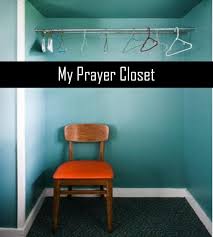
In your KJV, Matthew 6:6 "But thou, when thou prayest, enter into thy closet, and when thou hast shut thy door

It should refer to a private inner room or storeroom, not a small wardrobe for hanging clothes.


In John 3:3, Jesus tells Nicodemus he must be born anothen. The word carries a deliberate double meaning of both "again" and "from above," forcing English translators to pick one or the other.
KJV used 'again'
Catholic translation used 'from above', spiritually!

I care about what it DOES mean
so you should pray actually inside your closet....sola scriptura!!!
prayer-closet.jpeg
 
Last edited:

RLT63

Well-Known Member
Apr 24, 2022
4,566
2,881
113
Montgomery
Faith
Christian
Country
United States
Gender
Male
In your KJV, Matthew 6:6 "But thou, when thou prayest, enter into thy closet, and when thou hast shut thy door

It should refer to a private inner room or storeroom, not a small wardrobe for hanging clothes.
Great. That has absolutely nothing to do with what until means