Israel's Harvest Festivals: A Picture of God's Plan
The scope and sequence of God's redemptive purpose is understood through the harvest festivals God commanded Israel to observe. These were not merely agricultural celebrations or religious formalities. They were prophetic patterns — visible realities designed to point beyond themselves to the fuller story of what God was doing in history. The American Heritage College Dictionary defines a type as “a figure, representation, or symbol of something to come.” Scripture consistently uses such types to unfold divine intention gradually over time. What makes these festivals directly relevant to the question of punishment and redemption is their sequence: they do not end at the firstfruits. They move toward a final, comprehensive ingathering — and that movement maps precisely onto the question of whether God’s redemptive purposes can be understood as complete before all things are gathered in.
The Wave Sheaf: Christ the Firstfruits
The agricultural year began with the wave sheaf offering: the very first portion of the harvest was cut, lifted, and presented to God before any further reaping could occur (Leviticus 23:10). The New Testament identifies this offering unmistakably with Christ: “But now Christ is risen from the dead and has become the firstfruits of those who have fallen asleep” (1 Corinthians 15:20). Jesus is not merely among the firstfruits — He is the first of the firstfruits, the representative Head of a harvest that will ultimately include all who belong to Him. His resurrection is the guarantee that death does not have the final word over humanity. The first sheaf has been lifted; the rest of the harvest must follow.
Pentecost: The Early Harvest of the Firstfruits Community
The Feast of Weeks, known in the New Testament as Pentecost, marked the first major ingathering after the wave sheaf — still a spring harvest, comparatively small, but broader than the single offering. In the New Testament, this festival finds fulfillment in the outpouring of the Spirit and the formation of the believing community. James 1:18 says: “Of His own will He brought us forth by the word of truth, that we should be a kind of firstfruits of His creatures.” The early community of believers is explicitly called firstfruits — not the final harvest. They are the beginning of God's redemptive work, a preview of something much larger yet to come. As the spring harvest in Israel was small and anticipatory, so this early spiritual harvest points forward to a far greater ingathering.
The Feast of Tabernacles: The Great Ingathering
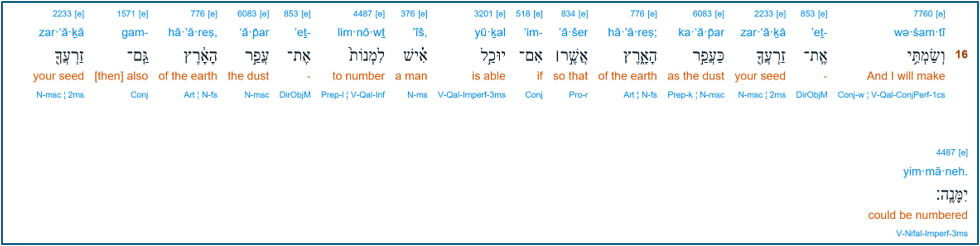
The final harvest festival, Tabernacles or Sukkot, celebrated the full ingathering of all crops at the end of the agricultural year. It was the largest, the most joyful, and the most complete of the three festivals — marked by abundance, rest, and the dwelling of God with His people. Prophetically, Tabernacles points to the culmination of God's redemptive work: “Behold, the tabernacle of God is with men, and He will dwell with them” (Revelation 21:3). Zechariah 14:16 envisions all nations participating in this feast — a detail that reinforces the inclusive scope of God's final harvest. The progression is unmistakable: firstfruits, early harvest, great ingathering. God does not stop at the firstfruits. The harvest is not complete until the final ingathering comes in.
Paul himself appears to invoke precisely this harvest sequence in 1 Corinthians 15:23: “But each in his own order: Christ the firstfruits, after that those who are Christ’s at His coming.” Again… The Greek word for order here — tagma — is a military term for a division or rank, implying a deliberate sequence of distinct groups arriving in succession. Christ is the wave sheaf: the first and representative offering. Those who are His at His coming correspond to the Pentecost ingathering — the firstfruits community. But Paul’s “then comes the end” in verse 24, when all things are subjected and God becomes all in all, points unmistakably toward the great Tabernacles ingathering still to come. The festivals are the architecture of redemption.
The Year of Jubilee: God's Guarantee of Restoration
In addition to the annual festivals stands an even greater symbol: the Year of Jubilee, commanded in Leviticus 25. Every fiftieth year — after seven cycles of seven years — the trumpet was blown on the Day of Atonement, and a comprehensive restoration was declared. All Israelite slaves were released, and all ancestral land was returned to its original family. Debts were cancelled. Every person who had lost their inheritance received it back.
Leviticus 25:10 You shall proclaim liberty throughout all the land to all its inhabitants; it shall be a jubilee for you, when each of you shall return to his property and each of you shall return to his clan.
The Jubilee reveals something essential about the character of God. No loss is permanent. No bondage is final. No inheritance is ultimately denied. Even those who had lost everything through debt, failure, or misfortune were restored — not because they had earned it back, but because the Jubilee was declared. It was an act of grace built into the structure of the year itself. The calendar demanded it.
Isaiah connects Jubilee themes directly to salvation: “To proclaim liberty to the captives... to proclaim the year of the LORD’s favor” (Isaiah 61:1–2). And in Luke 4:18–21, Jesus stands in the synagogue, reads this passage, closes the scroll, and says: “Today this Scripture has been fulfilled in your hearing.” Jesus presents Himself as the ultimate Jubilee — the one in whom all captives are freed, all debts cancelled, all inheritances restored. If the festivals show the process of redemption, the Jubilee reveals its guaranteed outcome: restoration, freedom, and return for all. The harvest culminates in Jubilee, where every loss is healed and every captive released.
The Sovereignty of God and the Certainty of His Purpose
Perhaps the most searching question raised by the traditional doctrine of endless punishment is whether it leaves God's purposes thwarted? If God desires all people to be saved (1 Timothy 2:4), and if vast numbers of people are not saved but are condemned to endless torment, has God failed to accomplish what He desired? The festivals and the Jubilee surveyed above press this question with force. They do not depict a harvest that stops at the firstfruits, nor a Jubilee that exempts some debtors. They depict a God whose redemptive purpose moves through distinct stages toward a comprehensive conclusion. If that typological pattern carries weight, then a doctrine of punishment with no final ingathering and no Jubilee release requires explanation — not merely from the warning texts, but from the overall architecture of how Scripture presents God's purposes in history. Scripture does not leave this question unanswered.
Isaiah 46:10 Declaring the end from the beginning, and from ancient times things which have not been done, saying: My purpose will be established, and I will accomplish all My good pleasure.
Job 42:2 I know that You can do all things, and that no purpose of Yours can be thwarted.
God declares the end from the beginning. He will accomplish all His good pleasure. God declares absolute sovereignty over the outcome of history. Now read them alongside 1 Timothy 2:3–4: God our Savior desires all people to be saved and to come to the knowledge of the truth. 1 Timothy 4:10: God is the Savior of all men, especially of believers.
If God desires all people to be saved, and no purpose of God can be thwarted, and God accomplishes all His good pleasure — then either God does not truly desire all to be saved (which contradicts the explicit text), or God lacks the power to accomplish what He desires (which contradicts His sovereignty). The traditional picture of endless punishment for most of the humanity needs to be reconsidered. These three texts, create a theological pressure that inherited doctrine has not always held open — more often resolving it with liberty that the texts themselves permit.
Romans 11:32 For God has consigned all to disobedience, that He may have mercy on all.
Paul’s climactic statement in Romans 11 is one of the most striking in the New Testament. God has consigned all to disobedience — not as an act of cruelty, but as the condition for His mercy. The same “all” that was consigned to disobedience is the “all” upon whom He will have mercy. Paul follows this immediately with a doxology: “Oh, the depth of the riches both wisdom and knowledge of God! How unsearchable are His judgments and His ways past finding out!” The conclusion that God has opened the door of mercy to all — the very all that fell in disobedience — moves Paul not to careful qualification but to worship.
John 12:32 And I, if I am lifted up from the earth, will draw all men to Myself.
Romans 5:18 As through one transgression there resulted condemnation to all men, even so through one act of righteousness there resulted justification of life to all men.
John 3:17 For God did not send His Son into the world to condemn the world, but in order that the world might be saved through Him.
The scope of the justification is all men — the same all that received condemnation through Adam. God’s purpose in sending His Son was not the condemnation of the world but its salvation. These texts are central, repeated, doxological declarations running through the heart of the New Testament.
Enjoy!