The following is my reasoning of things over all. Except I let an AI format things for me plus rewrite my thoughts in a manner easy to follow, regardless that you might not agree with some of these conclusions or any of them. But at least you can't complain that you couldn't follow what is being proposed and meant throughout. Will have to do the OP in two posts.
-----------------------
Part 1:
It is fascinating to watch Pretribulationists completely bypass direct scripture when their timeline is backed into a corner. When presented with the undeniable textual evidence of Revelation 11 and 13, the standard response is to run away from the text, launch a diversion tactic, and throw out a "one-liner" about the "Days of Noah" or claim "that's just for the Jews."
Let’s slow down, look at the actual reasoning, and walk through the scriptures in the exact order they are written. When you harmonize Revelation 11, Revelation 13, Matthew 24, and Luke 17, the Pretrib timeline completely collapses under its own logical contradictions.
1. The Reality of "Peace and Safety" During the Tribulation
Pretribulationists vehemently claim that 1 Thessalonians 5:3 ("When they say, 'Peace and safety!' then sudden destruction comes upon them") must describe a normal, prosperous world before the 7-year tribulation begins. They argue that the Tribulation is a period of non-stop, total global chaos that would make a mindset of "peace and safety" impossible.
But the text of Revelation completely obliterates this assumption. Look at Revelation 11:8–10:
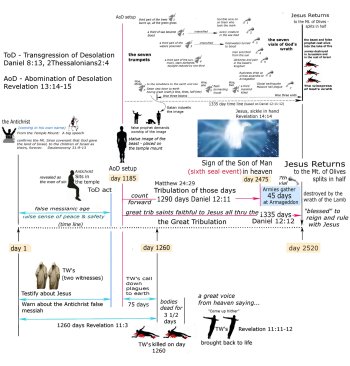
The Two Witnesses are killed by the Beast. The text explicitly states: "And they that dwell upon the earth shall rejoice over them, and make merry, and shall send gifts one to another; because these two prophets tormented them that dwelt on the earth."
Consider the mechanics of this passage:
• The Global Euphoria: The wicked world is experiencing a global, synchronized celebration. Why? Because the tormenting plagues brought by God's prophets have stopped. The global population feels a profound sense of relief, security, and triumph. They are literally experiencing a state of "peace and safety."
• The Economic Infrastructure: If the planet had already been utterly obliterated by God's total, final wrath during the early seals and trumpets, how is the global population still operating an economy stable enough to ship gifts to one another worldwide?
• The Pretrib Dilemma: Pretribulationists place the death of the Two Witnesses right at the midpoint of the 7 years—long after their supposed rapture. Therefore, by their own timeline, a global state of "peace and safety" and merry-making occurs inside the Tribulation.
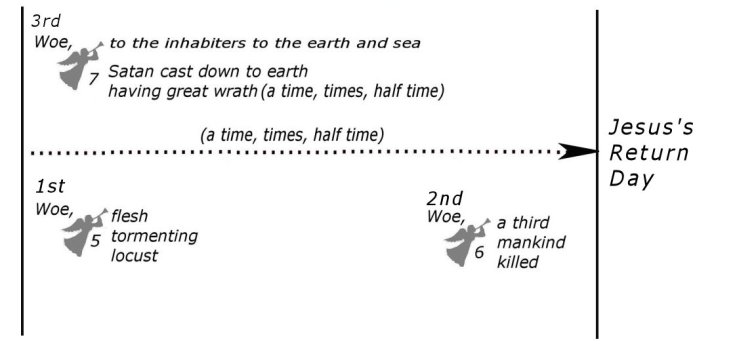
• The Sudden Destruction: Immediately after this global celebration (v. 11-19), the Two Witnesses are resurrected, a massive earthquake strikes, the 7th Trumpet sounds, and the final, catastrophic Bowl judgments of God’s actual wrath begin. This is the exact definition of "then sudden destruction comes upon them" from 1 Thessalonians 5:3.
2. The Fallacy of the "Days of Noah" Argument
When cornered on this, Pretribulationists will pivot to Matthew 24 or Luke 17 and say, "But Jesus said before the flood there is normal life, marriage, commerce, and everyday life... therefore His coming must be Pretrib!"
This argument completely backfires for two reasons:
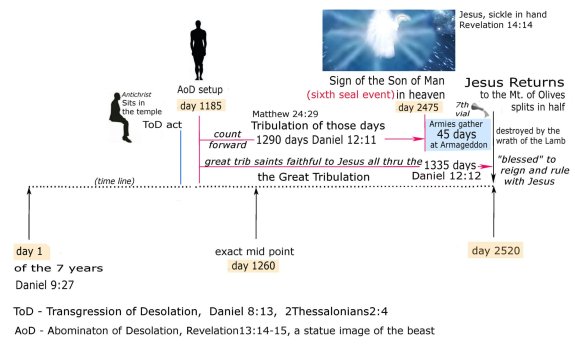
First, Jesus explicitly establishes the chronology in Matthew 24:29-37. In verse 29, He says: "Immediately after the tribulation of those days..." Then, in verse 30, He says the sign of the Son of Man will appear. Only after stating this does He say in verse 37: "But as the days of Noah were, so also will the coming of the Son of Man be." Jesus does not place the days of Noah before the tribulation; He places the comparison after it.
Second, this "normal life" perfectly matches the Revelation 13 economic system. The world worshiping the Beast is buying, selling, eating, drinking, and building an empire (Rev 13:17).
For the wicked, life continues in its ungodly normalcy right up until the day the final wrath hits them, just like in the days of Noah and Lot. They are saying "peace and safety" in their wicked normalcy, completely blind to the fact that sudden destruction is coming right after the tribulation ends.
-----------------------
Part 1:
It is fascinating to watch Pretribulationists completely bypass direct scripture when their timeline is backed into a corner. When presented with the undeniable textual evidence of Revelation 11 and 13, the standard response is to run away from the text, launch a diversion tactic, and throw out a "one-liner" about the "Days of Noah" or claim "that's just for the Jews."
Let’s slow down, look at the actual reasoning, and walk through the scriptures in the exact order they are written. When you harmonize Revelation 11, Revelation 13, Matthew 24, and Luke 17, the Pretrib timeline completely collapses under its own logical contradictions.
1. The Reality of "Peace and Safety" During the Tribulation
Pretribulationists vehemently claim that 1 Thessalonians 5:3 ("When they say, 'Peace and safety!' then sudden destruction comes upon them") must describe a normal, prosperous world before the 7-year tribulation begins. They argue that the Tribulation is a period of non-stop, total global chaos that would make a mindset of "peace and safety" impossible.
But the text of Revelation completely obliterates this assumption. Look at Revelation 11:8–10:
The Two Witnesses are killed by the Beast. The text explicitly states: "And they that dwell upon the earth shall rejoice over them, and make merry, and shall send gifts one to another; because these two prophets tormented them that dwelt on the earth."
Consider the mechanics of this passage:
• The Global Euphoria: The wicked world is experiencing a global, synchronized celebration. Why? Because the tormenting plagues brought by God's prophets have stopped. The global population feels a profound sense of relief, security, and triumph. They are literally experiencing a state of "peace and safety."
• The Economic Infrastructure: If the planet had already been utterly obliterated by God's total, final wrath during the early seals and trumpets, how is the global population still operating an economy stable enough to ship gifts to one another worldwide?
• The Pretrib Dilemma: Pretribulationists place the death of the Two Witnesses right at the midpoint of the 7 years—long after their supposed rapture. Therefore, by their own timeline, a global state of "peace and safety" and merry-making occurs inside the Tribulation.
• The Sudden Destruction: Immediately after this global celebration (v. 11-19), the Two Witnesses are resurrected, a massive earthquake strikes, the 7th Trumpet sounds, and the final, catastrophic Bowl judgments of God’s actual wrath begin. This is the exact definition of "then sudden destruction comes upon them" from 1 Thessalonians 5:3.
2. The Fallacy of the "Days of Noah" Argument
When cornered on this, Pretribulationists will pivot to Matthew 24 or Luke 17 and say, "But Jesus said before the flood there is normal life, marriage, commerce, and everyday life... therefore His coming must be Pretrib!"
This argument completely backfires for two reasons:
First, Jesus explicitly establishes the chronology in Matthew 24:29-37. In verse 29, He says: "Immediately after the tribulation of those days..." Then, in verse 30, He says the sign of the Son of Man will appear. Only after stating this does He say in verse 37: "But as the days of Noah were, so also will the coming of the Son of Man be." Jesus does not place the days of Noah before the tribulation; He places the comparison after it.
Second, this "normal life" perfectly matches the Revelation 13 economic system. The world worshiping the Beast is buying, selling, eating, drinking, and building an empire (Rev 13:17).
For the wicked, life continues in its ungodly normalcy right up until the day the final wrath hits them, just like in the days of Noah and Lot. They are saying "peace and safety" in their wicked normalcy, completely blind to the fact that sudden destruction is coming right after the tribulation ends.