Unlocking Ezekiel 28

  • Welcome to Christian Forums, a Christian Forum that recognizes that all Christians are a work in progress.

    You will need to register to be able to join in fellowship with Christians all over the world.

    We hope to see you as a part of our community soon and God Bless!

Hiddenthings

Well-Known Member
May 19, 2025
3,777
415
83
Leeton NSW
Faith
Christian
Country
Australia
Agreed.

I think you missed on this bit.

I find the "guardian cherub" of v.14 to be a callback to the story in Genesis 3, where God stationed a cherub with a flaming sword at the entrance of Eden, to prevent Adam and Eve from returning to the Garden. That doesn't come out of the blue, as the verse immediately preceding puts the Garden of Eden in the immediate context:

13 Thou hast been in Eden the garden of God

Providing you understand this symbol is not historical Eden but rather what Eden represented and signified to the King of Tyre.

I would suggest the holy mountain here is not Mt. Zion, but rather Mt. Hermon.

Evidence?

The king of Tyre did not visit Jerusalem. He sent craftsmen. He exported wood. He never saw Solomon's Temple. This is an argument from silence - if he had visited, the event would have been notable enough to be recorded.

Where did I say? You might be confused again by the symbol. The King (and his representatives) did trade within Israel.

You understand this, right?

He definitely visited Mt. Hermon. Not only does it lie within Tyre's territory, it's the single most important strategical site within it. There was a fortress there. It was also the seat of two different cults. My source in this paragraph is archaeology rather than the Bible.

I think you are looking at this too literally. The symbols speak to those things God allowed the King to do within the boundaries of Israel

You have it backwards - the Israelites were within the Phoenician's sphere of influence.

Not so - the protection was from God - He did the anointing! The whole chapter is about the removal of this protection both of Tyre and the King.

Before Israel ever existed, Phoenicia was the world's first sea-faring power. They invented navigation that didn't require staying within sight of the shore, and leveraged that to make themselves literally wealthy. They invented Phonetic language. They colonized the islands of the Mediterranean, the coast of North Africa (Carthage), and even sailed across the Atlantic. Artifacts of their civilization have been found alongside Native American relics in North America.

This has no relevance to the chapter. The prophecy focuses solely on what God permitted, Tyre’s prosperity through trade with Israel was allowed by God, but only up to a point (his pride). When that favor ended, so did their success.

God always acts according to his promise (bless or curse).

All of that would have been the case around the time of David, Moses, and Abraham. But by the time of the time of the writing of Ezekiel, they were in decline. The Hittite empire was encroaching from the north, Pharoah had ridden north and exacted tribute from most of the Canaanite city-states, and the Assyrians were pushing into the Beqaa.

These 2 paragraphs are based on reconstructed history and archaeology; not the Bible.

One thing we can say from the Bible - the temple was full of engravings of cherubim, and the cherub is the symbol of the king of Tyre.

Agreed.

Yes, mostly. All kings are angels of a sort. Not divine angels, but angels nonetheless.

I look forward to your next post.
The symbols of the garden, the cherubim, and the high priest’s breastplate all point to the divine privilege the king was granted to engage in trade within Israel’s borders.

There isn’t a single word or shred of evidence in this chapter that supports fallen angel theology. The context aligns entirely with the historical account of Tyre and its interactions with Israel.

More to come...
 

Hiddenthings

Well-Known Member
May 19, 2025
3,777
415
83
Leeton NSW
Faith
Christian
Country
Australia
@Wick Stick

Now to deepen our thoughts on this chapter.

It's clear by the intimate language used in this Chapter the King held a very close relationship not only with Israel but with Gid himself. The chapter is extremely personal.

I wonder if the king of Tyre may have been a Jew—or perhaps regarded as so closely aligned with Israel that he was seen as a kind of proselyte?

There are several reasons for raising this question, and an important lesson we can draw if that were the case.

God says, “You shall die the death of the uncircumcised at the hand of foreigners (Ezek. 28:10).

If the king of Tyre were already an uncircumcised Gentile, such a statement would seem unnecessary.

In Ezekiel 36:35, God describes the land of Israel as “like the garden of Eden.” Of the king of Tyre, He says, “You were in Eden (Israel), the garden of God” (Ezek. 28:13), which is symbolic of his place within the blessings of Israel.

He is also said to be adorned with nine of the twelve stones found on the high priest’s breastplate (compare Ezek. 28:13 with Exod. 39:10–14). This may imply a connection to the priesthood, possibly even from the tribe of Levi.

In verse 14, God says, “You were an anointed guardian cherub, for so I ordained you.” This too carries strong priestly overtones, suggesting a divinely appointed role of spiritual responsibility.

He is described as having been “on the holy mountain of God” (v. 14), which Ezekiel 20:40 identifies as “the high mountain of Israel.” This again places the king within a sacred, covenantal context rather than a foreign one.

The phrase “you walked among the fiery stones” (v. 14) allude's to the stones in the high priest’s breastplate, each representing a tribe of Israel and signifying proximity to God's glory and presence.

The fact that he (and his people) were able to do this in Israel was a significant blessing not afforded to just anyone or any country.

Finally, in verse 16, God says, “You sinned.” This could suggest that the king had knowledge of God's law, which makes his transgression more serious.

If the king of Tyre was indeed a Jew (or adopted) especially one holding a priestly office it helps explain the severity and specificity of the judgment pronounced against him. The principle here aligns with Jesus’ words: “That servant who knew his master’s will but did not get ready or act according to his will, will receive a severe beating... Everyone to whom much was given, of him much will be required” (Luke 12:47–48, ESV).

Now Wick, some of these points I am not dogmatic on and will not be defending - these are posted merely for consideration points and if you ask for evidence on some of these I could not provide.

What I can say with confidence is that the text and its context are entirely focused on the King of Tyre. The lament is not a hidden origin story or a veiled reference to a cosmic rebellion, it’s a direct message, written primarily for the benefit of Israel. It served as a warning: if God would bring such severe judgment upon a foreign king for pride and corruption, how much more would He hold His own people accountable if they continued in their disobedience?
 

Hiddenthings

Well-Known Member
May 19, 2025
3,777
415
83
Leeton NSW
Faith
Christian
Country
Australia
1. Ezekiel 28:1–10 — A Prophecy Against the Prince of Tyre:

This section presents a direct indictment against the ruler of Tyre, addressing his arrogance and false claims to divinity.


2. Verses 1–5 — The Prince's Claim to Divinity:

The ruler of Tyre boasts of his greatness and wisdom, exalting himself to the level of a deity.


3. Verse 2 — Pride and Divine Pretensions:

The prince claims, “I am a god; I sit in the seat of the gods,” yet God counters that he is merely a man (Heb. adam). Similar themes of self-exaltation appear in other passages (Dan. 4:17, 30–33; Isa. 14:13–16; 2 Thess. 2:3–4; Rev. 17:2–6, 9).


4. Verse 5 — Wealth and Pride:

His heart was lifted up because of his riches, showing how material gain led to arrogance (Prov. 6:16–17; 1 Tim. 6:10).


5. Verses 6–10 — Yahweh’s Judgment on the Prince:

God warns that the prince will fall by the hands of foreigners, his mortality laid bare despite his divine claims.


6. Verse 9 — Death Will Expose His Humanity:

God asks rhetorically whether the prince will still claim to be a god when confronted by his executioners. This desire to become divine echoes the temptation in Eden (Gen. 3:5).

7. Ezekiel 28:11–19 — A Lament for the King of Tyre:

This poetic lament shifts focus slightly in tone, describing the rise and fall of Tyre in symbolic and exalted terms.


8. Verses 11–15 — Tyre’s Idealized Beginning:

The imagery portrays the King of Tyre as once being perfect and privileged, much like Eden’s ideal state.


9. Verse 12 — King vs. Prince of Tyre?:

Both titles as referring to the same individual ruler under different roles.

10. Verse 13 — Precious Stones and Priestly Allusions:

The description of adorned stones recalls the high priest’s breastplate (Exod. 28:15–21). Notably, three of the twelve stones in the KJV list—ligure, agate, and amethyst—are absent, while the Septuagint retains all twelve. A similar use of gemstones appears in Revelation 17:4 with an apostate woman.

11. Verses 13–15 — Eden and Symbolic Imagery:

There’s no mention of Satan, a devil, or a fallen angel here. The Eden reference serves a symbolic purpose just as Adam and Eve were created and fell, so too did Tyre. Tyre’s strong relationship with Israel brought blessing (Gen. 12:3; 2 Sam. 24:7–9; 1 Kings 5:1–10), but its corruption led to downfall. Ezekiel 31 uses similar Edenic imagery to describe Pharaoh, further reinforcing symbolic, not literal, meaning (Ezek. 31:2–3, 8–9, 16, 18). Trees likely symbolize nations (cf. Gen. 10; Exod. 15:27).

12. Verses 16–19 — Tyre’s Sin and Judgment:

13. Verse 16 — “Violence” and Unjust Gain:


The Hebrew word ḥāmās (violence) can also denote greed or unjust trade practices.

14. Verse 17 — Pride Corrupted Wisdom:

The king’s wisdom was perverted through pride, leading to his moral and spiritual fall.

15. Verse 18 — Defilement of Sanctuaries:

Dishonest trade and iniquity desecrated Tyre’s sacred spaces. The city's downfall was as much spiritual as it was political and economic.
 

Hiddenthings

Well-Known Member
May 19, 2025
3,777
415
83
Leeton NSW
Faith
Christian
Country
Australia
16. Ezekiel 28:20–23 — Prophecy Against Zidon:

This section pronounces judgment on Zidon, a prominent city of Phoenicia, highlighting its guilt and forthcoming punishment.

17. Zidon’s Origins — Genesis 10:15, 19:

Zidon was a descendant of Ham through Canaan, his firstborn, placing it among the early Canaanite nations.

18. Zidon and Israel — Joshua 19:24–28; Judges 1:31–32; 3:1–7:

Israel failed to drive out the inhabitants of Zidon during the conquest and later fell into the worship of their gods, contributing to their spiritual decline.

19. Historical Conflicts Involving Zidon:
  • Zidon aided Babylon in its attack on Jerusalem.
  • In 351 BC, Zidon revolted against the Persian Empire. When besieged, many chose death over submission.
  • During the Crusades, Muslim armies captured the city three times.
  • In 1840, Zidon was bombarded by British, French, and Turkish fleets.
20. Ezekiel 28:24–26 — Judgment on Surrounding Nations and Israel’s Peace:

After God executes judgment on Israel’s hostile neighbors, peace and restoration will come to Israel.

21. Verse 24 — Recognition of God’s Sovereignty:

God declares that the nations will know that He is the Lord when He removes their threats and judgments.

22. Verse 25; Compare with 38:12 — Israel Regathered:

God promises to gather the house of Israel from the nations where they were scattered and bring them back to the land given to Jacob.

What was once desolate will become inhabited again.

23. Verse 26; Compare with 38:8 — Israel Will Dwell in Safety:

The people will live securely in their land in the latter years, free from threats and danger.

24. Verse 26; Compare with 38:12 — Restoration of Daily Life:

The people will rebuild their homes, plant vineyards, and acquire livestock and goods—signs of peace and prosperity.

25. Verse 26; Compare with 38:11; 39:22 — Confidence and Divine Presence:

Israel will dwell confidently, without walls, and will recognize God’s hand in their protection and restoration. From that day forward, they will know that Yahweh is their God.

This outline highlights how Ezekiel 28 not only focuses on the judgment of Tyre and Zidon but ultimately points forward to Israel’s restoration, peace, and renewed relationship with God.

Nothing in this chapter has anything to do with a fallen angel, war in heaven or any supernatural phenomena.
 

Brakelite

Well-Known Member
Feb 6, 2020
10,877
7,253
113
Melbourne
brakelite.wordpress.com
Faith
Christian
Country
Australia
Gender
Male
All your arguments, whether you think they are biblical or not, fall flatter than last week's road kill, when you consider the stark reality of the life and death struggles people experience in the third world as a direct result of occult curse and witchdoctor Voodoo. Many people's have lived under those bondages for centuries. And even in the western world, now and again the supernatural becomes evident when personal experience harmonizes with the scriptures you are so determined to undermine and deny.
Go and do summer genuine mission work in the Caribbean. Or India. Or Africa. Or even in your own backyard at the local indigenous village. See how long it is before you witness some genuine spiritual supernatural opposition, and stop calling those who have witnessed these things liars, or deceived.
 

Hiddenthings

Well-Known Member
May 19, 2025
3,777
415
83
Leeton NSW
Faith
Christian
Country
Australia
All your arguments, whether you think they are biblical or not, fall flatter than last week's road kill
That has to be one of the most irrelevant posts I’ve seen since joining. What was the point? Do you honestly think that adds value? You could’ve posted it anywhere—it doesn't even engage with the topic. Ironically, its lack of substance only reinforces how strong the contextual interpretation of this chapter actually is. I've seen your work and this far from your standard.
 

Hiddenthings

Well-Known Member
May 19, 2025
3,777
415
83
Leeton NSW
Faith
Christian
Country
Australia
For clarity and ease of reference, here is (a link) the sound interpretation of Ezekiel 28. It only serves to highlight how severely this chapter has been misused by those led more by human imagination than by Scripture, particularly in promoting the unfounded idea of a fallen angel.

Unlocking Ezekiel 28
 

Wick Stick

Well-Known Member
Sep 21, 2023
2,424
1,486
113
46
Phoenix
Faith
Christian
Country
United States
Providing you understand this symbol is not historical Eden but rather what Eden represented and signified to the King of Tyre.
There's no history in that period. But Eden is a real geographical place, anyway.
Evidence?
Uh... already given. Granted it's an argument from silence, so not a proof. But logically sound anyway.
Where did I say? You might be confused again by the symbol. The King (and his representatives) did trade within Israel.

You understand this, right?
Yes, not only did they trade within Israel, but Solomon gave a few cities of northern Israel to Hiram, in exchange for a few cities of Hiram's. But Hiram never went south to Judea. He stayed in the north - in Canaan and Israel. He did not walk on the temple mount.
This has no relevance to the chapter. The prophecy focuses solely on what God permitted, Tyre’s prosperity through trade with Israel was allowed by God, but only up to a point (his pride). When that favor ended, so did their success.

God always acts according to his promise (bless or curse).
Disagree. The Phoenicians success at mercantile trading is very much part of the chapter.
The symbols of the garden, the cherubim, and the high priest’s breastplate all point to the divine privilege the king was granted to engage in trade within Israel’s borders.
I wonder if you could identify Israel's borders during Solomon's reign. How about during Ezekiel's lifetime? Could you give me the borders of Canaan? Egypt? How is your geography?
There isn’t a single word or shred of evidence in this chapter that supports fallen angel theology. The context aligns entirely with the historical account of Tyre and its interactions with Israel.
Still depends on how you define 'angel.'
 

Hiddenthings

Well-Known Member
May 19, 2025
3,777
415
83
Leeton NSW
Faith
Christian
Country
Australia
Disagree. The Phoenicians success at mercantile trading is very much part of the chapter.
Sits behind the scenes as part of the problem, yes.
I wonder if you could identify Israel's borders during Solomon's reign. How about during Ezekiel's lifetime? Could you give me the borders of Canaan? Egypt? How is your geography?

Still depends on how you define 'angel.'
1753854834935.png
 

Hiddenthings

Well-Known Member
May 19, 2025
3,777
415
83
Leeton NSW
Faith
Christian
Country
Australia
Still depends on how you define 'angel.'
The Greek word angelos, translated “angel,” simply means “messenger” or “agent,” and is used for both human and divine messengers. Examples of its use for humans include: Matthew 11:10; Luke 7:24, 27; 9:52; and James 2:25.

Human messengers with flesh and blood nature (wages of sin is death)
Angelic massagers with divine nature (cannot sin or die)

Anything outside of the Biblical parameters must be seriously weighed against the evidence.
 
  • Like
Reactions: Wick Stick

Wick Stick

Well-Known Member
Sep 21, 2023
2,424
1,486
113
46
Phoenix
Faith
Christian
Country
United States
It's clear by the intimate language used in this Chapter the King held a very close relationship not only with Israel but with Gid himself. The chapter is extremely personal.

I wonder if the king of Tyre may have been a Jew—or perhaps regarded as so closely aligned with Israel that he was seen as a kind of proselyte?
You still have it backwards.

Solomon was NOT a righteous king. He's listed among the evil kings in the Bible, and the 2 reasons given for that are (1) that he tolerated and built the high places, and (2) that he allowed all his foreign wives to drag him into the worship of their gods.

The case is not that Solomon influenced the king of Tyre, but the other way round. The Phoenicians gave multiple wives to Solomon - this was the regular way of cementing a treaty in the Bronze Age. Those wives led him into the worship of the Canaanite gods. 1Kings 11:

6 Solomon did evil in the sight of the LORD, and went not fully after the LORD, as [did] David his father. 7 Then did Solomon build an high place for Chemosh, the abomination of Moab, in the hill that [is] before Jerusalem, and for Molech, the abomination of the children of Ammon. 8 And likewise did he for all his strange wives, which burnt incense and sacrificed unto their gods.
There are several reasons for raising this question, and an important lesson we can draw if that were the case.

God says, “You shall die the death of the uncircumcised at the hand of foreigners (Ezek. 28:10).

If the king of Tyre were already an uncircumcised Gentile, such a statement would seem unnecessary.
The Israelites weren't the only people who practiced circumcision. Moses had completely forgotten the covenant of circumcision given to Abraham. His wife had to remind him. She wasn't even an Israelite; she was an Edomite - not of the promise but descended from Abraham nonetheless. (Exodus 4)

Also, the term 'Gentile' (Goyim) refers to the descendants of Japheth. (Gen 10:2-5) The king of Tyre is not a Goy. He's descended from Ham; he's a Hamathite.
In Ezekiel 36:35, God describes the land of Israel as “like the garden of Eden.” Of the king of Tyre, He says, “You were in Eden (Israel), the garden of God” (Ezek. 28:13), which is symbolic of his place within the blessings of Israel.
Eden is not a synonym for Israel. Eden is in Lebanon, per Eze 31:16:

I made the nations to shake at the sound of his fall, when I cast him down to hell with them that descend into the pit: and all the trees of Eden, the choice and best of Lebanon, all that drink water, shall be comforted in the nether parts of the earth.

Was Israel promised that territory? Yes.
Did they ever possess it? No.
Was the king of Tyre literally in that territory? Yes.
He is also said to be adorned with nine of the twelve stones found on the high priest’s breastplate (compare Ezek. 28:13 with Exod. 39:10–14). This may imply a connection to the priesthood, possibly even from the tribe of Levi.
Archaeology and chronology rules that out. The King of Tyre exists before Levi. (He exists before Abraham, for that matter). If he is a priest, he's not a priest of Yahweh. At the end, his gods were Baal and Dagon. Before that, he worshiped the true god under the name EL. He was counted among the ELOHIM - the adopted sons of EL.
In verse 14, God says, “You were an anointed guardian cherub, for so I ordained you.” This too carries strong priestly overtones, suggesting a divinely appointed role of spiritual responsibility.
No, guardian cherub has military overtones, not priestly. Cherub literally means "one who fights."
He is described as having been “on the holy mountain of God” (v. 14), which Ezekiel 20:40 identifies as “the high mountain of Israel.” This again places the king within a sacred, covenantal context rather than a foreign one.
You ever been to Israel? Jerusalem contains no high mountains. Mt Moriah - aka Mt Zion - is more of a hill than a mountain. It's THE holy hill, but a hill nonetheless.

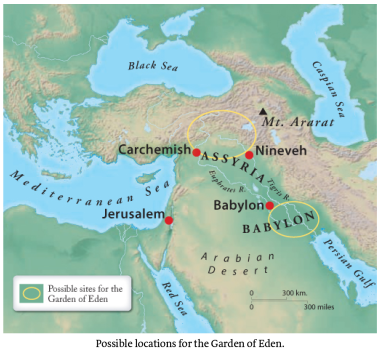
Mt Harmon, by contrast, is the highest mountain within Israel, and higher than any in Syria, Jordan, Lebanon, or anywhere else for hundreds of miles. The closest higher mountain is Ararat in modern-day Turkey, which is quite a way off.
The phrase “you walked among the fiery stones” (v. 14) allude's to the stones in the high priest’s breastplate, each representing a tribe of Israel and signifying proximity to God's glory and presence.

The fact that he (and his people) were able to do this in Israel was a significant blessing not afforded to just anyone or any country.
Agreed.
Finally, in verse 16, God says, “You sinned.” This could suggest that the king had knowledge of God's law, which makes his transgression more serious.
My view is that the Law was known well before Moses. Moses restored the Law to the Israelites - they had lost it during their time in "Egypt." That isn't in the Bible per se, but it's suggested in the multiple passages in Exodus, Numbers, and Deuteronomy where Israel shows familiarity with Egypt's culture, and ignorance of Abraham's covenant.
If the king of Tyre was indeed a Jew (or adopted) especially one holding a priestly office it helps explain the severity and specificity of the judgment pronounced against him. The principle here aligns with Jesus’ words: “That servant who knew his master’s will but did not get ready or act according to his will, will receive a severe beating... Everyone to whom much was given, of him much will be required” (Luke 12:47–48, ESV).
Chronology is a bear. Tyre exists before Judah. There are no Jews when Tyre enters the picture and no Israel either.
Now Wick, some of these points I am not dogmatic on and will not be defending - these are posted merely for consideration points and if you ask for evidence on some of these I could not provide.
No worries. I'm strong on history, and better versed in archaeology in the ANE than most.
What I can say with confidence is that the text and its context are entirely focused on the King of Tyre.
Yes they are.
The lament is not a hidden origin story...
It includes references to an origin story. It's not Israel's - it belongs to Edom. Still, the OT is the history of Israel AND Edom - the beloved and the hated.
...or a veiled reference to a cosmic rebellion,
Agree - that's definitely not part of the text.
it’s a direct message, written primarily for the benefit of Israel. It served as a warning: if God would bring such severe judgment upon a foreign king for pride and corruption, how much more would He hold His own people accountable if they continued in their disobedience?
No argument here.
 

Hiddenthings

Well-Known Member
May 19, 2025
3,777
415
83
Leeton NSW
Faith
Christian
Country
Australia
You still have it backwards.

Solomon was NOT a righteous king. He's listed among the evil kings in the Bible, and the 2 reasons given for that are (1) that he tolerated and built the high places, and (2) that he allowed all his foreign wives to drag him into the worship of their gods.

The case is not that Solomon influenced the king of Tyre, but the other way round. The Phoenicians gave multiple wives to Solomon - this was the regular way of cementing a treaty in the Bronze Age. Those wives led him into the worship of the Canaanite gods. 1Kings 11:

6 Solomon did evil in the sight of the LORD, and went not fully after the LORD, as [did] David his father. 7 Then did Solomon build an high place for Chemosh, the abomination of Moab, in the hill that [is] before Jerusalem, and for Molech, the abomination of the children of Ammon. 8 And likewise did he for all his strange wives, which burnt incense and sacrificed unto their gods.
I’m not going to be dogmatic about this one, it’s been a contentious topic for generations and has even divided families.
The Israelites weren't the only people who practiced circumcision. Moses had completely forgotten the covenant of circumcision given to Abraham. His wife had to remind him. She wasn't even an Israelite; she was an Edomite - not of the promise but descended from Abraham nonetheless. (Exodus 4)
Agree.
Also, the term 'Gentile' (Goyim) refers to the descendants of Japheth. (Gen 10:2-5) The king of Tyre is not a Goy. He's descended from Ham; he's a Hamathite.
Yes, more than likely from Caanan.
Eden is not a synonym for Israel. Eden is in Lebanon, per Eze 31:16:

I made the nations to shake at the sound of his fall, when I cast him down to hell with them that descend into the pit: and all the trees of Eden, the choice and best of Lebanon, all that drink water, shall be comforted in the nether parts of the earth.

Was Israel promised that territory? Yes.
Did they ever possess it? No.
Was the king of Tyre literally in that territory? Yes.
Agree
No, guardian cherub has military overtones, not priestly. Cherub literally means "one who fights."

The Cherub is a massive study in itself and a rabbit hole we can go down later.

I understand the term to originate from the Hebrew root rachav, meaning “to ride,” whether it refers to riding an animal or a vehicle. By rearranging the first two letters and inserting a waw (ו) before the final letter, we arrive at cherub, which can be interpreted as “that which is ridden.” In the plural, this becomes cherubim. This transformation from the verb rachav to the noun cherub is exemplified in Psalm 18:10.

First is just one aspect of this Angelic Manifestation - Studied this for over 30 years and have a lot of material to share (another thread!)

You ever been to Israel? Jerusalem contains no high mountains. Mt Moriah - aka Mt Zion - is more of a hill than a mountain. It's THE holy hill, but a hill nonetheless.

Mt Harmon, by contrast, is the highest mountain within Israel, and higher than any in Syria, Jordan, Lebanon, or anywhere else for hundreds of miles. The closest higher mountain is Ararat in modern-day Turkey, which is quite a way off.
Again, I won’t be dogmatic about it—the main point is that it refers to a mountain, and within the symbolic context, it represents the King’s privileged position in enjoying God’s blessing through trade with Israel.

Agreed.

My view is that the Law was known well before Moses. Moses restored the Law to the Israelites - they had lost it during their time in "Egypt." That isn't in the Bible per se, but it's suggested in the multiple passages in Exodus, Numbers, and Deuteronomy where Israel shows familiarity with Egypt's culture, and ignorance of Abraham's covenant.
I'd be interested here your thoughts on this (maybe another thread)
Chronology is a bear. Tyre exists before Judah. There are no Jews when Tyre enters the picture and no Israel either.
Agree
No worries. I'm strong on history, and better versed in archaeology in the ANE than most.

Yes they are.

It includes references to an origin story. It's not Israel's - it belongs to Edom. Still, the OT is the history of Israel AND Edom - the beloved and the hated.

Agree - that's definitely not part of the text.

No argument here.
Thanks
 
Last edited:

Brakelite

Well-Known Member
Feb 6, 2020
10,877
7,253
113
Melbourne
brakelite.wordpress.com
Faith
Christian
Country
Australia
Gender
Male
That has to be one of the most irrelevant posts I’ve seen since joining. What was the point? Do you honestly think that adds value? You could’ve posted it anywhere—it doesn't even engage with the topic. Ironically, its lack of substance only reinforces how strong the contextual interpretation of this chapter actually is. I've seen your work and this far from your standard.
You seem to have a habit of extracting one small part and, wrenching it out of context, turning it into a strawman, and ignoring the rest of the response. Can't discuss things with you seeing that is your attitude. Bye.
 

Hiddenthings

Well-Known Member
May 19, 2025
3,777
415
83
Leeton NSW
Faith
Christian
Country
Australia
You seem to have a habit of extracting one small part and, wrenching it out of context, turning it into a strawman, and ignoring the rest of the response. Can't discuss things with you seeing that is your attitude. Bye.
It seems like your approach is to avoid engaging directly with the Scriptures, letting them speak for themselves. So far, your posts haven’t offered any real substance, no insight, no argument, just meaningless opinions. As I mentioned earlier, this doesn’t seem like your usual approach. Either something in this thread has stirred your conscience and you're finding it difficult to work through, or you simply don’t have any meaningful contextual insights to contribute.

Looking back, I think even you might come to see that your first post added little more than noise to the discussion.
 

Hiddenthings

Well-Known Member
May 19, 2025
3,777
415
83
Leeton NSW
Faith
Christian
Country
Australia
@Wick Stick, would it be fair to say that, so far, the idea of a fallen angel origin story isn’t supported in Ezekiel 28? Throughout our discussion, I haven’t seen any clear indication that such a concept is present.

Another issue I've noticed is that believers have to impose a secondary meaning on the text, as nowhere in the Bible does the primary context actually refer to this figure.
 

Wick Stick

Well-Known Member
Sep 21, 2023
2,424
1,486
113
46
Phoenix
Faith
Christian
Country
United States
@Wick Stick, would it be fair to say that, so far, the idea of a fallen angel origin story isn’t supported in Ezekiel 28? Throughout our discussion, I haven’t seen any clear indication that such a concept is present.

Another issue I've noticed is that believers have to impose a secondary meaning on the text, as nowhere in the Bible does the primary context actually refer to this figure.
The idea of a human leader apostatizing is in there. For me the nomenclature "fallen angel" fits to describe that.

We basically agree on the content of the chapter. We have some disagreement on semantics
 

Hiddenthings

Well-Known Member
May 19, 2025
3,777
415
83
Leeton NSW
Faith
Christian
Country
Australia
The idea of a human leader apostatizing is in there. For me the nomenclature "fallen angel" fits to describe that.

We basically agree on the content of the chapter. We have some disagreement on semantics
Nice word!

You've shown me the courtesy of hearing me out, and the least I can do is return the favor.

As I see it, there is no contextual basis for a fallen angel narrative in this passage, nor any connection between such a being and the King of Tyre. The king chose his own path to destruction by his own free will, and it is he, not an angel whom God directly judges.

I'm ready and willing for you to show me your insights anytime - enjoyed the discussion even the semantics!
 
  • Like
Reactions: Wick Stick

Hiddenthings

Well-Known Member
May 19, 2025
3,777
415
83
Leeton NSW
Faith
Christian
Country
Australia
Another important point to consider is that there was a time when Tyre was truly faithful, remarkably so, it seems. This makes its eventual turning away all the more serious in God's eyes. Notably, the downfall is not attributed to any angelic influence, but to the king’s (and peoples) own nature and greed.

Ezekiel 28:14–16 (ESV) 14 You were an anointed guardian cherub. I placed you; you were on the holy mountain of God; in the midst of the stones of fire you walked. 15 You were blameless in your ways from the day you were created, till unrighteousness was found in you.
16 In the abundance of your trade you were filled with violence in your midst, and you sinned; so I cast you as a profane thing from the mountain of God, and I destroyed you, O guardian cherub, from the midst of the stones of fire.

Compare

Hebrews 6:4–6 (ESV) 4 For it is impossible, in the case of those who have once been enlightened, who have tasted the heavenly gift, and have shared in the Holy Spirit, 5 and have tasted the goodness of the word of God and the powers of the age to come,
6 and then have fallen away, to restore them again to repentance, since they are crucifying once again the Son of God to their own harm and holding him up to contempt.

It's unfortunate that the warning in Ezekiel 28 is overlooked by Christians, as their attention is too narrowly focused on the idea of a so-called fallen angel.

Unfortunately, I believe this warning captures a wider audience than the doctrines of devils and satan.
 

Wick Stick

Well-Known Member
Sep 21, 2023
2,424
1,486
113
46
Phoenix
Faith
Christian
Country
United States
Another important point to consider is that there was a time when Tyre was truly faithful, remarkably so, it seems. This makes its eventual turning away all the more serious in God's eyes. Notably, the downfall is not attributed to any angelic influence, but to the king’s (and peoples) own nature and greed.
This seems to be the case for ALL the Canaanites. Archaeology shows that the Canaanites originally worshiped EL as their chief god (though they were never quite monotheists). At some point, Baal supplanted God as their most popular deity.

Have you ever read on Ugarit? It's not in the Bible, but God judged the city in a big way. In the 13-12th century BC, the city was hit by a major earthquake, a tsunami, half the city burned down, it's army marched to the aid of allies and disappeared, and pirates sacked the city. The city ceases to exist from the archaeological record suddenly.