Galatians 3:23-25 NIV
Before the coming of this faith,[
a] we were held in custody
under the law,
locked up until the faith that was to come would be revealed.
24 So the law was our guardian until Christ came that we might be justified by faith.
25 Now that this faith has come, we are no longer under a guardian.
Nice try-not going to work.
Galatians 3:23-25 (NIV) with Greek Analysis:
Verse 23:
"Before the coming of this faith, we were held in custody under the law, locked up until the faith that was to come would be revealed."
Greek Phrase: ἐφρουρούμεθα ὑπὸ νόμον (ephrouroumetha hypo nomon):
ἐφρουρούμεθα: From phroureó, meaning "to guard" or "to keep under guard."
ὑπὸ νόμον: "under the law," where hypo means "under," showing subjection to the law's authority.
This shows a strong picture of being restricted or guarded by the law, not in the sense of freedom but in terms of restraint or confinement.
The phrase "held in custody" (ἐφρουρούμεθα) implies that, before Christ came, the law functioned like a prison or a controlling force. It kept people in check, revealing their need for a Savior but not providing the freedom of salvation itself.
Verse 24:
"So the law was our guardian until Christ came that we might be justified by faith."
Greek Phrase: ὁ νόμος παιδαγωγὸς ἡμῶν γέγονεν εἰς Χριστόν (ho nomos paidagōgos hēmōn gegonen eis Christon):
παιδαγωγὸς (paidagōgos): This term refers to a "guardian" or "tutor," often a servant responsible for overseeing and disciplining children. In Greco-Roman culture, a paidagōgos was not a teacher in the academic sense, but more of a strict guide or disciplinarian.
This metaphor shows that the law functioned as a temporary guide until the Messiah arrived, bringing the promise of justification by faith. The law was not the final answer but a necessary preparation for the revelation of Christ.
The word paidagōgos emphasizes that the law was not a permanent solution but rather a preparatory measure. It guided and disciplined God’s people, yet it could not justify or save them.
Verse 25:
"Now that this faith has come, we are no longer under a guardian."
Greek Phrase: οὐκ ἔτι ὑπὸ παιδαγωγόν (ouk eti hypo paidagōgon):
οὐκ ἔτι: "No longer" – signifying the end of the law’s guardianship.
ὑπὸ παιδαγωγόν: "Under a guardian" – reiterating the transition from the law’s role as a disciplinarian to Christ’s coming.
Once the Messiah came, the role of the law as a paidagōgos ended. Faith in Christ replaced the need for the law to act as a restrictive guardian, since Christ fulfilled the law and brought justification through faith.
Cross-References:
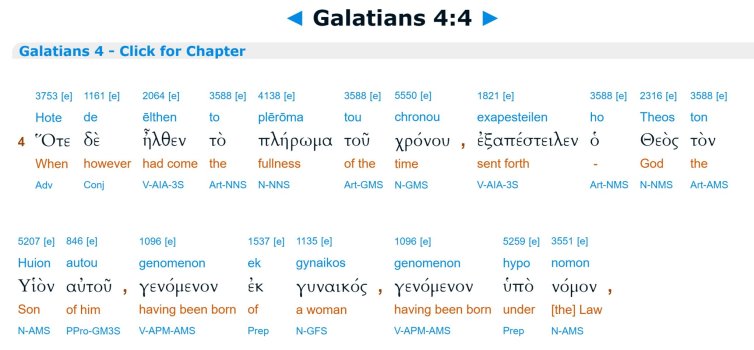
Galatians 4:4-5:
"But when the fullness of time had come, God sent forth His Son, born of a woman, born under the law, to redeem those under the law, that we might receive the adoption as sons."
Here, Paul explicitly states that Jesus was born under the law
(Greek: ὑπὸ νόμον, hypo nomon), confirming that He subjected Himself to the same Mosaic Law.
This is critical because, as the Messiah, Jesus fulfilled the law’s requirements perfectly in a way no one else could (Matthew 5:17).
Romans 10:4:
"For Christ is the end of the law for righteousness to everyone who believes."
Christ's coming marks the telos (Greek: τέλος), the goal or fulfillment of the law.
This doesn't mean the law was abolished but fulfilled its purpose in Christ, allowing believers to be justified by faith rather than by the works of the law.
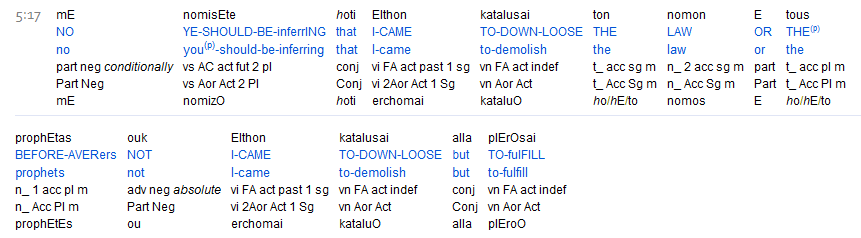
Matthew 5:17:
"Do not think that I have come to abolish the Law or the Prophets; I have not come to abolish them but to fulfill them."
Jesus Himself declared that His mission was to fulfill the law (Greek: πληρῶσαι, plērōsai),
meaning He lived in perfect obedience to it, thereby fulfilling its demands.
Philippians 2:7-8:
"But emptied himself, taking the form of a servant, being made in human likeness. And being found in appearance as a man, He humbled Himself by becoming obedient to death—even death on a cross."
Christ's obedience to the law (and to God’s will) even unto death reflects His submission to the Mosaic covenant, under which He was born and lived.
Synthesis and Conclusion:
In Galatians 3:23-25, Paul outlines the purpose of the law as a temporary guardian (paidagōgos), a disciplinarian that held God’s people in check until the coming of Christ, the ultimate fulfillment of the law. The law's role was preparatory, not salvific—it pointed towards the coming Messiah, who would justify humanity by faith, not by adherence to the law. The Greek terms, particularly hypo nomon (under the law) and paidagōgos (guardian), illustrate how the law both restrained and guided God's people until Jesus fulfilled it.
When Paul states in Galatians 4:4-5 that Jesus was “born under the law,” he highlights that Jesus subjected Himself to the law's authority in order to redeem those also under the law. Jesus' perfect adherence to the law was necessary for Him to fulfill the requirements of the Mosaic covenant and thus become the means by which all people can be justified by faith.
The notion that "faith has come" and believers are no longer "under a guardian" reflects that, in Christ, the law has fulfilled its purpose. Jesus’ life, death, and resurrection ended the law's role as a disciplinarian over God’s people, replacing it with justification through faith, confirming that He was indeed born under the law to fulfill it perfectly.
J.