Ephesians 2:15 and Colossians 2:14

  • Welcome to Christian Forums, a Christian Forum that recognizes that all Christians are a work in progress.

    You will need to register to be able to join in fellowship with Christians all over the world.

    We hope to see you as a part of our community soon and God Bless!

dak

Well-Known Member
Feb 9, 2013
1,457
188
63
Messianica
sites.google.com
Faith
Other Faith
Country
United States
Gender
Male
Paul is not overturning the Torah, rather, he no longer recognizes the authority of the rulers of the people in his day. Paul teaches the new Way of understanding the Torah taught by the Teacher of Righteousness whose Testimony we now read in the Gospel accounts and his Gospel is no different from that Testimony.

Colossians 2:13-22

The following translator understands the Colossians passage quite well, even to the point that it is the Body of Meshiah which is to judge regarding what is mentioned in the text, meaning that the word order, (which is not all that important in Greek, but critical in English translations), is not properly rendered in most if not all English translations. The phrase, the Body of Meshiah is more properly placed at the beginning of verse sixteen. This is why so many translators find the need to either add to this statement or change the meaning of soma from body to substance: for it does not read properly in English without adding to it or redefining words so as to make sense of it, and the reason why is because it does not belong where it is generally placed in English translations, (the end of verse seventeen).

Colossians 2:13-22 TS2009 W/Footnotes
13 And you, being dead in your trespassesc and the uncircumcision of your flesh, He has made alive together with Him, having forgiven you all trespasses, Footnote: cEph 2:1.
14 having blotted out that which was written by hand against us – by the dogmasd – which stood against us. And He has taken it out of the way, having nailed it to the stake. Footnote: dDogmas - also see Col 2:20 and Eph 2:15.
15 Having stripped the principalities and the authorities, He made a public display of them, having prevailed over them in it.
16 Let no one therefore judge you in eating or in drinking, or in respect of a festival or a new moon or Sabbaths –
17 which are a shadow of what is to come – but the Body of the Messiah.e Footnote: eThe Body of Messiah is to give ruling on all matters, not the outsiders! See also Mat 18:15-20.
18 Let no one deprive you of the prize, one who takes delight in false humility and worship of messengers, taking his stand on what he has not seen, puffed up by his fleshly mind,
19 and not holding fast to the Head, from whom all the Body – nourished and knit together by joints and ligaments – grows with the growth of Elohim.
20 If, then, you died with Messiah from the elementary mattersf of the world, why, as though living in the world, do you subject yourselves to dogmas:d Footnotes: dDogmas - also see Col 2:14 and Eph 2:15. fSee Col 2:8 and Gal 4:3 and Gal 4:9.
21 “Do not touch, do not taste, do not handle” –
22 which are all to perish with use – according to the commands and teachings of men?g Isa 29:13. Footnote: gSee also Mat 15:8-9, Mar 7:6-7.

The translator footnote for verse seventeen rightly says that it is the Body of Meshiah that is to rule on all matters, not outsiders: but it appears that the translator misses one thing, that is, the meaning of the Body of Meshiah in this context, and almost no doubt the Body of Meshiah in this context concerns the Tanak Body of the Meshiah. The Tanak Body of Meshiah was raised up in Matthew 27:51-53, and entered into the holy city, (Yerushalem of above, not Yerushalem of below, see Hebrews 12:22-24). The Tanak Body of Meshiah was therefore folded into the Body of Meshiah under the new/renewed covenant expounded by the Master himself in the Gospel accounts, (and also later by his apostles in their writings in the scriptures).

Thus it is the Torah, Prophets, and Writings, the Tanak Body of Meshiah, which is to be our judge in the matters mentioned in that portion of the text above where this is mentioned. If therefore we correct the word order, as it appears to be strongly implied in the Greek text, it should read and be rendered in the following manner.

Colossians 2:13-22
13 And you, being dead in your trespasses and the uncircumcision of your flesh, he has made you alive together with him, having forgiven us all our trespasses,
14 having blotted out the handwriting in dogmas/decrees that were against us, which were contrary to us: and he has taken it out of the way, nailing it to the stake:
15 having despoiled the principalities and the powers, he made a show of them openly, triumphing over them in it.
16 Therefore let no one but the body of Meshiah judge you in food, or in drink, or in respect of a feast day or a new month or the Shabbat:
17 which are a shadow of the things to come.
18 Let no one defraud you of the prize through [false] humility and the religion of the messengers, dwelling in the things which he has seen, vainly puffed up by his fleshly mind,
19 and not holding fast the Head, from whom all the body, being supplied and knit together through the joints and bands, increases by the increase of Elohim.
20 If you died with Meshiah from the rudiments of the world, why, as though living in the world, do you subject yourselves to dogmas,
21 Handle not, Taste not, Touch not,
22 (all of which things are to perish with the using), after the commandments and doctrines of men?

Nowhere in the scripture is the Torah ever called dogmas, and Paul explains at the end of the portion above that he speaks of the commandments and teachings or doctrines of men: that is surely not speaking of the Torah. However dogma does appear in the Septuagint, and is always used for edicts, decrees, dogmas, and proclamations from kings and-or rulers. In the sense of the Colossians passage above it no doubt pertains to the rulers of the people, the Sanhedrin, Elders, Chief Priests, Pharisees, Sadducees, and Scribes, and their handwritten dogmas and decrees which were against the people and contrary to us all: for their interpretations of the Torah were based on a natural minded, outward, and physical understanding of the Torah, which we know from Romans 7:14 is spiritual, just as Elohim Himself is Spirit, (John 4:24), and so also His Word is Spirit, and likewise the Testimony of the Meshiah is Spirit, (John 6:63).

The handwritten dogmas and decrees of the Sanhedrin, Elders, Chief Priests, Pharisees, Sadducees, and Scribes, which were binding upon the whole nation, and which were contrary and against the people, are the same letter which Paul says kills. The letter which kills is not the Torah. The letter which kills concerns the handwritten dogmas and decrees of the Sanhedrin, Elders, Chief Priests, Pharisees, Sadducees, and Scribes, which Paul speaks about in Colossians 2:14. Meshiah indeed triumphed over them and their carnal minded rulings, dogmas, and decrees in many places throughout the Gospel accounts for all to see: making a show of them and their hypocrisy openly before all the people, which is one of the main reasons why the rulers of the people had him crucified, (and he was an obvious threat to their power and authority).

Please have patience: this OP will be in three portions, (two more posts to follow).
 
Last edited:

dak

Well-Known Member
Feb 9, 2013
1,457
188
63
Messianica
sites.google.com
Faith
Other Faith
Country
United States
Gender
Male
Letters:

John 7:14-18 KJV
14 Now about the midst of the feast Jesus went up into the temple, and taught.
15 And the Jews marvelled, saying, How knoweth this man letters, [G1121 γραμμα (γραμματα)] having never learned?
16 Jesus answered them, and said, My doctrine is not mine, but his that sent me.
17 If any man will do his will, he shall know of the doctrine, whether it be of God, or whether I speak of myself.
18 He that speaketh of himself seeketh his own glory: but he that seeketh his glory that sent him, the same is true, and no unrighteousness is in him.

The Meshiah knows letters and yet the letter kills?

Acts 28:17-21 KJV
17 And it came to pass, that after three days Paul called the chief of the Jews together: and when they were come together, he said unto them, Men and brethren, though I have committed nothing against the people, or customs of our fathers, yet was I delivered prisoner from Jerusalem into the hands of the Romans.
18 Who, when they had examined me, would have let me go, because there was no cause of death in me.
19 But when the Jews spake against it, I was constrained to appeal unto Caesar; not that I had ought to accuse my nation of.
20 For this cause therefore have I called for you, to see you, and to speak with you: because that for the hope of Israel I am bound with this chain.
21 And they said unto him, We neither received letters [G1121 γραμμα (γραμματα)] out of Judaea concerning thee, neither any of the brethren that came shewed or spake any harm of thee.

From whom might the "chief (foremost) of the Jews" in Rome possibly receive letters? especially concerning harm or evil concerning Paul? That really can only mean certain dogmas, decrees, or injunctions concerning Paul, and coming from the Sanhedrin, Elders, Chief Priests, Pharisees, Sadducees, and Scribes at Yerushalem.

Pay extra close attention to this next passage: for Paul actually says that by the letter and circumcision they were transgressing the Torah. How can this be? It is by way of their incorrect interpretations of the Torah concerning circumcision, which was the natural minded, outward, physical interpretation of circumcision, and which by their own handwritten dogmas and decrees was forced upon the people, binding upon the whole nation, and yet it was the wrong interpretation: thus they were forcing the people to observe their own misunderstanding and misinterpretation of the Torah which is spiritual, (Rom 7:14). After that statement Paul gives us the true meaning of circumcision, which is of the heart, and which is also taught in the Torah: and thus we have a choice to either choose life or death in our understanding of what we hear, (understand), and see, (perceive), in our reading of the Torah, (Deut 10:16, Deut 30:6, Deut 30:11-20, Rom 10:6-8). Moreover what Paul states in Rom 2:28-29 is not a set of multiple choice options: the things stated therein are emphatically stated to be the case, and one either believes what he says or does not.

Romans 2:27-29 KJV
27 And shall not uncircumcision which is by nature, if it fulfil the law, judge thee, who by the letter [G1121 γραμμα (γραμματος)] and circumcision dost transgress the law?
28 For he is not a Jew, which is one outwardly; neither is that circumcision, which is outward in the flesh:
29 But he is a Jew, which is one inwardly; and circumcision is that of the heart, in the spirit, and not in the letter; [G1121 γραμμα (γραμματι)] whose praise is not of men, but of God.

If the letter is the Torah then how can it be that the Sanhedrin, Elders, Chief Priests, Pharisees, Sadducees, and Scribes might transgress the Torah by the letter? The letter in this case therefore cannot be the Torah: it concerns the handwritten dogmas, decrees, injunctions, and ordinances of the Sanhedrin, Elders, Chief Priests, Pharisees, Sadducees, and Scribes, which were binding on the whole nation, and which were against us because they were natural minded, outward, physical interpretations of the Torah which were incorrect interpretations of the spiritual and supernal Word of the Father who is Spirit.

Moreover gramma is also used for writings and-or scripture:

2 Timothy 3:15 KJV
15 And that from a child thou hast known the holy scriptures, [G1121 γραμμα (γραμματα)] which are able to make thee wise unto salvation through faith which is in Christ Jesus.

2 Timothy 3:15 ASV
15 and that from a babe thou hast known the sacred writings [G1121 γραμμα (γραμματα)] which are able to make thee wise unto salvation through faith which is in Christ Jesus.

Is the Torah not scripture? Rightly divide: the letter which kills is not the scripture, and certainly not the Torah, rather, the letter which kills concerns the handwritten dogmas, decrees, injunctions, and ordinances of the Sanhedrin, Elders, Chief Priests, Pharisees, Sadducees, and Scribes, which were binding upon the whole nation, and which were against us because they were natural minded, outward, physical-minded interpretations of the Torah which were incorrect interpretations of the spiritual and supernal Torah-Word of the Father who is Spirit. The Torah is spiritual, Romans 7:14.

Dogma - New-Renewed Covenant Writings

Luke 3:1 KJV
1 And it came to pass in those days, that there went out a decree [G1378 δογμα] from Caesar Augustus, that all the world should be taxed.

Acts 16:4 KJV
4 And as they went through the cities, they delivered them the decrees [G1378 δογμα] for to keep, that were ordained of the apostles and elders which were at Jerusalem.

Acts 17:7 KJV
7 Whom Jason hath received: and these all do contrary to the decrees [G1378 δογμα] of Caesar, saying that there is another king, one Jesus.

Apart from Eph 2:15, Col 2:14, and Col 2:20, (G1379 δογματιζω), that's it for dogma in the R/C.
Strange how the translators forget the meaning when it comes to Eph 2:15, Col 2:14, and Col 2:20, huh?

Dogma - Greek Septuagint Tanak

Esther 3:9 Brenton Septuagint
9 If it seem good to the king, let him make a decree [G1379 δογματιζω] to destroy them: and I will remit into the king's treasury ten thousand talents of silver.

Daniel 2:13 Brenton Septuagint
13 So the decree [G1378 δογμα] went forth, and they began to slay the wise men; and they sought Daniel and his fellows to slay them.

Daniel 3:10-12 Brenton septuagint
10 Thou, O king, has made a decree [G1378 δογμα] that every man who shall hear the sound of the trumpet, and pipe, and harp, sackbut, and psaltery, and all kinds of music,
11 and shall not fall down and worship the golden image, shall be cast into the burning fiery furnace.
12 There are certain Jews whom thou has appointed over the affairs of the province of Babylon, Sedrach, Misach, and Abdenago, who have not obeyed thy decree, [G1378 δογμα] O king: they serve not thy gods, and worship not the golden image which thou hast set up.

And there Are seven more instances which are probably too much for one post:

Daniel 3:29 - G1378 δογμα - rendered as the king's decree
Daniel 4:6 - G1378 δογμα - rendered as the king's decree
Daniel 6:8-26 - G1378 δογμα (5 times) - rendered as the king's decree

G1378 δογμα (with G1379 δογματιζω) is found seventeen times in the Septuagint and New-Renewed Covenant writings combined: fourteen times it is rendered "decree(s)" and the other three times it is rendered "ordinances", (at least in the KJV and ASV which I checked), and those three times, which are the final occurrences in the Renewed Covenant writings, are of course Eph 2:15, Col 2:14, and Col 2:20, (the one occurrence of δογματιζω in the R/C). Understand that the fix is in, literally, in the biased translations of carnal minded antinomian men who believe the Torah is abolished.
 
Last edited:

dak

Well-Known Member
Feb 9, 2013
1,457
188
63
Messianica
sites.google.com
Faith
Other Faith
Country
United States
Gender
Male
The Greek text for Col 2:14 is the same in the T/R as with all the majority morph texts:

Colossians 2:14 T/R, BYZ, N/A, W/H
14 εξαλειψας το καθ ημων χειρογραφον τοις δογμασιν ο ην υπεναντιον ημιν και αυτο ηρκεν εκ του μεσου προσηλωσας αυτο τω σταυρω

The ASV is probably correct to render χειρογραφον as a bond in this case because it speaks of a handwritten legal document or handwritten legal bond, and therefore, of course, binding upon all the people because in this context it concerns the rulings of the Sanhedrin, handwritten by their Scribes. Moreover, generally speaking, the most important rulings were typically posted in public places for all to see, especially the Temple.

Colossians 2:14 ASV
14 having blotted out the bond written [χειρογραφον] in ordinances [dogmas] that was against us, which was contrary to us: and he hath taken it out of the way, nailing it to the cross;

Thus we have:

Colossians 2:14
14 having blotted out the handwritten-bond of the dogmas/decrees against us, which were adversarial to us: and he has taken it out of the way, nailing it to the stake,

The Meshiah did not blot out the Torah or nail it to the stake so as to be figuratively destroyed with the flesh. It should clearly be understood as the handwritten-bonds, dogmas, and decrees of the natural minded, outward, and physical-minded interpretations of the Torah according to the Sanhedrin, Elders, Chief Priests, Pharisees, Sadducees, and Scribes, whose natural minded outward interpretations of the Torah were binding upon the whole nation, and yet adversarial to the people, as openly shown in many passages in the Gospel accounts where the Meshiah engages vehement disputes with them over some of their erroneous dogmas and decrees.

Ephesians 2:11-22
11 Wherefore remember that you, once nations/gentiles in the flesh, being reckoned Uncircumcision by the Circumcision in the flesh made by hands,
12 that you were in that time without Meshiah, alienated from the citizenship-commonwealth of Yisrael, and foreigners from the covenants of solemn promise, having no hope, and without Elohim in the world.
13 But now, in Meshiah Ι̅Η, you who were once far off have been brought near by the blood of Meshiah:
14 for he is our peace, having made both one, and having broken down the middle partition-wall of the enclosure,
15 having abolished in his flesh the enmity, the law of the injunctions in dogmas/decrees, that he might create in himself one renewed man, making peace,
16 and that he might fully restore them both in one body unto Elohim by the stake, having slain the enmity thereby.
17 And having come, he announced good news, peace to you that were afar off, and to those near:
18 for by him we both have access in one Spirit to the Father.
19 Wherefore you are no longer strangers and foreigners, but fellow citizens with the holy ones and members of the household of Elohim,
20 built upon the foundation of the apostles and of the prophets, the chief cornerstone thereof being Meshiah Ι̅Η,
21 in whom all the building fitted together increases unto a holy temple in YHWH:
22 in whom also you are builded together for a habitation of Elohim in the Spirit.

Surely Paul mentions and goes into the teaching on the temple at the end of the above passage because it has to do with what he speaks of just before that in what we read in the passage. The middle partition wall is being used in this analogy because anyone who had been to the temple would have immediately known what he speaks of, even if a person only came at the feasts from far away, like those we read of from all over the known world in Acts 2, at Pentecost.

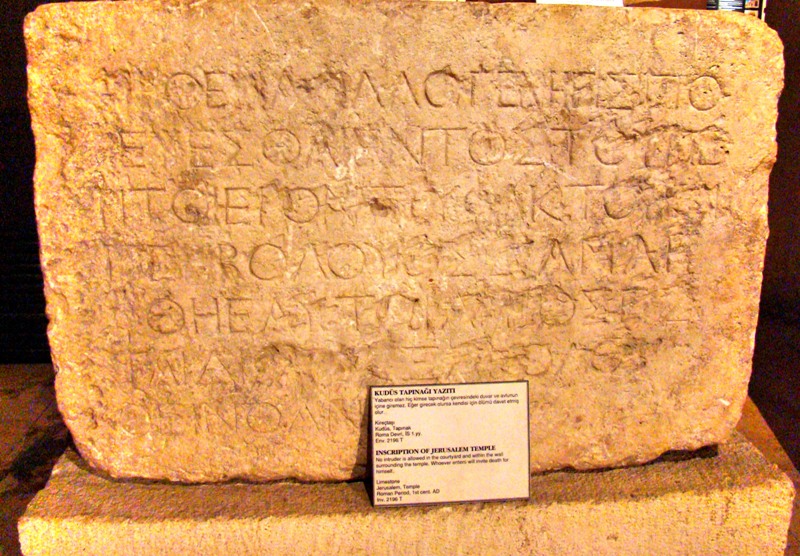
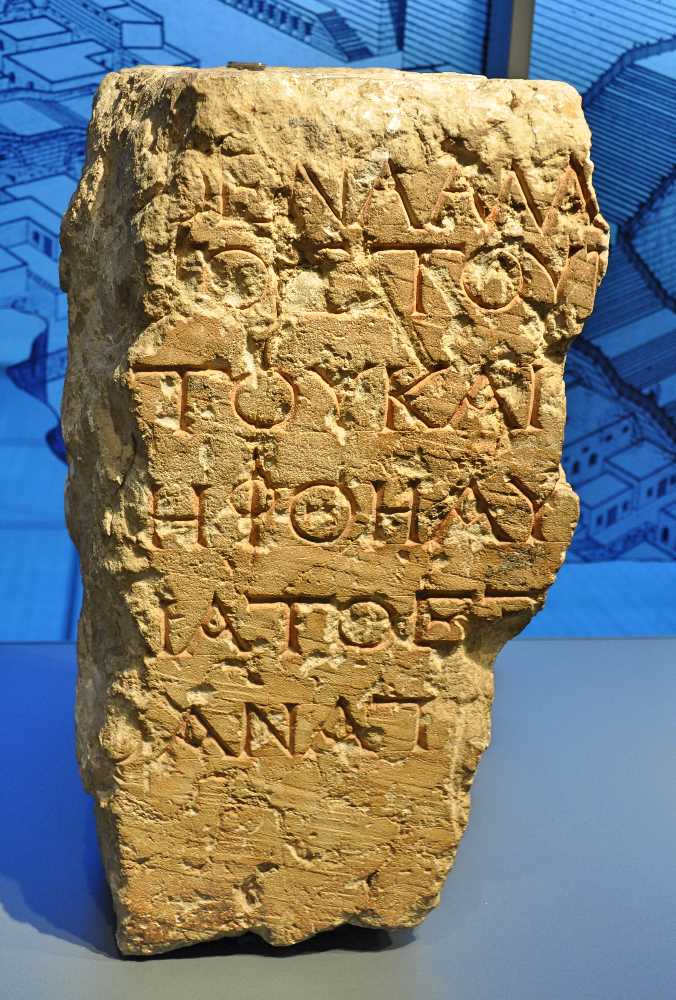
The partition wall which is mentioned here by Paul would have been the barrier that separated the Court of the Nations or Gentiles, and stone markers were placed at intervals all along this dividing wall to warn Gentiles not to go beyond that point: the penalty for which trespass was death. Several of these stone markers with their handwritten engraved warnings have been discovered with the texts still intact and legible. Paul's discourse here surely reveals that his usage of this analogy speaks of the doing away with the handwritten dogmas and decrees of the Sanhedrin, Elders, Chief Priests, Pharisees, Sadducees, and Scribes, which were based in natural minded, physical, outward interpretations of the Torah.

Istanbul Archaeology Museum:

temple-inscription-herodian.jpg


"NO FOREIGNER IS TO ENTER WITHIN THE BALUSTRADE AND EMBANKMENT AROUND THE SANCTUARY: WHOEVER IS CAUGHT WILL HAVE HIMSELF TO BLAME FOR HIS DEATH WHICH WILL FOLLOW."

This is one of the warning signs carved in stone that were placed at regular intervals in the partition wall of separation around the temple court which separated the Court of the Gentiles and kept them from going beyond their court any closer to the temple. The penalty was physical death for any Gentile going beyond the partition wall, and this was "the law", although you will not find it anywhere in the Torah. This is exactly what Paul is speaking about in the Ephesians 2 passage.

Israel Museum:

temple-inscription-2555lm.jpg


"NO FOREIGNER IS TO GO BEYOND THE BALUSTRADE AND THE PLAZA OF THE TEMPLE ZONE. WHOEVER IS CAUGHT DOING SO WILL HAVE HIMSELF TO BLAME FOR HIS DEATH WHICH WILL FOLLOW."

None of this concerns the Torah being abolished, abrogated, or set aside.
This third post is the completion of the OP.
 
Last edited:

Hiddenthings

Well-Known Member
May 19, 2025
3,777
415
83
Leeton NSW
Faith
Christian
Country
Australia
Nowhere in the scripture is the Torah ever called dogmas, and Paul explains at the end of the portion above that he speaks of the commandments and teachings or doctrines of men: that is surely not speaking of the Torah. However dogma does appear in the Septuagint, and is always used for edicts, decrees, dogmas, and proclamations from kings and-or rulers. In the sense of the Colossians passage above it no doubt pertains to the rulers of the people, the Sanhedrin, Elders, Chief Priests, Pharisees, Sadducees, and Scribes, and their handwritten dogmas and decrees which were against the people and contrary to us all: for their interpretations of the Torah were based on a natural minded, outward, and physical understanding of the Torah, which we know from Romans 7:14 is spiritual, just as Elohim Himself is Spirit, (John 4:24), and so also His Word is Spirit, and likewise the Testimony of the Meshiah is Spirit, (John 6:63).

The handwritten dogmas and decrees of the Sanhedrin, Elders, Chief Priests, Pharisees, Sadducees, and Scribes, which were binding upon the whole nation, and which were contrary and against the people, are the same letter which Paul says kills. The letter which kills is not the Torah. The letter which kills concerns the handwritten dogmas of the Sanhedrin, Elders, Chief Priests, Pharisees, Sadducees, and Scribes, which Paul speaks about in Colossians 2:14. Meshiah indeed triumphed over them and their carnal minded rulings, dogmas, and decrees in many places throughout the Gospel accounts for all to see: making a show of them and their hypocrisy openly before all the people, which is one of the main reasons why the rulers of the people had him killed.
It's clear what you're attempting to do here dak.

The Purpose of the Law is found in Galatians 3:24 Therefore the law was our tutor (or schoolmaster???) to bring us to Christ, that we might be justified by faith.”

The term “pedagogue” refers to a child attendant or custodian, a slave employed by wealthy Greek or Roman families to supervise a child roughly between the ages of six and sixteen. This attendant was responsible for overseeing the child's behavior at all times and escorting him to and from school. Importantly, the pedagogue did not teach the child.

Therefore, translating paidagogos as “schoolmaster” (as in the KJV) is inaccurate. If Paul had intended to mean a teacher, he would have used the word didaskalos instead.

Paul’s point is that this supervisory role ended once the child reached full sonship, when he was formally adopted by his father as an adult (Galatians 4:1-7). The phrase “to Christ” should not be understood geographically, as if the pedagogue were leading the child to a teacher. Rather, it is temporal: it signifies the period until we come of age spiritually, marked by the revelation of our full sonship through Christ’s coming.

Dak wants to remain under a supervisor (Law =immature child) and have Christ as well.

Impossible!
 

Hiddenthings

Well-Known Member
May 19, 2025
3,777
415
83
Leeton NSW
Faith
Christian
Country
Australia
In Galatians 3:21–22, Paul writes:

“…for if a law had been given that could impart life, then righteousness would certainly have come by the law. But Scripture has locked up everything under the power of sin so that what was promised, being given through faith in Jesus Christ, might be given to those who believe.”

This makes the point clear: The Law of Moses was never intended to be the means of attaining eternal life. It's true purpose was to act as a paedagogue—a guardian or tutor-slave—to lead the natural descendants of Abraham to Christ (Galatians 3:24). By living under the Law, they became fully aware of their sinfulness, as Paul explains in Romans 7:5–12.

Under the Law of Moses, even a single violation brought guilt under the entire system. As both James 2:10–11 and Galatians 3:10; 5:3 affirm: breaking one commandment meant falling under the Law’s curse. Therefore, the Law could never grant eternal life, because, as Solomon rightly observed “there is no one who does not sin” (1 Kings 8:46).

This leads us to a deeper question:

Could the Law of Moses have given eternal life to someone who never sinned? @dak

Surprisingly, the answer is NO. Even Jesus Christ, who was sinless was condemned by the Law, not because of personal fault, but because He bore the penalty of sin on behalf of others.
 

Hiddenthings

Well-Known Member
May 19, 2025
3,777
415
83
Leeton NSW
Faith
Christian
Country
Australia
The Law Abolished Because It Condemned Christ

The profound wisdom of Yahweh is seen in a few seemingly small but deeply significant words within the Law of Moses:

“For he who is hanged is accursed of God” Deuteronomy 21:23.

Though Jesus Christ was “obedient unto death, even the death of the cross” (Philippians 2:8), this very act of obedience brought him under the curse of the Law.

How can this be?

How could the perfectly obedient Son of God be condemned by the very Law he came to fulfill?

The answer lies in the purpose and plan of God. It was intended to be this way. Deuteronomy 21:23 was not an afterthought, it was a divinely prearranged provision that would allow God to justly abolish the Law of Moses.

Jesus upheld the righteousness of God through perfect obedience, carrying out His Father’s will by dying on the cross. In doing so, He demonstrated God’s judgment on human nature, the nature he inherited from Adam (Acts 2:22–24). Yet, as Peter points out, this same obedience guaranteed his resurrection, because the righteousness of God demanded that a sinless man not be left in the grave.

But this created a dilemma: how could God raise Christ from the dead while the Law of Moses remained in effect, a law that had condemned Christ, despite his innocence?

The solution was exactly as God had designed: the Law was set aside, abolished as a national system of commands and rituals. Yet its moral principles were preserved and carried forward in the law of Christ.

In this way, God’s righteousness was fully upheld, through Christ’s obedience, his death, the setting aside of the Law, and ultimately, His resurrection.
 

Hiddenthings

Well-Known Member
May 19, 2025
3,777
415
83
Leeton NSW
Faith
Christian
Country
Australia

------------------------------------------Are Believers Under Any Law?-----------------------------------------------------


Believers and the Law of Moses

A common and serious misunderstanding among some believers is the idea that, because they are “free in Christ,” they are under no law at all. This view is not only mistaken, it can be dangerous, often leading to careless or immoral behavior.

Paul faced this very issue in his day, even being falsely accused of promoting sin so that grace might increase (Romans 3:7–8; 6:1,15).

This is where @dak needs to be more precise in his posts!

The freedom that believers enjoy in Christ is not freedom from all law. It is freedom specifically from the ritual and ceremonial obligations of the Law of Moses, not from the divine principles behind it.

Paul makes this distinction clear in Galatians 5:1:

“Stand fast therefore in the liberty wherewith Christ hath made us free, and be not entangled again with the yoke of bondage.”

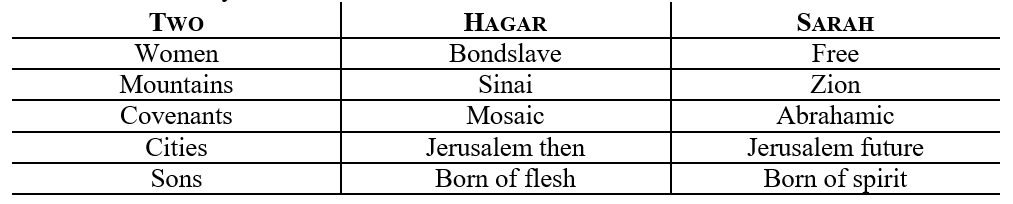
Throughout the New Testament, the Law of Moses is described as a form of bondage, especially its rituals and regulations. Paul's allegory in Galatians 4:21–31 illustrates this vividly: those under the Mosaic Law (represented by Hagar, the slave woman) are like Ishmael, born into slavery, whereas those in Christ (represented by Sarah, the free woman) are like Isaac, born into freedom.

This was the background to Jesus’ words in John 8:32:

“You shall know the truth, and the truth shall make you free.”

His audience, offended by the implication, claimed they were never in bondage. But in reality, they were enslaved by their unwillingness to let go of the Law of Moses and fully embrace the truth in Christ.

Paul further rebukes this return to old legal observances in Galatians 4:9–10:

You are turning back to those weak and miserable principles. Do you wish to be enslaved by them all over again? You are observing special days and months and seasons and years.”

In Christ, believers are freed from these ritual observances, including the keeping of holy days, food restrictions, and other ceremonial commands. However, this does not mean they are free from all law.

Paul makes this balance clear in Galatians 5:13:

“For you, brethren, have been called to liberty; only do not use liberty as an opportunity for the flesh, but through love serve one another.”

He also directly addresses the idea of law in 1 Corinthians 9:20–21:

“To the Jews I became like a Jew, to win the Jews. To those under the law I became like one under the law... To those not having the law, I became like one not having the law (though I am not free from God's law but am under Christ’s law)...”

This is the key point: Believers are no longer under the Law of Moses, but they are very much under the law of Christ, a law centered on love, grace, conscience, and inward transformation.

In fact, the law of Christ is often more demanding than the Law of Moses because it penetrates deeper, it governs not only actions but also the thoughts and intentions of the heart.

For example, while the seventh commandment says, “You shall not commit adultery” (Exodus 20:14), Jesus expands this in Matthew 5:28:

“But I say to you that whoever looks at a woman to lust after her has already committed adultery with her in his heart.”

Paul draws on this concept in Romans 7:1–3, comparing the Law to a husband. Those who wish to follow Christ must die to the Law first; otherwise, attempting to follow both is spiritual adultery. He teaches that believers must abandon their former bond to the Law of Moses before being fully united to Christ.
 

Hiddenthings

Well-Known Member
May 19, 2025
3,777
415
83
Leeton NSW
Faith
Christian
Country
Australia
@dak

This is truth and its something we must eventually hear you repeat if you are to be (saved) in Christ.

Paul draws on this concept in Romans 7:1–3, comparing the Law to a husband.

Those who wish to follow Christ must die to the Law first; otherwise, attempting to follow both is spiritual adultery. He teaches that believers must abandon their former bond to the Law of Moses before being fully united to Christ.
 
Last edited:

dak

Well-Known Member
Feb 9, 2013
1,457
188
63
Messianica
sites.google.com
Faith
Other Faith
Country
United States
Gender
Male
The Purpose of the Law is found in Galatians 3:24 Therefore the law was our tutor (or schoolmaster???) to bring us to Christ, that we might be justified by faith.”

That's just another erroneous rendering hiding behind the incorrect rendering from the KJV and using that translation as if it sets precedent. It has already been addressed where you also were there.

Quote Below
1) The KJV translators did not even realize they were translating Koine Greek. In modern times the first to realize that the N/T was written in Koine Greek was a man by the name of Gustav Adolf Deissman, in the late 1800's, (please read the link if you are indeed interested in the truth). And some have brought this fact to light having written about it, but not many and not much about it, as far as I know, (for example, Everything You Wanted to Know About the King James Bible, (go down to the section called "Doctrinal Concerns" which is in bold, and from there go back up two paragraphs).

2) The KJV therefore has great difficulty with verb tenses, especially with the verb forms of γινομαι:
2a) γεγονεν, Gal 3:24, rendered as was, (it means has become in this context, shown to you previously).
2b) γεγενησθαι, Rom 15:8, again rendered as was, when it should be has become or has been made.
2c) γενεσθαι, John 8:58, again rendered as was, when it should be comes to be or comes to pass or is done.

3) The KJV translators are excused because at that time they had very limited materials to work with and no one knew it was Koine Greek until the late 1800's, (see the second link above). However modern translators have no excuse whatsoever: and those who follow the KJV in such critical places, as in Gal 3:24, are surely therefore only hiding behind the erroneous KJV in that instance by using the KJV as a supposed precedent, but in reality what they are hiding is their own antinomian bias against the Torah because they too have been indoctrinated.

The term “pedagogue” refers to a child attendant or custodian,

I know what it means and your attempt at defining it is lacking.

Paul’s point is that this supervisory role ended once the child reached full sonship, when he was formally adopted by his father as an adult (Galatians 4:1-7).

I've also addressed this, (again, "Paul's Gospel").

Quote Below
All of the following was and is written to believers.

Hebrews 10:35-39 KJV
35 Cast not away therefore your confidence, which hath great recompence of reward.
36 For ye have need of patience, that, after ye have done the will of God, ye might receive the promise.
37 For yet a little while, and he that shall come will come, and will not tarry. [Hab 2:3 LXX]
38 Now the just shall live by faith: but if any man draw back, my soul shall have no pleasure in him. [Hab 2:4 LXX]
39 But we are not of them who draw back unto perdition; but of them that believe to the saving of the soul.

We enter into the family of Elohim as newborns, as infants, and then grow into children. However no father sets his own babe or child in charge of all his goods: there must first come age with experience and learning, and then eventually there comes a time of testing, the time appointed of the Father when a child becomes an adult, a proven, tried and true son of the Father. There is an appointed time coming, a time appointed of the Father, (Gal 4:2), and no one knows the day or hour: but first we must each do the will of Elohim before we can receive the Promise, (Heb 10:36).

What is the will of Elohim in this regard? Paul writes regarding this also in 1Thess 4:1-8. Paul also makes the Hebrews 10:35-39 passage point plain as day in Gal 4:1-2 but modern mainstream doctrine and its preachers and teachers seem to just ignore it:

Galatians 4:1-2 KJV
1 Now I say, That the heir, as long as he is a child, differeth nothing from a servant, though he be lord of all;
2 But is under tutors [Torah and Prophets] and governors [Writings (e.g. Psalms)] until the time appointed of the father.

Moreover this passage is a continuation of the previous chapter, (23), so the chapter break can be deceptive for the casual reader because it breaks off the end of the passage and places it in the passage above, at the top of chapter four. The above statement begins the conclusion of what was said in chapter 3.

Galatians 3:24—4:2
24 so that the Law has become our tutor—to/into Christ, that we may be declared righteous by faith,
25 and faith having come, we are no longer under a tutor,
26 for you are all sons of God through faith in Christ Jesus,
27 for as many as were immersed into Christ put on Christ;
28 there is neither Jew nor Greek, there is neither servant nor freeman, there is neither male and female, for you are all one in Christ Jesus;
29 and if you [are] of Christ then you are seed of Abraham, and heirs according to promise. [Heb 10:36]
01 And I say, now as much time as the heir is a child, he differs nothing from a servant, [though] being lord of all,
02 but is under tutors and stewards until the time appointed of the father,

Therefore one is not a tried, true, bona fide son until the time appointed of the Father when a child becomes a son: for it is only at that point that he is no longer a servant. This same appointed time of testing is also said to be the timing of the saving of the soul in Hebrews 10:39, (take heed, it speaks of a vision). This appointed time is also extremely likely to be the time when one overcomes, mentioned to all of the assemblies in the Apocalypse, and it is personal and individual, "the one who overcomes...", to each in his or her own appointed times appointed by the Father. This in no way can be the day wherein one first believed: such reasoning throws the patient endurance and faith of the believer in Meshiah out the window, and what happens when believers are taught that they have already overcome just by an initial statement of faith? Typically it is time to eat, drink, and rise up to play, (an extremely negative and ominous Hebrew idiom, Exo 32:6).

Dak wants to remain under a supervisor (Law =immature child) and have Christ as well.

Impossible!

Oh blind one leading the blind in your mind: if you yourself have never been under the schoolmaster and the tutors and governors provided by the Father then you cannot have come to be "in Meshiah" because even according to Paul those are they who lead you into Meshiah, (Gal 3:24, Gal 4:1-2).

Why would the Father set an appointed time to become a fully tested, tried, true, and proven legitimate son if through your childhood you have rejected His Instructions through His instructors, tutors, and governors which He has provided for you?

Moreover, how is it that you, as a Christadelphian, suddenly came up with the same doctrine I have received from the scripture if you did not read it from my own postings? I highly doubt that Christadephians have any such doctrine.
 

Hiddenthings

Well-Known Member
May 19, 2025
3,777
415
83
Leeton NSW
Faith
Christian
Country
Australia
That's just another erroneous rendering hiding behind the incorrect rendering from the KJV and using that translation as if it sets precedent. It has already been addressed where you also were there.


1) The KJV translators did not even realize they were translating Koine Greek. In modern times the first to realize that the N/T was written in Koine Greek was a man by the name of Gustav Adolf Deissman, in the late 1800's, (please read the link if you are indeed interested in the truth). And some have brought this fact to light having written about it, but not many and not much about it, as far as I know, (for example, Everything You Wanted to Know About the King James Bible, (go down to the section called "Doctrinal Concerns" which is in bold, and from there go back up two paragraphs).

2) The KJV therefore has great difficulty with verb tenses, especially with the verb forms of γινομαι:
2a) γεγονεν, Gal 3:24, rendered as was, (it means has become in this context, shown to you previously).
2b) γεγενησθαι, Rom 15:8, again rendered as was, when it should be has become or has been made.
2c) γενεσθαι, John 8:58, again rendered as was, when it should be comes to be or comes to pass or is done.

3) The KJV translators are excused because at that time they had very limited materials to work with and no one knew it was Koine Greek until the late 1800's, (see the second link above). However modern translators have no excuse whatsoever: and those who follow the KJV in such critical places, as in Gal 3:24, are surely therefore only hiding behind the erroneous KJV in that instance by using the KJV as a supposed precedent, but in reality what they are hiding is their own antinomian bias against the Torah because they too have been indoctrinated.


I know what it means and your attempt at defining it is lacking.


I've also addressed this, (again, "Paul's Gospel").


All of the following was and is written to believers.

Hebrews 10:35-39 KJV
35 Cast not away therefore your confidence, which hath great recompence of reward.
36 For ye have need of patience, that, after ye have done the will of God, ye might receive the promise.
37 For yet a little while, and he that shall come will come, and will not tarry. [Hab 2:3 LXX]
38 Now the just shall live by faith: but if any man draw back, my soul shall have no pleasure in him. [Hab 2:4 LXX]
39 But we are not of them who draw back unto perdition; but of them that believe to the saving of the soul.

We enter into the family of Elohim as newborns, as infants, and then grow into children. However no father sets his own babe or child in charge of all his goods: there must first come age with experience and learning, and then eventually there comes a time of testing, the time appointed of the Father when a child becomes an adult, a proven, tried and true son of the Father. There is an appointed time coming, a time appointed of the Father, (Gal 4:2), and no one knows the day or hour: but first we must each do the will of Elohim before we can receive the Promise, (Heb 10:36).

What is the will of Elohim in this regard? Paul writes regarding this also in 1Thess 4:1-8. Paul also makes the Hebrews 10:35-39 passage point plain as day in Gal 4:1-2 but modern mainstream doctrine and its preachers and teachers seem to just ignore it:

Galatians 4:1-2 KJV
1 Now I say, That the heir, as long as he is a child, differeth nothing from a servant, though he be lord of all;
2 But is under tutors [Torah and Prophets] and governors [Writings (e.g. Psalms)] until the time appointed of the father.

Moreover this passage is a continuation of the previous chapter, (23), so the chapter break can be deceptive for the casual reader because it breaks off the end of the passage and places it in the passage above, at the top of chapter four. The above statement begins the conclusion of what was said in chapter 3.

Galatians 3:24—4:2
24 so that the Law has become our tutor—to/into Christ, that we may be declared righteous by faith,
25 and faith having come, we are no longer under a tutor,
26 for you are all sons of God through faith in Christ Jesus,
27 for as many as were immersed into Christ put on Christ;
28 there is neither Jew nor Greek, there is neither servant nor freeman, there is neither male and female, for you are all one in Christ Jesus;
29 and if you [are] of Christ then you are seed of Abraham, and heirs according to promise. [Heb 10:36]
01 And I say, now as much time as the heir is a child, he differs nothing from a servant, [though] being lord of all,
02 but is under tutors and stewards until the time appointed of the father,

Therefore one is not a tried, true, bona fide son until the time appointed of the Father when a child becomes a son: for it is only at that point that he is no longer a servant. This same appointed time of testing is also said to be the timing of the saving of the soul in Hebrews 10:39, (take heed, it speaks of a vision). This appointed time is also extremely likely to be the time when one overcomes, mentioned to all of the assemblies in the Apocalypse, and it is personal and individual, "the one who overcomes...", to each in his or her own appointed times appointed by the Father. This in no way can be the day wherein one first believed: such reasoning throws the patient endurance and faith of the believer in Meshiah out the window, and what happens when believers are taught that they have already overcome just by an initial statement of faith? Typically it is time to eat, drink, and rise up to play, (an extremely negative and ominous Hebrew idiom, Exo 32:6).


Oh blind one leading the blind in your mind: if you yourself have never been under the schoolmaster and the tutors and governors provided by the Father then you cannot have come to be "in Meshiah" because even according to Paul those are they who lead you into Meshiah, (Gal 3:24, Gal 4:1-2).

Why would the Father set an appointed time to become a fully tested, tried, true, and proven legitimate son if through your childhood you have rejected His Instructions through His instructors, tutors, and governors which He has provided for you?

Moreover, how is it that you, as a Christadelphian, suddenly came up with the same doctrine I have received from the scripture if you did not read it from my own postings? I highly doubt that Christadephians have any such doctrine.
As was said dak - attempting to follow both is spiritual adultery
 

Hiddenthings

Well-Known Member
May 19, 2025
3,777
415
83
Leeton NSW
Faith
Christian
Country
Australia
Oh blind one leading the blind in your mind: if you yourself have never been under the schoolmaster and the tutors and governors provided by the Father then you cannot have come to be "in Meshiah" because even according to Paul those are they who lead you into Meshiah, (Gal 3:24, Gal 4:1-2).

Why would the Father set an appointed time to become a fully tested, tried, true, and proven legitimate son if through your childhood you have rejected His Instructions through His instructors, tutors, and governors which He has provided for you?

Moreover, how is it that you, as a Christadelphian, suddenly came up with the same doctrine I have received from the scripture if you did not read it from my own postings? I highly doubt that Christadephians have any such doctrine.
You cling to earthly training while what has been shown you is spiritual maturity in Christ Jesus.

Every member I know recognises the depth of this subject and understands its truth, that we are dead to the law and alive in Christ.

Keep trying dak if you must but I will be here to reveal the true Gospel of God.
 

Hiddenthings

Well-Known Member
May 19, 2025
3,777
415
83
Leeton NSW
Faith
Christian
Country
Australia
Galatians 4:1-2 KJV
1 Now I say, That the heir, as long as he is a child, differeth nothing from a servant, though he be lord of all;
2 But is under tutors [Torah and Prophets] and governors [Writings (e.g. Psalms)] until the time appointed of the father.

Moreover this passage is a continuation of the previous chapter, (23), so the chapter break can be deceptive for the casual reader because it breaks off the end of the passage and places it in the passage above, at the top of chapter four. The above statement begins the conclusion of what was said in chapter 3.
An example of this is Jesus who was subject to Mary and Joseph: Luke 2:51

Effectively what you are trying to do is place Jesus back with Mary and Joseph.

Can't happen - impossible!
 

Hiddenthings

Well-Known Member
May 19, 2025
3,777
415
83
Leeton NSW
Faith
Christian
Country
Australia
I know what it means and your attempt at defining it is lacking.
This is interesting, openly acknowledging the meaning, yet unable to grasp or interpret Paul’s arguments and conclusions.

How are you able to do that and still respond with such error?
 

Hiddenthings

Well-Known Member
May 19, 2025
3,777
415
83
Leeton NSW
Faith
Christian
Country
Australia
Oh blind one leading the blind in your mind: if you yourself have never been under the schoolmaster and the tutors and governors provided by the Father then you cannot have come to be "in Meshiah" because even according to Paul those are they who lead you into Meshiah, (Gal 3:24, Gal 4:1-2).
Out of interest where you trained by the Law of Moses, did it speak to you and where you held "under it?" Romans 3:19?

Might explain why you have this "thing" for the Law.
 

dak

Well-Known Member
Feb 9, 2013
1,457
188
63
Messianica
sites.google.com
Faith
Other Faith
Country
United States
Gender
Male
In Galatians 3:21–22, Paul writes:

“…for if a law had been given that could impart life, then righteousness would certainly have come by the law. But Scripture has locked up everything under the power of sin so that what was promised, being given through faith in Jesus Christ, might be given to those who believe.”

This makes the point clear: The Law of Moses was never intended to be the means of attaining eternal life. It's true purpose was to act as a paedagogue—a guardian or tutor-slave—to lead the natural descendants of Abraham to Christ (Galatians 3:24). By living under the Law, they became fully aware of their sinfulness, as Paul explains in Romans 7:5–12.

Under the Law of Moses, even a single violation brought guilt under the entire system. As both James 2:10–11 and Galatians 3:10; 5:3 affirm: breaking one commandment meant falling under the Law’s curse. Therefore, the Law could never grant eternal life, because, as Solomon rightly observed “there is no one who does not sin” (1 Kings 8:46).

This leads us to a deeper question:

Could the Law of Moses have given eternal life to someone who never sinned? @dak

Surprisingly, the answer is NO. Even Jesus Christ, who was sinless was condemned by the Law, not because of personal fault, but because He bore the penalty of sin on behalf of others.

Strawman argument assuming I have said things I have neither said nor believe.

The Law Abolished Because It Condemned Christ

Heretical lie.

The profound wisdom of Yahweh is seen in a few seemingly small but deeply significant words within the Law of Moses:

“For he who is hanged is accursed of God” Deuteronomy 21:23.

Though Jesus Christ was “obedient unto death, even the death of the cross” (Philippians 2:8), this very act of obedience brought him under the curse of the Law.

How can this be?

How could the perfectly obedient Son of God be condemned by the very Law he came to fulfill?

The answer lies in the purpose and plan of God. It was intended to be this way. Deuteronomy 21:23 was not an afterthought, it was a divinely prearranged provision that would allow God to justly abolish the Law of Moses.

Jesus upheld the righteousness of God through perfect obedience, carrying out His Father’s will by dying on the cross. In doing so, He demonstrated God’s judgment on human nature, the nature he inherited from Adam (Acts 2:22–24). Yet, as Peter points out, this same obedience guaranteed his resurrection, because the righteousness of God demanded that a sinless man not be left in the grave.

But this created a dilemma: how could God raise Christ from the dead while the Law of Moses remained in effect, a law that had condemned Christ, despite his innocence?

The solution was exactly as God had designed: the Law was set aside, abolished as a national system of commands and rituals. Yet its moral principles were preserved and carried forward in the law of Christ.

In this way, God’s righteousness was fully upheld, through Christ’s obedience, his death, the setting aside of the Law, and ultimately, His resurrection.

No pertinent scripture for your opinions? Of course not.
 

Hiddenthings

Well-Known Member
May 19, 2025
3,777
415
83
Leeton NSW
Faith
Christian
Country
Australia
Strawman argument assuming I have said things I have neither said nor believe.

Heretical lie.

No pertinent scripture for your opinions? Of course not.
As I mentioned, you've already been given plenty to consider. From Paul's analogies of law added (prothesis), to the pedagogue to the dead husband! If these aren't enough to convince you, then nothing else likely will.
 

dak

Well-Known Member
Feb 9, 2013
1,457
188
63
Messianica
sites.google.com
Faith
Other Faith
Country
United States
Gender
Male

------------------------------------------Are Believers Under Any Law?-----------------------------------------------------


Believers and the Law of Moses

A common and serious misunderstanding among some believers is the idea that, because they are “free in Christ,” they are under no law at all. This view is not only mistaken, it can be dangerous, often leading to careless or immoral behavior.

Paul faced this very issue in his day, even being falsely accused of promoting sin so that grace might increase (Romans 3:7–8; 6:1,15).

This is where @dak needs to be more precise in his posts!

The freedom that believers enjoy in Christ is not freedom from all law. It is freedom specifically from the ritual and ceremonial obligations of the Law of Moses, not from the divine principles behind it.

Paul makes this distinction clear in Galatians 5:1:

“Stand fast therefore in the liberty wherewith Christ hath made us free, and be not entangled again with the yoke of bondage.”

Throughout the New Testament, the Law of Moses is described as a form of bondage, especially its rituals and regulations. Paul's allegory in Galatians 4:21–31 illustrates this vividly: those under the Mosaic Law (represented by Hagar, the slave woman) are like Ishmael, born into slavery, whereas those in Christ (represented by Sarah, the free woman) are like Isaac, born into freedom.

This was the background to Jesus’ words in John 8:32:

“You shall know the truth, and the truth shall make you free.”

His audience, offended by the implication, claimed they were never in bondage. But in reality, they were enslaved by their unwillingness to let go of the Law of Moses and fully embrace the truth in Christ.

Paul further rebukes this return to old legal observances in Galatians 4:9–10:

You are turning back to those weak and miserable principles. Do you wish to be enslaved by them all over again? You are observing special days and months and seasons and years.”

In Christ, believers are freed from these ritual observances, including the keeping of holy days, food restrictions, and other ceremonial commands. However, this does not mean they are free from all law.

Paul makes this balance clear in Galatians 5:13:

“For you, brethren, have been called to liberty; only do not use liberty as an opportunity for the flesh, but through love serve one another.”

He also directly addresses the idea of law in 1 Corinthians 9:20–21:

“To the Jews I became like a Jew, to win the Jews. To those under the law I became like one under the law... To those not having the law, I became like one not having the law (though I am not free from God's law but am under Christ’s law)...”

This is the key point: Believers are no longer under the Law of Moses, but they are very much under the law of Christ, a law centered on love, grace, conscience, and inward transformation.

In fact, the law of Christ is often more demanding than the Law of Moses because it penetrates deeper, it governs not only actions but also the thoughts and intentions of the heart.

For example, while the seventh commandment says, “You shall not commit adultery” (Exodus 20:14), Jesus expands this in Matthew 5:28:

“But I say to you that whoever looks at a woman to lust after her has already committed adultery with her in his heart.”

Paul draws on this concept in Romans 7:1–3, comparing the Law to a husband. Those who wish to follow Christ must die to the Law first; otherwise, attempting to follow both is spiritual adultery. He teaches that believers must abandon their former bond to the Law of Moses before being fully united to Christ.

This is all based on your ignoring the first three posts containing the OP. You are siding with the Pharisees, Sadducees, Chief Priests, and Scribes in your understanding of the sacrifices and feasts which you do not understand, and because of that, your natural-minded outward physical-minded paradigm king forces you to divide the Torah into "divine principles" and "ritual observances" and "ceremonial commands".

Most all of the things you quote from Paul in the above also ignore the OP, and moreover the lengthy discussion we've already had about "the Bride", which included much discussion regarding Gal 4 and "our mother(covenant)".

The things you mention from Paul, while giving your corrupt understanding, prove you did not hear a word: for those things speak of the "works of the law" which were clearly the natural-minded, outward, physical precepts, decrees, and handwritten dogmas based on the doctrines and incorrect interpretations of the Torah from the Pharisees, Sadducees, Chief Priests, Scribes, Elders, and the Sanhedrin, which put the people in/under bondage, and which were against us, and which Meshiah nailed to the stake, triumphing over them in those things. And those things were done away because, not only was the all important Testimony of the Meshiah sealed by the Father, but Meshiah was also raised from the dead: bringing an end to the faulty teachings of the rulers of the people.
 

Hiddenthings

Well-Known Member
May 19, 2025
3,777
415
83
Leeton NSW
Faith
Christian
Country
Australia
This is all based on your ignoring the first three posts containing the OP. You are siding with the Pharisees, Sadducees, Chief Priests, and Scribes in your understanding of the sacrifices and feasts which you do not understand, and because of that, your natural-minded outward physical-minded paradigm king forces you to divide the Torah into "divine principles" and "ritual observances" and "ceremonial commands".
It's an ignorant mindset to set aside the teachings of Paul for your own.
Most all of the things you quote from Paul in the above also ignore the OP, and moreover the lengthy discussion we've already had about "the Bride", which included much discussion regarding Gal 4 and "our mother(covenant)".
To completely disregard the faith and covenant of Abraham is, spiritually speaking, self-destructive. Honestly, I've spoken with staunch Torah promoters, but I've never encountered someone who claims to be a Christian and yet denies the very foundation of salvation by faith.

The fact that you haven’t referenced any of Paul’s teachings on the faith of Abraham and its superiority over the Law is baffling. It’s not even a matter of natural reasoning, anyone with a natural mind can read Romans and Hebrews and understand that the New Covenant is based on faith, not the Law.

There is no logical explanation that explains your position.
 

Hiddenthings

Well-Known Member
May 19, 2025
3,777
415
83
Leeton NSW
Faith
Christian
Country
Australia
This truth still stands as truth in terms of the two covenants stills stands. You agree the Law was a bondslave and yet you wish to remove the Abrahamic Covenant and place Sarah in bondage.

@dak what's more concerning is your serious.

1755668809715.png
 

dak

Well-Known Member
Feb 9, 2013
1,457
188
63
Messianica
sites.google.com
Faith
Other Faith
Country
United States
Gender
Male
@dak

This is truth and its something we must eventually hear you repeat if you are to be (saved) in Christ.

You decide who is saved? And no doubt that would be according to your definitions and false doctrines.

Paul draws on this concept in Romans 7:1–3, comparing the Law to a husband.

And he avoids any mention of brides or wives like the plague when speaking of believers.

Those who wish to follow Christ must die to the Law first; otherwise, attempting to follow both is spiritual adultery. He teaches that believers must abandon their former bond to the Law of Moses before being fully united to Christ.

I do not agree with your opinions at all: why have you not quoted and exegeted the relevant statements? In my reading of the text it says die by the Torah, not die to the Torah. If you do not allow the Torah to do its job then you are not yet "in Meshiah", for the Torah has become our schoolmaster into Meshiah, (Gal 3:24).

Moreover regarding Romans 7, this is where Paul also says emphatically that the Torah is spiritual, (Rom 7:14a), and how many times has that been stated and referenced to you from me so far in our discussions? It's probably been at least five times now. Moreover, at the end of the Rom 7 passage, Paul states that with the mind he serves the torah-instruction of Elohim, but with the flesh he serves the torah-instruction of the sin-offering, (but explaining that would take a whole other thread and you have rejected so much from the Testimony of the Master you would surely not believe that either).

Also, are you not aware of what the Master says about taking up your own stake and following him? He says that his talmidim-disciples and followers must utterly deny themselves, not the Torah.

Apart from quite a few other companion passages and statements, I quote the following, (while not ignoring the others).

Luke 14:25-35
25 And there were going on with Him great multitudes, and having turned, He said to them,
26 If anyone comes to me, and does not hate [love less] his own father, and mother, and wife, and children, and brothers, and sisters, and yet even his own soul, he cannot be my disciple;
27 and whoever does not bear his own stake, and come after me, he cannot be my disciple.
28 For who of you, willing to build a tower, does not first, having sat down, count the expense, whether he has the things for completing?
29 Lest that he having laid a foundation, and not being able to finish, all who are beholding may begin to mock him,
30 saying, This man began to build, and was not able to finish.
31 Or what king going on to engage with another king in war, does not, having sat down, first consult if he with ten thousand is able to meet him who is coming against him with twenty thousand?
32 And if not so—he being yet a long way off—having sent a delegation, he asks the things for peace.
33 So then, everyone of you who does not forsake all that he has, he cannot be my disciple.
34 The salt [is] good, but if the salt becomes tasteless, with what will it be seasoned? [Mrk 9:50]
35 It is neither fit for land nor for manure—they cast it outside. He who is having ears to hear—let him hear."

Moreover Luke 14:26 is one of the places from where Paul received his teaching in Rom 7 regarding the war that is supposed to be ongoing in your "members". Without the parables and teachings of the Master you will not understand Paul, for he even states it outright and makes it known to the reader of his writings: he teaches the commandments of the Master.