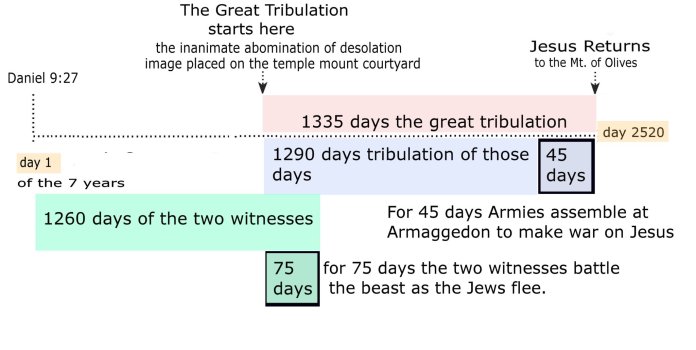
Contrary to popular belief, the Great Tribulation is not something that will happen in the future. It began in 70AD with the destruction of Jerusalem and continues to this very day.
Here is the famous verse:
Since context is important for determining the precise timing, it is always a good idea to review the surrounding verses:
Matthew 24:15 is where most stumble. No effort is made to properly unpack the rich amount of information contained within the verse. Let us break it down.
See
The first mistake most folks make is interpreting the word 'see' as 'seeing physically with the eyes'. We now go to the original Greek:
Strong's Greek 3708: horaó
Properly, see, often with metaphorical meaning: "to see with the mind" (i.e. spiritually see), i.e. perceive (with inward spiritual perception).
As we can 'see', there is more than one meaning. So how do we know which meaning is intended? Thankfully, the Holy Spirit gave us the answer right in the verse itself.
let him understand
The instructions are clear. We are to interpret the word 'see' as well as the entire verse itself, through the lens of understanding. In other words, with metaphorical meaning: "to see with the mind" (i.e. spiritually see), i.e. perceive (with inward spiritual perception).
So, what is it that the reader is to understand?
abomination of desolation
The Abomination of Desolation was the Crucifixion that ultimately led to the desolation, i.e., the destruction of Jerusalem in 70AD. This was prophesied many times in the Old Testament, especially in the Book of Daniel. Therefore, the reader of Daniel was to understand what the Abomination of Desolation was and when it was to occur.
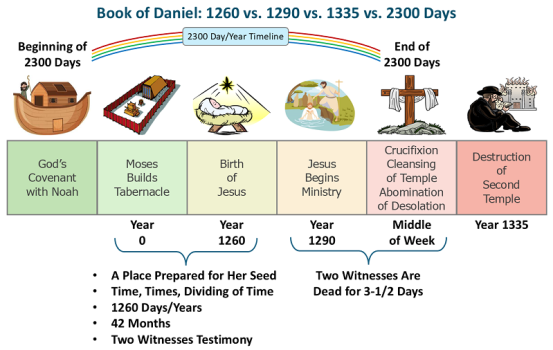
All of the dates were precisely laid out ahead of time. Anyone living in Daniel's time, that had a good grasp of their ancient manuscripts, could have easily deciphered it.
Simply put, when the reader 'saw' as in spiritually understood the meaning of the Abomination of Desolation, they would know that when the Crucifixion occurred, they would have roughly forty-five years to move away from Jerusalem before her desolation. The following verses make it absolutely clear that the desolation was to occur in Judea:
God was kind enough to give the residents plenty of time to start their lives over.
And here we are, thousands of years later after the Great Tribulation began. The only thing left for the world to experience is the Man of Sin to be revealed at end of the world:
Again, the phrase 'those days' is referring to the period of time from 70AD to a yet future end point. There is no coming Great Tribulation. We are in it! Many verses attest to this:
Tribulation has been happening all along. And as a believer in the Harpazo, I would also include a Rapture event coming before the sun is darkened, etc.
The great irony in all of this is that both sides are technically correct. The Harpazo does come after the Great Tribulation *AND YET* the next event that is coming is the Harpazo itself because we are already in the Great Tribulation. Everyone wins... almost.
Here is the famous verse:
Matthew 24:21 - "For then shall be great tribulation, such as was not since the beginning of the world to this time, no, nor ever shall be."
Since context is important for determining the precise timing, it is always a good idea to review the surrounding verses:
Matthew 24:15 - "When ye therefore shall see the abomination of desolation, spoken of by Daniel the prophet, stand in the holy place, (whoso readeth, let him understand)"
Matthew 24:15 is where most stumble. No effort is made to properly unpack the rich amount of information contained within the verse. Let us break it down.
See
The first mistake most folks make is interpreting the word 'see' as 'seeing physically with the eyes'. We now go to the original Greek:
Strong's Greek 3708: horaó
Properly, see, often with metaphorical meaning: "to see with the mind" (i.e. spiritually see), i.e. perceive (with inward spiritual perception).
As we can 'see', there is more than one meaning. So how do we know which meaning is intended? Thankfully, the Holy Spirit gave us the answer right in the verse itself.
let him understand
The instructions are clear. We are to interpret the word 'see' as well as the entire verse itself, through the lens of understanding. In other words, with metaphorical meaning: "to see with the mind" (i.e. spiritually see), i.e. perceive (with inward spiritual perception).
So, what is it that the reader is to understand?
abomination of desolation
The Abomination of Desolation was the Crucifixion that ultimately led to the desolation, i.e., the destruction of Jerusalem in 70AD. This was prophesied many times in the Old Testament, especially in the Book of Daniel. Therefore, the reader of Daniel was to understand what the Abomination of Desolation was and when it was to occur.
All of the dates were precisely laid out ahead of time. Anyone living in Daniel's time, that had a good grasp of their ancient manuscripts, could have easily deciphered it.
Simply put, when the reader 'saw' as in spiritually understood the meaning of the Abomination of Desolation, they would know that when the Crucifixion occurred, they would have roughly forty-five years to move away from Jerusalem before her desolation. The following verses make it absolutely clear that the desolation was to occur in Judea:
Matthew 24:16-21 - "Then let them which be in Judaea flee into the mountains: Let him which is on the housetop not come down to take any thing out of his house: Neither let him which is in the field return back to take his clothes. And woe unto them that are with child, and to them that give suck in those days! But pray ye that your flight be not in the winter, neither on the sabbath day: For then shall be great tribulation, such as was not since the beginning of the world to this time, no, nor ever shall be."
God was kind enough to give the residents plenty of time to start their lives over.
And here we are, thousands of years later after the Great Tribulation began. The only thing left for the world to experience is the Man of Sin to be revealed at end of the world:
Matthew 24:29 - "Immediately after the tribulation of those days shall the sun be darkened, and the moon shall not give her light, and the stars shall fall from heaven, and the powers of the heavens shall be shaken:"
Again, the phrase 'those days' is referring to the period of time from 70AD to a yet future end point. There is no coming Great Tribulation. We are in it! Many verses attest to this:
John 16:33 - "These things I have spoken unto you, that in me ye might have peace. In the world ye shall have tribulation: but be of good cheer; I have overcome the world."
Tribulation has been happening all along. And as a believer in the Harpazo, I would also include a Rapture event coming before the sun is darkened, etc.
The great irony in all of this is that both sides are technically correct. The Harpazo does come after the Great Tribulation *AND YET* the next event that is coming is the Harpazo itself because we are already in the Great Tribulation. Everyone wins... almost.