Deuteronomy 18
9 “When you come into the land which the Lord your God is giving you, you shall not learn to follow the [d]abominations of those nations. 10 There shall not be found among you anyone who makes his son or his daughter pass[e] through the fire, or one who practices witchcraft, or a soothsayer,
or one who interprets omens, or a sorcerer, 11 or one who conjures spells, or a medium, or a spiritist, or one who calls up the dead. 12 For all who do these things are [f]an abomination to the Lord, and because of these abominations the Lord your God drives them out from before you. 13 You shall be [g]blameless before the Lord your God. 14 For these nations which you will dispossess listened to soothsayers and diviners; but as for you, the Lord your God has not [h]appointed such for you.
What is an omen? Does the Bible desribe anyone receiving omens? What is a good omen and what is a bad omen?
www.gotquestions.org
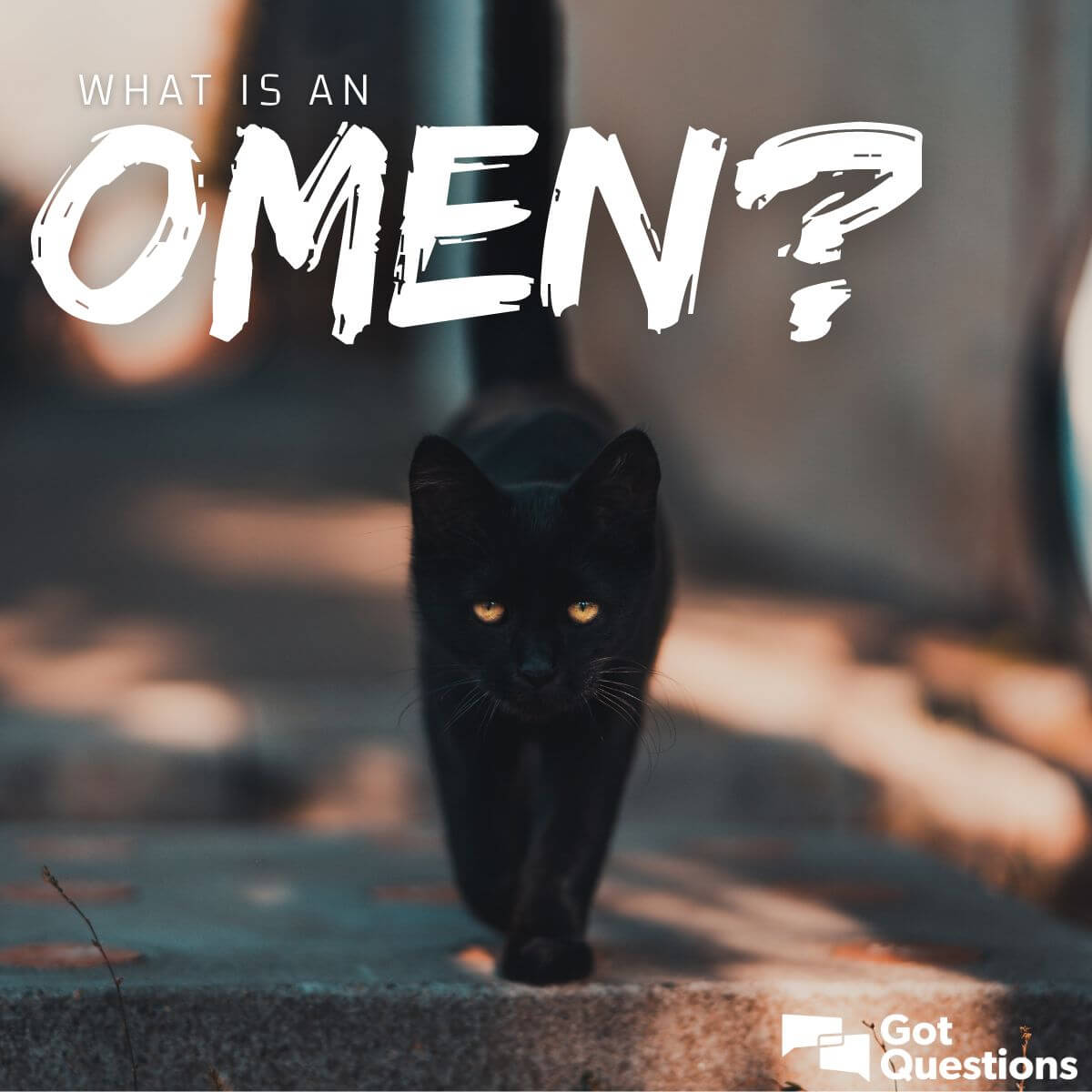
An omen is a sign with prophetic significance that portends an exceptionally notable or disastrous event. Natural phenomena, strange birth defects, or animals acting in unexplainable ways are all commonly seen as omens. Omens can be good or evil, that is, they can foretell a good, positive event or an evil, harmful one. The superstitious might consider finding a heads-up penny a good omen but see a black cat crossing their path as a bad omen.
Omens are closely tied with fortune-telling and divination, as the omen must be “read” or “divined” by someone who knows how. Throughout the ancient world, omens (also referred to as signs and portents) were believed, divined, and obeyed. For example, in ancient Assyria if the king received an evil omen, he would go into hiding and the Assyrians would place a decoy king on the throne in anticipation that the evil event would befall the false king instead of the true one.
Signs sometimes occurred in the Bible in association with prophecies from God. Isaiah the prophet said that he and his children were “signs and symbols” to Israel (
Isaiah 8:18). The names of Isaiah’s children were meaningful to Israel’s future (see
Isaiah 8:1–4). Also, God made Isaiah walk naked and barefoot as “a sign and omen against Egypt and Cush” (
Isaiah 20:3, NET). In this case, God placed Isaiah’s nakedness in the sight of those doomed lands as a sign to them about their destruction. Another divine prophecy accompanied by a sign in the
book of Isaiah is the backwards movement of the shadow on the sundial (
Isaiah 38:7–8). These events—these “omens”—were clear confirmations of God’s plan.
Another example of a sign or “omen” happened before the exodus. God sent Moses to Pharaoh with a sign: when Moses threw his staff down, God turned it into a serpent. This miracle was specifically designed to convince those who did not believe (
Exodus 4:1–5). The presence of a snake in the royal court should also have been a sign to Pharaoh of the plagues to come, but he failed to heed the omen. Another person who tragically failed to heed a divine omen was Pontius Pilate. During Jesus’ trial, Pilate’s wife sent him an urgent message: “Don’t have anything to do with that innocent man, for I have suffered a great deal today in a dream because of him” (
Matthew 27:19).
These portents occurred in the Bible, usually through God’s prophets, when it served God’s purpose. However, the Bible expressly forbids divination of any kind: “Let no one be found among you who . . . interprets omens. . . . Anyone who does these things is detestable to the Lord” (
Deuteronomy 18:10–12). We do not live by
superstition, and we should not be searching for good or evil omens. Our understanding of the spiritual world does not come through the occult. God has given us the ultimate sign of His goodness, love, and grace in Jesus Christ (
1 John 4:9). The Bible is our source for spiritual insight (
2 Peter 1:19–21).