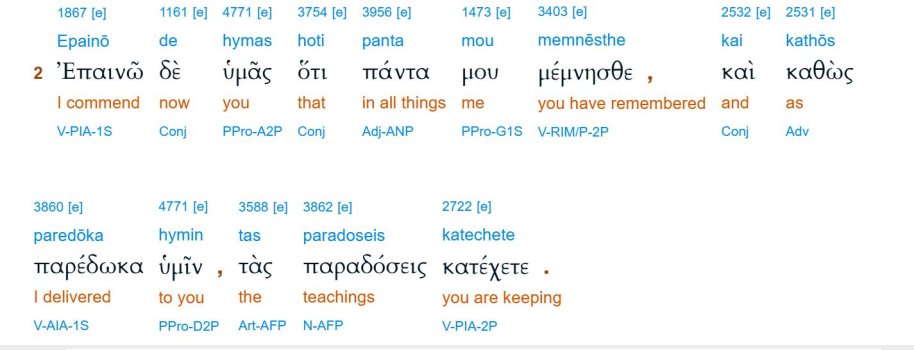
The question of what ordinances must be kept is not left to Paul’s words, but is made clear by the teaching of the Lord Jesus and His apostles. Jesus commanded, “Go therefore and make disciples of all the nations, baptizing them in the name of the Father and of the Son and of the Holy Spirit, teaching them to observe all things that I have commanded you”(Matthew 28:19–20). Baptism is not a tradition of men but a command of Christ. Peter, following this command, said, “Repent, and let every one of you be baptized in the name of Jesus Christ for the remission of sins” (Acts 2:38). The early believers obeyed this word, for it is written, “Then those who gladly received his word were baptized” (Acts 2:41).
The Lord’s Supper also came directly from Jesus, who on the night He was betrayed said, “Take, eat; this is My body”and, “Drink from it, all of you. For this is My blood of the new covenant, which is shed for many for the remission of sins” (Matthew 26:26–28). Luke records, “Do this in remembrance of Me” (Luke 22:19). This was a command from Christ Himself, not an optional teaching of men.
The apostles continued in these same ordinances. It is written, “And they continued steadfastly in the apostles’ doctrine and fellowship, in the breaking of bread, and in prayers” (Acts 2:42). This shows that baptism, the Lord’s Supper, and the teachings of Christ were all kept together as part of the life of the church from the beginning.
Therefore, when Scripture speaks of ordinances, it is not about human traditions or private instructions, but the commands of the Lord that He gave to His disciples to be observed by all who follow Him. As Jesus Himself said, “If you love Me, keep My commandments” (John 14:15).