


Is it possible to lose salvation?
- Thread starter LoveYeshua
- Start date
-
Welcome to Christian Forums, a Christian Forum that recognizes that all Christians are a work in progress.
You will need to register to be able to join in fellowship with Christians all over the world.
We hope to see you as a part of our community soon and God Bless!
You are using an out of date browser. It may not display this or other websites correctly.
You should upgrade or use an alternative browser.
You should upgrade or use an alternative browser.

Big Boy Johnson
Well-Known Member
We CAN and DO pray to souls of the Saints in Heaven . . .
We CAN and DO pray to Angels in Heaven . . .
The catholics totally forgot to add.... "and we CANNOT find any command or instructions from the Lord or His Apostles telling us to pray to those separated from this world (physically dead people) or showing them doing this themselves but we heard the devil likes people to talk to familiar spirits (demons) so we gonna keep doing this because it's what our father the devil wants us to do since he makes us feel special and we like that cause it's all about us and what we want!"

BreadOfLife
Well-Known Member
- Jan 2, 2017
- 22,692
- 3,835
- 113
- Faith
- Christian
- Country
- United States
- Gender
- Male
That's exactly what I would have expected from someone of such "incredible" intellect . . .


ProverbsInPink
Well-Known Member
- Oct 13, 2025
- 1,253
- 1,057
- 113
- Faith
- Christian
- Country
- United States
- Gender
- Female
I asked for proof in scripture that tells us how God rescinds all that transpired when we were regenerated through Christ once we decide to lose our Salvation.2 Cor 5:
[16] Wherefore henceforth know we no man after the flesh: yea, though we have known Christ after the flesh, yet now henceforth know we him no more.
[17] Therefore if any man be in Christ, he is a new creature: old things are passed away; behold, all things are become new.
Criteria … A man IN Christ
Consequence …That man IS a new Creature.
The Change… From Flesh to Spiritual.
The Whole….. body, soul, spirit
1 Thes 5:
[23] And the very God of peace sanctify you wholly; and I pray God your whole spirit and (whole) soul and (whole) body be preserved blameless unto the coming of our Lord Jesus Christ.
Glory to God,
Taken
BreadOfLife
Well-Known Member
- Jan 2, 2017
- 22,692
- 3,835
- 113
- Faith
- Christian
- Country
- United States
- Gender
- Male
Interesting . . .The catholics totally forgot to add.... "and we CANNOT find any command or instructions from the Lord or His Apostles telling us to pray to those separated from this world (physically dead people) or showing them doing this themselves but we heard the devil likes people to talk to familiar spirits (demons) so we gonna keep doing this because it's what our father the devil wants us to do since he makes us feel special and we like that cause it's all about us and what we want!"
Can YOU show me where Jesus or the Apostles taught OR commanded -
- Scripture being our SOLE Authority??
- A Pre-Trib “Rapture”??
- “Personal Relationship with Christ”??
- “Accepting Christ as personal Lord and Savior”??
- “Eternal Security (OSAS)”??
I'll waith right here for your well-researched answers . . .

Taken
Well-Known Member
Ahh, yes – another cop-out.
Just admit you couldn’t find anything.
Calling out your gaslighting is not a cop out…
You said it… You provide the Scripture! Duh!
I never said their flesh wasn‘t dead. I said THEY weren’t dead.
Necromancy (/ˈnɛkrəmænsi/) is the practice of magic involving communication with the dead by summoning their spirits.
Deut 18:
[10] There shall not be found among you any one that maketh his son or his daughter to pass through the fire, or that useth divination, or an observer of times, or an enchanter, or a witch,
[11] Or a charmer, or a consulter with familiar spirits, or a wizard, or a necromancer.
[12] For all that do these things are an abomination unto the LORD: and because of these abominations the LORD thy God doth drive them out from before thee.
We see the disembodies souls of the martyrs in Heaven
You SEE disembodied souls IN Heaven?
LOL!!
PRAY…and you don’t seem to get it. Let me go even further . . .
Not a mystery.
Prayer IS The exclusive Means of a mans Communication TO God.
Prayer TO God, FOR others is For Living men, To Pray TO God, For Living Persons…
Living Persons HAVE Alive Living Body’s !!!
Duh!
Never are living men Directed to PRAY TO disembodied souls or spirits in Heaven.
Not ONLY does Pray simply mean, to ASK
Not in Spiritual Understanding…
Pray “spiritually” is exclusively TO God.
Ask is between Living men.
Ask is Also between a man and Gods APPOINTED “intercessor” JESUS.
No where does Scripture teach for a living man TO PRAY “TO” human men, their body’s, their soul, their spirit.
OR make statutes of Them to bow down to.
Twisting the spiritual truth, in an attempt to appease and exalt your secular rituals, is still twisting the truth.
Many Biblical characters are held in high esteem and remembrance for they being Noteworthy Examples of Dutiful Faithful Servants…
YET…somehow your church doctrine has Wrongfully Given “them” Non-Biblical, Corrupt “assignments” and “duties” and “titles”…
Unto the LORD…
A necromancer IS an Abomination!
Taken
Well-Known Member
I asked for proof in scripture that tells us how God rescinds all that transpired when we were regenerated through Christ once we decide to lose our Salvation.
Not presenting a study… just a brief.
A man “IN Christ” is NOT in jeopardy of losing his Already Received Salvation.
Believers, who are Not “IN Christ”… are in danger, day by day, that they could be influenced to Reject God, and thus would LOSE being able to ever “receive” “the gift of salvation, bought, paid for and offered them.”
The gift is “accepted” by a mans “WORD AND True Hearts Thought”.
The gift IS Given… After an ACCOUNTED ONE “Required” bodily Death
Faithful OT men… could ONLY receive their salvation gift… AFTER mortal (physical bodily) death.
Faithful NT (better testament… See Heb 7:22), Offers a man Salvation… by his Word. And “willingly giving his bodily Life… crucified WITH Jesus’ body”…
His body IS Accounted Dead…
Fulfilling the ONE Bodily Requirement…
(Body must, shall die God requires it…See
Gen 9:5…. And Heb 9:27)
A human body Can Not be Glorified Until After the Old Body Has Died.
1 Cor 15;
[36] Thou fool, that which thou sowest is not quickened, except it die:
Men “IN” Christ… (soul saved, spirit born again”, bodily crucified with Christ…
Spiritually “live IN Christs risen Body”…
Until their OWN body is Raised “glorified”…
Rapture.
They IN Christs body…
Christ… the SEED of God… IN Them
(1 John 3:9)
Christ… the Power of God… IN Them
(1 Cor 1:24)
Spirit of Truth … Jesus… IN Them
(John 16:13)
They are fully “prepared” ( forgiven, saved, quickened/ spirit born again, body to be raised glorified)… when the Lord calls them up to Him ( in the clouds ), to meet their Lord…
While great tribulations are sent down upon the whole world because of their “unrighteousness”
(Rom 1:18)
Only two options… With or without God.
If one is Not with Him, they ARE without Him, Against Him.
(Matt 12:30)
There are many who Believe… but have made no “commitment”. There are many devils, anti- Christ men, demon possessed men… prowling to convince the uncommitted to “reject” God.
Open eyes, Open Ears…Rejection is pridefully broadcasted daily.
Glory to God,
Taken

Been on that list for a very liong time.. LolNow you're on the hit list of the OSAS people View attachment 72950

ProverbsInPink
Well-Known Member
- Oct 13, 2025
- 1,253
- 1,057
- 113
- Faith
- Christian
- Country
- United States
- Gender
- Female
I think the reason there are those who synopsize their misunderstanding of the Gospel as OSAS,intending that acronym.as a slur,is because they don't understand the power of God in fulfilling His plan of Salvation.
Apparently those people think people who claim to now Christ yet Sin consistently, deny parts of the Gospel they disagree with, think mortals have to commit to Jesus so Jesus reciprocates and therein keeps them saved, are an example of Christian. While their behaviors are a reflection of arrogance that smugly thinks Salvation remains steadfast regardless of bad behaviors. And those behaviors prove Salvation cannot be said to be irrevocable. Because one cannot sin with impunity and think God approves.
That rationale is actually contrary to what is in scripture.
It also reiterates what opponents of Eternal Salvation always fail to realize.
We are not Saved by our own efforts or choice. We are called by God to His understanding that our natural worldly Intellect was incapable of understanding before.
And when we are called into that understanding we also know we who are called do not make it a habit to sin wilfully. We do not desire to live a selfish worldly life thinking we are Heaven bound no matter what.
Apparently those people think people who claim to now Christ yet Sin consistently, deny parts of the Gospel they disagree with, think mortals have to commit to Jesus so Jesus reciprocates and therein keeps them saved, are an example of Christian. While their behaviors are a reflection of arrogance that smugly thinks Salvation remains steadfast regardless of bad behaviors. And those behaviors prove Salvation cannot be said to be irrevocable. Because one cannot sin with impunity and think God approves.
That rationale is actually contrary to what is in scripture.
It also reiterates what opponents of Eternal Salvation always fail to realize.
We are not Saved by our own efforts or choice. We are called by God to His understanding that our natural worldly Intellect was incapable of understanding before.
And when we are called into that understanding we also know we who are called do not make it a habit to sin wilfully. We do not desire to live a selfish worldly life thinking we are Heaven bound no matter what.
RomeSweetHome
New Member
Read the two Babylons. I know the Roman hierarchy considers it heretical but read it anyway.
By Hislop? Yikes. Here's evangelical, former Hislop emulator Ralph Woodrow explaining on Hank Hanegraaff's website (originally 25 years ago) why he went as far as to pull his own book based on Hislop's out of print because he realized that Hislop had engaged in faux history (to be charitable about it). If Hislop is a contributing source of your antipathy to the Church, you really should reinvestigate - seems like you've imbibed lies.
RomeSweetHome
New Member
You can conclude it a dodge if you wish but it is not. I found the texts at studylight .org which used anathenios (I hoped I spelled that right) instead of syngenes
and bible hub, when I queried brought up no OT uses of syngenes. After doing a deeper search of bible hub, I found the uses of syngenes. As I said, I regret the error. I was rushed that day ( I had ot bring my wife for day stay surgery) and did not do full diligence and just accepted the initial cursory response I got. If this is not "coming clean" enough, it is the best I can do.
First, of course, hope your wife is fine.
Second, though, this still doesn't track, as study light's lxx uses the word.
Third, regardless, you declared as "unalterable fact" that the LXX did not use the word because it was unavailable in Greek (you were trying to argue why all the uses of "brother" in the Septuagint to refer to non-biological-sibling kin could be explained away [because, according to you, there was no word for cousin they could've used instead]). But that "unalterable fact" was false. And so all those instances stand unrebutted and further support that, in Koine, as a matter of accepted and practiced semantic usage, "brother" can be used for non-biological-sibling relative. (This bears on a point you make below)
And just because I erred due to lax diligence, I will not stop going after people butchering language and grammatic rules. That is where many errors come from, dud to lousy grammar.
You called "unalterable facts" something that you now admit you had done "lax diligence" on. About something as simple as the words in the text. But you're still going to "go after" people butchering language and grammar rules? Really? I'm not saying don't argue your points--but have some humility, and not just because it is a virtue but because those who live in glass houses shouldn't throw stones!
Well you and BOL have yet to give real examples of adelphos and adelphoi of being used for cousins or other relatives outside of the contended verses.
I know it can be used of fellow countrymen or associates with a common cause.
From Bible Hub:
adelphos: Brother
Original Word: ἀδελφός
Part of Speech: Noun, Masculine
Transliteration: adelphos
Pronunciation: ah-del-FOS
Phonetic Spelling: (ad-el-fos')
KJV: brother
NASB: brethren, brother, brothers, brother's, believing husband
Word Origin: [from G1 (α - Alpha) (as a connective particle) and delphus "the womb"]
1. a brother
2. (of faith) a brother in our Lord, Jesus
{literally or figuratively; near or remote; much like G1}
no cousin or near relative implied here
From blue letter bible:
adelphos (Key)
TDNT Reference: 1:144,22
KJV Translation Count — Total: 346x
The KJV translates Strong's G80 in the following manner: brethren (226x), brother (113x), brother's (6x), brother's way (1x).
Outline of Biblical Usage [?]
Strong’s Definitions [?](Strong’s Definitions Legend)
- a brother, whether born of the same two parents or only of the same father or mother
- having the same national ancestor, belonging to the same people, or countryman
- any fellow or man
- a fellow believer, united to another by the bond of affection
- an associate in employment or office
- brethren in Christ
- his brothers by blood
- all men
- apostles
- Christians, as those who are exalted to the same heavenly place
ἀδελφός adelphós, ad-el-fos'; from G1 (as a connective particle) and δελφύς delphýs (the womb); a brother (literally or figuratively) near or remote (much like G1):—brother.
no cousins here.
Without going back to see what others have cited--I've given you, chapter and verse, in just the past few posts, examples spanning the Koine period from around its start to the NT period, where (1) "adelphos" and "syngenes" are used as synonyms, including to refer to a cousin (like the Tobit 7 example), showing that as a matter of actual usage in Koine, "adelphos" and "syngenes" were not used to the exclusion of the other to talk about relatives besides flesh-and-blood brothers (dispelling your claim that the NT authors necessarily would have used "syngenes" rather than "adelphos" if the "brothers" were, say, cousins rather than blood brothers), and (2) examples showing where "adelphos" was used to speak of cousins (like the 1 Chronicles 23 example) - even though both "syngenes" and "anepsios" were readily available to use, as you now concede - further illustrating that "adelphos" could be used to refer to such relatives.
So I'm at a loss as to why you say that no "real examples" have been provided outside of the Gospel texts (the "contended verses" you reference, I think?). And citing generic definitions, without grappling with those real examples of actual usages, suggests you have no meaningful response to those examples.
And for the Mt. 13:55 passage, why would they use adelphos when anaposis and syngenes were commonly used. The context cannot be talking about simple fellow Jews, or fellow believers, it is speaking directly of family.
See my comments above.
And going beyond those--
One of the "brothers" mentioned in Matthew 13 and other Gospel passages where the "brothers" are named is Simon. Now, Hegesippus was a second century AD Christian historian--believed to be a Jewish convert connected with the Jerusalem church--fragments from whom we have preserved for us in Eusebius. The excerpts we have provide for us the succession of bishops in Jerusalem after James. Worth noting, Hegesippus does not appear concerned with defending any belief about perpetual virginity in the relevant portions--he's seemingly simply relaying history as he's heard and compiled it. And here's what he says about Simon, Jesus's "brother" (Eusebius, Church History, 4.22.24)
A "cousin" of the Lord.
Also see Eusebius, Church History, 3.11.1, which is similar.
In other words, a Jerusalem-based/-connected church historian (where these "brothers" served the church there prominently as bishops), writing in the second century (close in time), unambiguously knows and speaks of one as a cousin.
Make your case for why we should reject such ancient witnesses that corroborate the semantic evidence that "brother" could speak of a "cousin" (and did, in the case of the Gospels).
Last edited:

Christian Soldier
Well-Known Member
Thank you for pointing this out, I should have included it with my reply to those who hold to the unbiblical version of the gospel, where salvation is granted by God at the end of a faithful believers life. They believe that, nobody can be sure of their salvation until they die and then they receive their reward for their good works and keeping the law and remaining faithful to the end.""""if you can save yourself by your good works and keeping the law???? """
Confusion appears to start when believers fail to accept that Christ selected Paul to teach Salvation to believers today.
I don't see anywhere where Paul teaches that a believer today can become UNsaved, UNsealed or UNjustified.
Paul does teach that the life of a post-saved life of a believer will be subject to rewards/loss at the Judgement Seat of Christ yet remains saved.
That version of the gospel, may seem right to man, but we see that Gods Word says in Proverbs 14:12, "There is a way that seems right to a man, But its end is the way of death".
The true gospel message is hard to accept, most professing Christians reject it because it leaves them nothing to boast about, all the glory in salvation goes to God.
Christian Soldier
Well-Known Member
Your interpretation of the gospel, is incoherent, inconsistent and self defeating. I see you have used the pragmatic approach, where you mix opposing versions of the gospel, in an attempt to marry them together. But God is not the Author of confusion and His gospel is not open to private interpretation.Your words do not reflect what Jesus Himself taught. The truth is not found in man-made systems like “Arminian”. Jesus never called His followers by such names. He gave a simple message that combined faith, love, and obedience. Why do you use the words of men to label people?
You accuse others of “believing in salvation by keeping the law,” but that is not what Jesus taught nor what true believers follow. Jesus said that salvation is a gift from God, but He also said that to follow Him we must obey the Father. These are not opposites. They work together.
Jesus said in John 3:16, “For God so loved the world that He gave His only begotten Son, that whoever believes in Him should not perish but have everlasting life.” This shows that salvation begins by believing in Him. But Jesus also said in Matthew 7:21, “Not everyone who says to Me, ‘Lord, Lord,’ shall enter the kingdom of heaven, but he who does the will of My Father in heaven.” So faith without obedience is not enough.
You say there is not a single verse that connects obedience or good works with salvation. Jesus Himself gave many. He said, “If you want to enter into life, keep the commandments” (Matthew 19:17). He said, “If you love Me, keep My commandments” (John 14:15). He said, “Why do you call Me ‘Lord, Lord,’ and not do the things which I say?” (Luke 6:46). These are not the words of someone who teaches that obedience is meaningless.
When the rich man ignored the poor at his gate, Jesus said he was condemned, not because he broke a ritual law, but because he refused to show love and mercy (Luke 16:19–31). When He described the final judgment, He said people would be separated based on their actions like feeding the hungry, visiting the sick, helping the needy (Matthew 25:31–46).
None of this means that we earn salvation. It means that those who truly receive salvation will live by the Spirit and do what pleases God. As Jesus said, “A tree is known by its fruit” (Matthew 12:33).
So the real question is not “why did God send His Son if you can save yourself,” because no one can save themselves. The question is “why do you call Him Lord and refuse to do what He says?” He came not only to forgive sin but to lead us into a new life of obedience to God.
Jesus gave His life so we could be set free from sin, not so we could remain in it and claim we are saved while disobeying Him. True faith brings change, and that change shows itself in a life that keeps His word.
So you see, the gospel that Jesus preached is not a debate between man-made doctrines. It is a call to believe, to repent, to love, and to obey the Father through His Son. That is the light of Scripture, and it cannot be twisted.
The fact that you have not identified which gospel you believe in, shows that your that haven't yet come to the knowledge of the truth of the gospel.
You claim that the gospel (or preaching of the cross) message is simply "faith, love and obedience". So you leave me to conclude that you believe that Jesus prescribed those three requirements, in return for salvation.
The problem with your private interpretation is, that it falls flat on it's face when we shine the light of scripture on it.
Here's what God said about salvation, in >>>
Ephesians 2:8-9
For by grace you have been saved through faith; and that not of yourselves, it is the gift of God; not as a result of works, so that no one may boast.
There you have it, you claim one thing ut Gods said something contrary to you. Now it's up to you to either believe what God clearly said, or continue to hold on to your private opinion.
I've never heard of your prescription for salvation before. You referred to faith as the first requirement, but God said that He is the One who gives His people faith. It's not something you create by your own might and wisdom.
Your second requirement is "love", I hate to disappoint you but Gods is love, not you. You can't produce love by your own might and wisdom, you can't show love unless God gives it to you first.
Your third requirement is "work" of "obedience", again, you can't produce obedience by your own might or wisdom. Only those who have been saved respond with "faith" "love" and 'obedience", and that not of ourselves, it is the gift of God lest anyone boast.
Every single professing Christian, holds to one of two interpretations of the gospel. You either believe that God is the Author and finisher of salvation, that's the "saved by grace" gospel message.
Or you believe the "saved by works" version of the gospel.
I'm not sure how much you know about Church history, but the Church was divided over these two interpretations of the gospel, 500 years ago and it is more divided over these two interpretations of the gospel, than ever before. This division caused a war between the two camps of Christians, it was a very bloody war with tens of thousands being butchered to death by their supposed brethren.
The hatred is still hot in the Church to this day, and it will always remain until the Lord returns. I'm not going to go over the rest of the scriptures you made reference to. It would take too long and your most probably not interested in the truth of the gospel anyway.
Christian Soldier
Well-Known Member
You have a serious problem with comprehension, you hate the truth so much that every time I answer you foolish question, you reject it and demand I tell you some lies. Well, I don't lie, so I'm about to make an exception for you.Im not an "arminian".
Also...
Is there a good reason you wont tell us who in your family were chosen for Hell before they were born, while you were chosen for Heaven you believe???? @Christian Soldier
You dont want to answer this question?.
You can't face it like an adult?
Listen...You are the one teaching that some people are predestned for Hell before they are born.... so, who in your family is predesined for Hell, and and why were you not.. @Christian Soldier
So...Ive now asked you 7 times and i'll keep asking you until you answer, as the members and the MODS here need to see you as you really are, as a person.
= (Your Character).
You are certainly continuing to give them clear evidence by continuing to avoid my question. @Christian Soldier
I have asked you 7 times, when did I ever claim that God predestines anyone to hell??????????? Answer never!!!!! so stop your lying and false accusations already. You should be ashamed of yourself.
You must show me where or when or how I made such a stupid claim, if you can't then that will prove that you're just a troll

Ronald Nolette
Well-Known Member
Well in you rmind, any sect that disagrees with Rome, is heretical. but yes some of those sects had heretical beliefs. all sects do simply because churches are in habited by people.Your links include Marcionism, Manicheaism, Thomasines, Montanism , Gnostics and others that are heretical sects - and NOT true Christians at all. As for the Christian Churches , they were ALL Catholic - just in different cultures and geographical areas.
Do your HOMEWORK . . .
and so? The church was not known as the "catholic church" in many circles. It was merely christians or followers of Jesus.You completely missed the point I was making – but I’m NOT surprised . . .
I added the capital “C” to make a point that “catholic church” is being used as a TITLE and NOT a mere description in the Martyrdom of Polycarp.
Ronald Nolette
Well-Known Member
Well there are others that show more than just a casual connection. but show me some of th is debunking.HILARIOIS . . .
Allow me to educate you about Alexander Hislop’s heavily-debunked work, "The Two Babylons".
Just about everything you listed is right out of Hislop's book. One of his staunchest adherents, Ralph Woodrow was so obsessed with Hislop that he wrote his own book called "Babylon Mystery Religion". HOWEVER - when doing some actual research for a follow-up book, he discovered to his horror that his hero Hislop simply INVENTED all of his nonsense.
Woodrow quickly pulled his book from print and published a work debunking Hislop called "The Babylon Connection?" He now runs a website APOLOGIZING for his first book and trying to make sure that people know about Hislop's garbage.
Apparently - YOU didn't get the memo . . .
Glad I could bring humor to your day.
No because jesus is God. Mary is just another sinner saved by grace.Soooo, that means what, exactly??
Jesus’s story seems to mirror many facets of pagan gods like Tammuz in Mesopotamia, Adonis in Syria, Attis in Asia Minor, and Horus in Egypt.
Krishna was –born of a Virgin, baptized in a riven, put to death, resurrected and ascended to Heaven. Do these things make you doubt the truth about Jesus?
Why did not the first century church exalt Mary as Queen of heaven or a perpetual virgin when the plain reading of Scripture debunks that claim.
Also all the romanist claims for Mary do not appear in Scripture (except through twisting verses and allegorizing scriptures like the easterngate and the ark of the covenant).
If Mary was the important, you would think that god would have let teh inspired writers of Sacred Scripture write on it. But after Acts 2 Mary becomes invisible! For the focus is Jesus as Mediator and not Mary as co-Mediattrix.
Ronald Nolette
Well-Known Member
Yopur tow late! BOL already posted that.By Hislop? Yikes. Here's evangelical, former Hislop emulator Ralph Woodrow explaining on Hank Hanegraaff's website (originally 25 years ago) why he went as far as to pull his own book based on Hislop's out of print because he realized that Hislop had engaged in faux history (to be charitable about it). If Hislop is a contributing source of your antipathy to the Church, you really should reinvestigate - seems like you've imbibed lies.
No my antipathy to Romanism came straight from Gods word! Hislops book came about two decades later.
I did not know Woodrow is not the infallible source for all things Hislop
Ronald Nolette
Well-Known Member
Woodrow wrote this:By Hislop? Yikes. Here's evangelical, former Hislop emulator Ralph Woodrow explaining on Hank Hanegraaff's website (originally 25 years ago) why he went as far as to pull his own book based on Hislop's out of print because he realized that Hislop had engaged in faux history (to be charitable about it). If Hislop is a contributing source of your antipathy to the Church, you really should reinvestigate - seems like you've imbibed lies.
"The subtitle for Hislop’s book is “The Papal Worship Proved to Be the Worship of Nimrod and His Wife.” Yet when I went to reference works such as the Encyclopedia Britannica, The Americana, The Jewish Encyclopedia, The Catholic Encyclopedia, The Worldbook Encyclopedia – carefully reading their articles on “Nimrod” and “Semiramis” — not one said anything about Nimrod and Semiramis being husband and wife. They did not even live in the same century. Nor is there any basis for Semiramis being the mother of Tammuz. I realized these ideas were all Hislop’s inventions."
But here is an article:
Who Is Semiramis? - Nimrod's Wife
Who is Semiramis? According to the historian Eusebius, Semiramis was the wife of Nimrod. In the Sumerian language, her name is "Sammur-amat."
 truerichesacademy.com
Who is Semiramis?
According to the historian Eusebius, Semiramis was the wife of Nimrod. In the Sumerian language, her name is “Sammur-amat.”According to less trustworthy traditions, Semiramis was Noah’s granddaughter, and both the mother and wife of Nimrod.
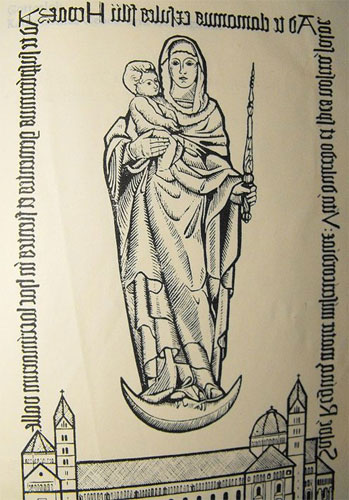
Semiramis – The Mother and Wife of Nimrod
According to various legends, Semiramis became pregnant after engaging in an adulterous affair while married to Nimrod. Around this same time, Nimrod dies a violent and untimely death. In an effort to retain power and to hide her misdeeds, Semiramis makes a most audacious claim. She publicly declares that upon Nimrod’s death he had been resurrected as the god of the sun. As the sun-god, Nimrod used his sun rays to miraculously inseminate Semiramis with a child. This child was thus considered to be divinely conceived. The child’s name was Tammuz, which she claimed was the reincarnated Nimrod. (Thus, Semiramis was both Nimrod’s wife and mother.)
I cannot vouch for his video on America Liberty as I have not looked into it, but I do no tthink you consider Eusebius a liar.
Ronald Nolette
Well-Known Member
First, of course, hope your wife is fine.
Second, though, this still doesn't track, as study light's lxx uses the word.
Third, regardless, you declared as "unalterable fact" that the LXX did not use the word because it was unavailable in Greek (you were trying to argue why all the uses of "brother" in the Septuagint to refer to non-biological-sibling kin could be explained away [because, according to you, there was no word for cousin they could've used instead]). But that "unalterable fact" was false. And so all those instances stand unrebutted and further support that, in Koine, as a matter of accepted and practiced semantic usage, "brother" can be used for non-biological-sibling relative. (This bears on a point you make below)
You called "unalterable facts" something that you now admit you had done "lax diligence" on. About something as simple as the words in the text. But you're still going to "go after" people butchering language and grammar rules? Really? I'm not saying don't argue your points--but have some humility, and not just because it is a virtue but because those who live in glass houses shouldn't throw stones!
Without going back to see what others have cited--I've given you, chapter and verse, in just the past few posts, examples spanning the Koine period from around its start to the NT period, where (1) "adelphos" and "syngenes" are used as synonyms, including to refer to a cousin (like the Tobit 7 example), showing that as a matter of actual usage in Koine, "adelphos" and "syngenes" were not used to the exclusion of the other to talk about relatives besides flesh-and-blood brothers (dispelling your claim that the NT authors necessarily would have used "syngenes" rather than "adelphos" if the "brothers" were, say, cousins rather than blood brothers), and (2) examples showing where "adelphos" was used to speak of cousins (like the 1 Chronicles 23 example) - even though both "syngenes" and "anepsios" were readily available to use, as you now concede - further illustrating that "adelphos" could be used to refer to such relatives.
So I'm at a loss as to why you say that no "real examples" have been provided outside of the Gospel texts (the "contended verses" you reference, I think?). And citing generic definitions, without grappling with those real examples of actual usages, suggests you have no meaningful response to those examples.
See my comments above.
And going beyond those--
One of the "brothers" mentioned in Matthew 13 and other Gospel passages where the "brothers" are named is Simon. Now,
Well I already apologized for my lack of due diligence about syngenes( I say only the word synanothias or whatver). If you wish to continue after I apologized for me error, fine.was a second century AD Christian historian--believed to be a Jewish convert connected with the Jerusalem church--fragments from whom we have preserved for us in Eusebius. The excerpts we have provide for us the succession of bishops in Jerusalem after James. Worth noting, Hegesippus does not appear concerned with defending any belief about perpetual virginity in the relevant portions--he's seemingly simply relaying history as he's heard and compiled it. And here's what he says about Simon, Jesus's "brother" (Eusebius, Church History, 4.22.24)
A "cousin" of the Lord.
Also see Eusebius, Church History, 3.11.1, which is similar.
In other words, a Jerusalem-based/-connected church historian (where these "brothers" served the church there prominently as bishops), writing in the second century (close in time), unambiguously knows and speaks of one as a cousin.
Make your case for why we should reject such ancient witnesses that corroborate the semantic evidence that "brother" could speak of a "cousin" (and did, in the case of the Gospels).
Chapter 11. Symeon rules the Church of Jerusalem after James.
1. After the martyrdom of James and the conquest of Jerusalem which immediately followed, it is said that those of the apostles and disciples of the Lord that were still living came together from all directions with those that were related to the Lord according to the flesh (for the majority of them also were still alive) to take counsel as to who was worthy to succeed James.2. They all with one consent pronounced Symeon, the son of Clopas, of whom the Gospel also makes mention; to be worthy of the episcopal throne of that parish. He was a cousin, as they say, of the Saviour. For Hegesippus records that Clopas was a brother of Joseph.
So according to you-simon and Joseph(very common names in Judaism) could not be Jesus half brothers as well as also being cousins. that is like saying that in a family, any time John is named it must refer to just one john- even if three are in teh family through three brothers and their wives.
JLB
Well-Known Member
Your interpretation of the gospel, is incoherent, inconsistent and self defeating. I see you have used the pragmatic approach, where you mix opposing versions of the gospel, in an attempt to marry them together. But God is not the Author of confusion and His gospel is not open to private interpretation.
The fact that you have not identified which gospel you believe in, shows that your that haven't yet come to the knowledge of the truth of the gospel.
You claim that the gospel (or preaching of the cross) message is simply "faith, love and obedience". So you leave me to conclude that you believe that Jesus prescribed those three requirements, in return for salvation.
The problem with your private interpretation is, that it falls flat on its lease don’t accuse and slanderface when we shine the light of scripture on it.
that if you confess with your mouth the Lord Jesus and believe in your heart that God has raised Him from the dead, you will be saved. Romans 10:9
Do you believe a unsaved person must confess Jesus as Lord to become saved?
Similar threads

- Replies
- 226
- Views
- 3K

- Replies
- 1
- Views
- 156

- Replies
- 12
- Views
- 341


- Replies
- 2K
- Views
- 18K


- Replies
- 0
- Views
- 45