Can the Bible contain mistakes?

  • Welcome to Christian Forums, a Christian Forum that recognizes that all Christians are a work in progress.

    You will need to register to be able to join in fellowship with Christians all over the world.

    We hope to see you as a part of our community soon and God Bless!

ArkangeMikail

Member
Mar 24, 2025
73
46
18
26
France
Faith
Christian
Country
France
Can the Bible contain mistakes?

The Bible is the Word of God, meaning that the Holy Spirit has inspired men to write it.

However, is it completely perfect and devoid of any mistake or contradiction?

If the Bible is so clear and understandable, why are there so many church denominations? Why Christians don't agree on many things about religion?

Some Christians say that we need to pray to God so that He send us His Holy Spirit who helps us interpret the Bible. However, what does that mean? If several Christians studying the Bible, ask God for discernment, but they finally have opposite interpretations, what can we really conclude?

As a Christian, can we widely reinterpret or even deny certain biblical verses?
 

Davy

Well-Known Member
Feb 11, 2018
15,973
3,379
113
Southeastern U.S.
Faith
Christian
Country
United States
Gender
Male
Not the original manuscripts of God's Word, no. But we don't have that many of those. Even the OT manuscripts the Jews have are from transcribed copies by Israel's scribes. And only some of those actually contain the Massorah scribe notes that were written in the borders of those manuscripts.

Every English Bible translation has translation errors. Can't escape that problem when going from one language to another. But no matter, because God provided a repeat of the events in His Word throughout the various Books so we could always cross-reference and confirm The Word by two or more witnesses.
 

Deborah_

Well-Known Member
Jun 7, 2015
1,177
1,169
113
Swansea, Wales
Faith
Christian
Country
United Kingdom
Gender
Female
Can the Bible contain mistakes?

The Bible is the Word of God, meaning that the Holy Spirit has inspired men to write it.

However, is it completely perfect and devoid of any mistake or contradiction?

If the Bible is so clear and understandable, why are there so many church denominations? Why Christians don't agree on many things about religion?

Some Christians say that we need to pray to God so that He send us His Holy Spirit who helps us interpret the Bible. However, what does that mean? If several Christians studying the Bible, ask God for discernment, but they finally have opposite interpretations, what can we really conclude?

As a Christian, can we widely reinterpret or even deny certain biblical verses?
It all depends on how you define "perfection" and "mistake".

(6) Does the Bible contain errors?

What exactly constitutes an error? Do we mean anything short of exact precision, for example in dates and measurements? Yet the Biblical writers, just like most of us in everyday conversation, often use rough approximations and round figures. Dates are particularly difficult, as in ancient times there was no ‘year zero’ to count from, and people had to use relative dating (e.g. from the beginning of a king’s reign); inevitably this leads to discrepancies (of which there are plenty in the books of Kings and Chronicles).
With regard to teaching doctrine, the Bible's "method" is not to give a detailed argument on any particular issue, but rather to give us direct commands (which may appear contradictory) and leave us to work out how to relate them. For example: in the Ten Commandments we're told to honour our parents (and Jesus upholds this in Mark 7:9-13). But then in Luke 14:26 He tells us that we have to "hate" our father and mother in order to follow Him. Both commands are to be obeyed: the first one is the general rule, but there are certain situations in which the second overrides it. As Ecclesiastes puts it, there is "a time to love and a time to hate." (Ecclesiastes 3:8)

It's not all that difficult to understand the Bible, but it does contain a number of ambiguities, and there are therefore a number of issues on which Christians will quite legitimately disagree. The existence of so many denominations owes more to lack of brotherly love than to serious differences in doctrine.
 

ProverbsInPink

Well-Known Member
Oct 13, 2025
1,268
1,063
113
Mansford
www.cgi.org
Faith
Christian
Country
United States
Gender
Female
I think it's important to understand how language was employed in writing the Bible.

Hate does not translate as what we today understand as hatred.


Luke 14:26 employs Semitic hyperbole to demand that allegiance to Christ eclipse all earthly ties. This does not nullify the Fifth Commandment; it situates it within a graded hierarchy where honoring parents is mandatory unless it conflicts with obedience to the Lord. Far from contradiction, the passages integrate to affirm wholehearted devotion to God that, paradoxically, equips the disciple to honor father and mother more authentically.


No Contradiction but Complementarity

1. Honor parents—ongoing moral duty.


2. Love Christ supremely—ultimate duty.


3. When duties collide, obey the higher without malice toward the lower, fulfilling “hate” as “comparatively less attachment.”


Because Scripture is God-breathed (2 Timothy 3:16) and self-consistent, any appearance of conflict dissolves when context, language, and redemptive hierarchy are weighed.
 

LoveYeshua

Eagle
Staff member
Sep 25, 2024
1,855
1,101
113
Quebec
Faith
Christian
Country
Canada
Gender
Male
Can the Bible contain mistakes?

The Bible is the Word of God, meaning that the Holy Spirit has inspired men to write it.

However, is it completely perfect and devoid of any mistake or contradiction?

If the Bible is so clear and understandable, why are there so many church denominations? Why Christians don't agree on many things about religion?

Some Christians say that we need to pray to God so that He send us His Holy Spirit who helps us interpret the Bible. However, what does that mean? If several Christians studying the Bible, ask God for discernment, but they finally have opposite interpretations, what can we really conclude?

As a Christian, can we widely reinterpret or even deny certain biblical verses?
No mistakes, everything is there for a reason. Some books will instruct us, some will give us hope, some parts of some books will test your faith. some bible versions can change the meaning so be careful, stick with translations that are closer to the original texts. Ah, the numerous church denominations are due to many falsely interpreting scripture. to understand the bible properly one must read it completely as all information in these books complement one another. Most bible books are clear and require no interpretations, many books contain imagery to convey a message, some books are written in a way that are difficult to understand and are easily twisted by some.

Yes we need to pray, and Ask God to open scripture to us, this is primordial, Jesus did promise to those who follow him and do his will that he would send the Holy Spirit;

John 14:16-26 King James Version​

16 And I will pray the Father, and he shall give you another Comforter (HOLY SPIRIT) , that he may abide with you for ever;

17 Even the Spirit of truth; whom the world cannot receive, because it seeth him not, neither knoweth him: but ye know him; for he dwelleth with you, and shall be in you.

18 I will not leave you comfortless: I will come to you.

19 Yet a little while, and the world seeth me no more; but ye see me: because I live, ye shall live also.

20 At that day ye shall know that I am in my Father, and ye in me, and I in you.

21 He that hath my commandments, and keepeth them, he it is that loveth me: and he that loveth me shall be loved of my Father, and I will love him, and will manifest myself to him.

No one should try to interpret some scriptures, notably the words of Jesus in the synoptic gospels need little to no interpretation. ( except certain parables) if one need to interpret it needs to be done in accordance with the words of Christ and Him alone. In other words the meaning of ALL bible scripture must be in accord with the words of Jesus, No other interpretation is permitted as they would bring people away from God and not closer. unfortunately we see this today, a lot of false doctrine circulating today. In doubt Check with what Christ did say. The Old testament is also very valuable to verify and see if some interpretations are true or not.

Blessings

 

MatthewG

Well-Known Member
Apr 21, 2021
18,973
5,787
113
35
Alabama
Faith
Christian
Country
United States
Gender
Male
Can the Bible contain mistakes?

The Bible is the Word of God, meaning that the Holy Spirit has inspired men to write it.

However, is it completely perfect and devoid of any mistake or contradiction?

If the Bible is so clear and understandable, why are there so many church denominations? Why Christians don't agree on many things about religion?

Some Christians say that we need to pray to God so that He send us His Holy Spirit who helps us interpret the Bible. However, what does that mean? If several Christians studying the Bible, ask God for discernment, but they finally have opposite interpretations, what can we really conclude?

As a Christian, can we widely reinterpret or even deny certain biblical verses?

The Bible is just the Bible. The Word of God, was what God spoke, in the beginning say "Let there be light."

The very first line in the bible takes faith to even believe happen or was something that was brought into existence.

The bible is called "The Word of God" by tradition, thats not true...

God, God's Word, and The Holy Spirit of God, was all in the beginning... which takes faith to believe in the first place.

I do believe that the Bible to be true, concerning history, God, and the nation of Israel, and Jesus coming to save the world.

Are there mistakes? Eh, there are edited wordings, but one has to actually study to figure out some of the words and what they mean.

I don't know. Maybe sometimes, there can be, but overall I believe it is still trustworthy.
 
  • Like
Reactions: ArkangeMikail

LoveYeshua

Eagle
Staff member
Sep 25, 2024
1,855
1,101
113
Quebec
Faith
Christian
Country
Canada
Gender
Male
The Bible is just the Bible. The Word of God, was what God spoke, in the beginning say "Let there be light."

The very first line in the bible takes faith to even believe happen or was something that was brought into existence.

The bible is called "The Word of God" by tradition, thats not true...

God, God's Word, and The Holy Spirit of God, was all in the beginning... which takes faith to believe in the first place.

I do believe that the Bible to be true, concerning history, God, and the nation of Israel, and Jesus coming to save the world.

Are there mistakes? Eh, there are edited wordings, but one has to actually study to figure out some of the words and what they mean.

I don't know. Maybe sometimes, there can be, but overall I believe it is still trustworthy.
I see doubt in what you wrote again and again, why do you doubt? what is preventing you to fully believe. if you did you would not have written:
"The bible is called "The Word of God" by tradition, thats not true...

God, God's Word, and The Holy Spirit of God, was all in the beginning... which takes faith to believe in the first place."

Faith? It requires a solid foundation.

just trying to help not judging. I am here if you need, if not then, no need to reply, I will let you be.

Blessings
 
  • Like
Reactions: ArkangeMikail

MatthewG

Well-Known Member
Apr 21, 2021
18,973
5,787
113
35
Alabama
Faith
Christian
Country
United States
Gender
Male
I see doubt in what you wrote again and again, why do you doubt? what is preventing you to fully believe. if you did you would not have written:
"The bible is called "The Word of God" by tradition, thats not true...

God, God's Word, and The Holy Spirit of God, was all in the beginning... which takes faith to believe in the first place."

Faith? It requires a solid foundation.

just trying to help not judging. I am here if you need, if not then, no need to reply, I will let you be.

Blessings

I dont want or seek your help. Thanks! See what you want, however you would like.

Have a good one.
 

NotTheRock

Well-Known Member
Aug 10, 2024
1,117
619
113
50
Oklahoma
Faith
Christian
Country
United States
Not the King James, at least according to KJV-only adherents.
 

Debp

Mod - Encounter Team
Staff member
Encounter Team
Jul 5, 2020
12,953
15,946
113
California
Faith
Christian
Country
United States
Gender
Female
If the Bible is so clear and understandable, why are there so many church denominations? Why Christians don't agree on many things about religion?

Please remember we are still in this fallen world. The Lord Jesus did promise believers that the Holy Spirit would indwell us. But we are still capable of misconstruing things in this world.

So that is why we must read the Bible for ourselves and also make sure we listen to sound Bible teaching. When we read the Word of God for ourselves, that helps us to recognize false teachings.

@Papa Smurf
 
  • Like
Reactions: ArkangeMikail

Papa Smurf

Well-Known Member
Jul 6, 2023
206
297
63
69
Midwest
Faith
Christian
Country
United States
Gender
Male
Can the Bible contain mistakes?
Hello Arkange, can the Bible make mistakes? Well, only if its Author can!

That said, we hold the original manuscripts (or autographs) to be the wholly infallible and inerrant word of God Himself.

I recommend watching the following movie/documentary about this topic. The cast is made up of well-known theologians, pastors, historians, apologists, evangelists and linguists, and the movie (which is all about the Bible) is not only informative and useful, it is also very well-made, with beautiful cinematography, much of it onsite in the Holy Land (as you will be able to see in both the trailer and the movie itself below).

Be sure that both the tailer and the movie are set to HD before watching them (as the video is worth seeing at its best :thumbsupx1). I mention this because, for me at least, the trailer linked below was in HD, but the movie was not for some reason (though changing it to HD was simple enough).
Official Trailer/2 minutes

Full Movie/90 mintues

The Bible is the Word of God, meaning that the Holy Spirit has inspired men to write it.
Yes, that's true, but not in the sense that you and I would mean it apart from Him. IOW, it is the Scriptures themselves that are "inspired" (literally "God-breathed"), the human authors were not.

2 Timothy 3
16 All Scripture is inspired by God/God-breathed and profitable for teaching, for reproof, for correction, for training in righteousness;
17 so that the man of God may be adequate, equipped for every good work.

The Bible is made up of the words that God both wrote (The Decalogue) and spoke, personally (e.g. Isaiah 43:10-11; John 5:24), as well as words that He neither wrote nor spoke personally, but said what He wanted the Bible to tell us. So, I believe that this is one of the reasons why the Bible is called the "word" of God (rather than the "words" of God), because 1. He did not speak/write all of the words contained therein Himself but, 2. the Bible says EXACTLY what He wants it to say because He made sure that it does, for our sake (this was done via the superintendence of the Holy Spirit). IOW, each of the 40 human authors of the Bible used the exact words that God wanted them to use when they wrote their portion of the Holy Writ.

If the Bible is so clear and understandable, why are there so many church denominations? Why Christians don't agree on many things about religion?

Some Christians say that we need to pray to God so that He send us His Holy Spirit who helps us interpret the Bible. However, what does that mean? If several Christians studying the Bible, ask God for discernment, but they finally have opposite interpretations, what can we really conclude?

As a Christian, can we widely reinterpret or even deny certain biblical verses?
My granddaughter is here now, so I will not be able to reply to the rest of your OP until a little later this evening (Dv).

God bless you!!

--Papa Smurf


1762387159298.png
 
Last edited:

Jack

Well-Known Member
May 3, 2022
15,801
5,941
113
Midwest
Faith
Christian
Country
United States
Can the Bible contain mistakes?

Of course. Satan's messengers find them all the time!
 

ProverbsInPink

Well-Known Member
Oct 13, 2025
1,268
1,063
113
Mansford
www.cgi.org
Faith
Christian
Country
United States
Gender
Female
Hello Arkange, can the Bible make mistakes? Well, only if its Author can!

That said, we hold the original manuscripts (or autographs) to be the wholly infallible and inerrant word of God Himself.

I recommend watching the following movie/documentary about this topic. The cast is made up of well-known theologians, pastors, historians, apologists, evangelists and linguists, and the movie (which is all about the Bible) is not only informative and useful, it is also very well-made, with beautiful cinematography, much of it onsite in the Holy Land (as you will be able to see in both the trailer and the movie itself below).

Be sure that both the tailer and the movie are set to HD before watching them (as the video is worth seeing at its best :thumbsupx1). I mention this because, for me at least, the trailer linked below was in HD, but the movie was not for some reason (though changing it to HD was simple enough).


Official Trailer/2 minutes

Full Movie/90 mintues


Yes, that's true, but not in the sense that you and I would mean it apart from Him. IOW, it is the Scriptures themselves that are "inspired" (literally "God-breathed"), the human authors themselves were not.

2 Timothy 3
16 All Scripture is inspired by God/God-breathed and profitable for teaching, for reproof, for correction, for training in righteousness;
17 so that the man of God may be adequate, equipped for every good work.

The Bible is made up of the words that God both wrote (The Decalogue) and spoke, personally (e.g. Isaiah 43:10-11; John 5:24), as well as words that He neither wrote nor spoke personally, but said what He wanted the Bible to tell us. So, I believe that this is one of the reasons why the Bible is called the "word" of God (rather than the "words" of God), because 1. He did not speak/write all of the words contained therein Himself but, 2. the Bible says EXACTLY what He wants it to say because He made sure that it does, for our sake (this was done via the superintendence of the Holy Spirit). IOW, each of the 40 human authors of the Bible used the exact words that God wanted them to use when they wrote their portion of the Holy Writ.


My granddaughter is here now, so I will not be able to reply to the rest of your OP until a little later this evening (Dv).

God bless you!!

--Papa Smurf


Dear Martin, if that were true there wouldn't be a history of seven ecumenical councils deciding what qualified as God's words so to form their official Canon of Scripture.
 

Papa Smurf

Well-Known Member
Jul 6, 2023
206
297
63
69
Midwest
Faith
Christian
Country
United States
Gender
Male
Dear Martin, if that were true there wouldn't be a history of seven ecumenical councils deciding what qualified as God's words so to form their official Canon of Scripture.
Hello ProverbsInPink, I'm fairly certain that it was several regional councils that defined the 73 Book Canon of the Catholic Church, the first being in Rome (382 AD), then in the cities of Hippo, Carthage, & Florance (who all affirmed the same 73 Books set down by the Council of Rome, I think), and then finally at Trent (where the CC Canon was finally made official doctrine or dogma of the RCC).

As far as I know, those first seven ecumenical councils had little to nothing to do with establishing the Canon of Scripture (please let me know if I am wrong about that, thanks).

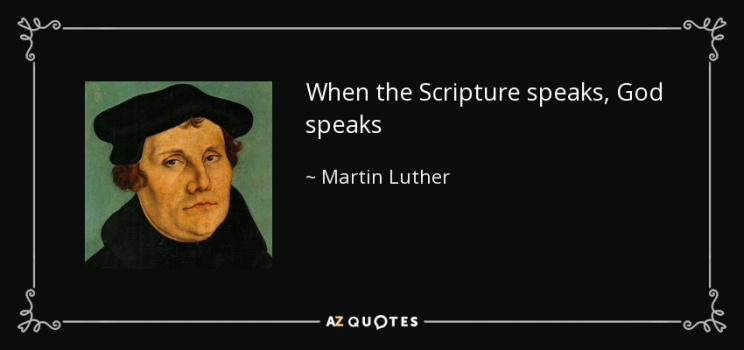
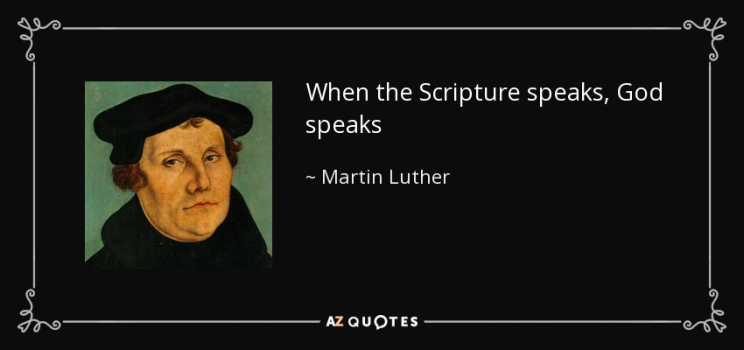
As far as Luther's quote goes, I believe that all he was saying is that whenever we read the Bible or hear something read from it, whether from the OT or the New, we are hearing from God Himself :clmSmlx

Finally, it seems to me that determining which Books/Epistles are actually Holy Scripture (and which ones are not) is a related but very different matter.

God bless you!!

--Papa Smurf


1762583126107.png
 
Last edited:

GodsGrace

Well-Known Member
Aug 29, 2017
17,514
8,609
113
Tuscany
Faith
Christian
Country
Italy
Gender
Female
Hello ProverbsInPink, I'm fairly certain that it was several regional councils that defined the 73 Book Canon of the Catholic Church, the first being in Rome (382 AD), then in the cities of Hippo, Carthage, & Florance (who all affirmed the same 73 Books set down by the Council of Rome, I think), and then finally at Trent (where the CC Canon was finally made official doctrine or dogma of the RCC).

As far as I know, those first seven ecumenical councils had little to nothing to do with establishing the Canon of Scripture (please let me know if I am wrong about that, thanks).

As far as Luther's quote goes, I believe that all he was saying is that whenever we read the Bible or hear something read from it, whether from the OT or the New, we are hearing from God Himself :clmSmlx

Finally, it seems to me that determining which Books/Epistles are actually Holy Scripture (and which ones are not) is a related but very different matter.

God bless you!!

--Papa Smurf


Was the Council of Nicea in 325AD not valid in your opinion?
 

HealthyShape

Well-Known Member
Aug 29, 2025
1,827
673
113
Northeast
Faith
Christian
Country
United States
My view is that the Bible is inspired in main theological and moral points, everything else is a human work. I would even propose various places or books in the Bible have various degrees of inspiration. Which seems quite obvious if one reads the Bible with it in mind. Messianic prophecies are surely of a different importance from (for example) the verses about the firmament with holes in it for rain.

Textual problems with the Bible:

1. Preservation errors - copy errors, different textual families errors
- the Bible you are holding in your hand is a compilation made by various scholars from many various manuscripts; many places differ greatly
- probably the most known problem is that the NT writers used a different OT that differs from the OT in the majority of Bibles

2. The ambiguity of the original languages and texts
- this is not technically an error, but its an imperfection that leads to many errors in translations and interpretations

3. Internal errors and mistakes, in the "original" text
- can be seen when comparing two gospels side by side - inspiration certainly is not a perfect dictation; basically any fundamentalist view of the Bible can be easily debunked by the Bible itself, when comparing two gospels

4. Canonical problems - there are no clear rules why some writing should be in the Bible or not, its all more or less based upon what the majority used and what some human authority said
 
  • Like
Reactions: GodsGrace

Papa Smurf

Well-Known Member
Jul 6, 2023
206
297
63
69
Midwest
Faith
Christian
Country
United States
Gender
Male
Was the Council of Nicea in 325AD not valid in your opinion?
Hello GodsGrace, yes, the Council of Nicea was valid IMHO, my point was that decisions concerning the makeup and establishment of the Biblical Canon were not discussed there, that's all. As I said in my last post,

As far as I know, those first seven ecumenical councils had little to nothing to do with establishing the Canon of Scripture (please let me know if I am wrong about that, thanks).
 
  • Like
Reactions: GodsGrace

GodsGrace

Well-Known Member
Aug 29, 2017
17,514
8,609
113
Tuscany
Faith
Christian
Country
Italy
Gender
Female
Hello GodsGrace, yes, the Council of Nicea was valid IMHO, my point was that decisions concerning the makeup and establishment of the Biblical Canon were not discussed there, that's all. As I said in my last post,
Right.
Missed your point !
Thanks.
 
  • Like
Reactions: Papa Smurf
