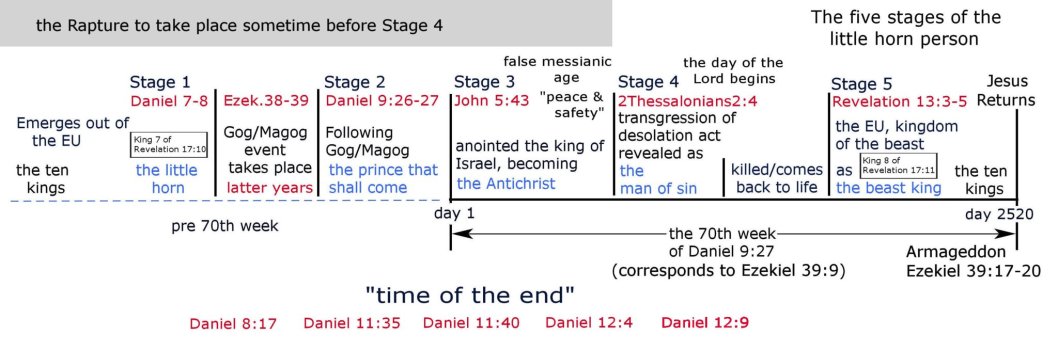
Antiochus IV was not time of the end. Daniel 12:11 is time of the end, Daniel 12:9.
We've already been through this. The "time of the end" is interpreted differently by different interpreters. Many scholars find the phrase to refer to the end of a dynasty or to the end of a monarchy or to the end of a particular period of trouble. The "end" does not have to refer to the eschaton!
It seems quite obvious to me that you're trying to force a particular end-time application of the phrase "time of the end" into an historical application where that interpretation is utterly impossible. The phrase must mean "time of the end of a period of trouble."
I'll tell you how I know this. Dan 8 plainly spells out who the historical figures are, indicating Media, Persia, and Greece. And then they are said to represent a "time of the end." These kingdoms existed in OT history, and are not to be projected into the eschaton! The "time of the end" must therefore mean the time of the end of a series of prophetic events, the end of a biblical drama. The prophecy itself, in fact, declares the "end" to represent the end of the reigns of these kings.
Dan 8.19 He said: “I am going to tell you what will happen later in the time of wrath, because the vision concerns the appointed time of the end. 20 The two-horned ram that you saw represents the kings of Media and Persia. 21 The shaggy goat is the king of Greece, and the large horn between its eyes is the first king. 22 The four horns that replaced the one that was broken off represent four kingdoms that will emerge from his nation but will not have the same power.
23 “In the latter part of their reign, when rebels have become completely wicked, a fierce-looking king, a master of intrigue, will arise. 24 He will become very strong, but not by his own power. He will cause astounding devastation and will succeed in whatever he does. He will destroy those who are mighty, the holy people. 25 He will cause deceit to prosper, and he will consider himself superior. When they feel secure, he will destroy many and take his stand against the Prince of princes. Yet he will be destroyed, but not by human power.
26 “The vision of the evenings and mornings that has been given you is true, but seal up the vision, for it concerns the distant future.”
So this is the history of ancient Media, Persia, Greece, Alexander, and Antiochus 4. It concerns the distant future from Daniel's point of view, but it represented the time of the end of Antiochus' reign, in the series of kings from Medo-Persia to Greece.
Daniel 11:35 is the transition verse to the time of end.
35 And some of them of understanding shall fall, to try them, and to purge, and to make them white, even to the time of the end: because it is yet for a time appointed.
So next, Daniel 11:36-Daniel 12:13 is all time of the end activities.
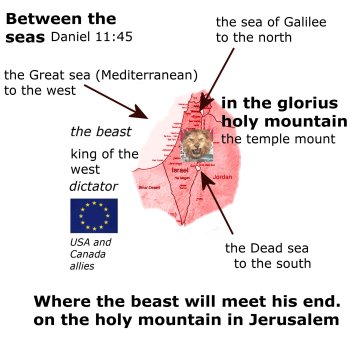
Daniel 11:36 picks up the time of the end activities with (the little horn > prince who shall come > the Antichrist > the revealed man of sin > the beast king) person, in his beast king stage. In his beast king stage, he will be claiming to be God. And that is says in verse 37 he has no regards for the God of his fathers - indicates that the person will be a Jew.
He has to be a Jew in order to go through the Antichrist stage (stage 3 on the chart below).
The entire end portion of ch. 11 in Daniel is about Antiochus, sort of repeating what is said in Dan 8 about Antiochus. It is about the end of his kingdom. Rome is, I believe, the 4th kingdom that emerges as Antiochus falls and the Greek Kingdom goes into decline. That's when Michael is raised up to protect Israel because the Roman Period will be the time of "great tribulation" for the Jewish People, and God wants to ensure their survival.
Jesus quoted that "great tribulation" as he predicted the fall of Jerusalem to begin this period of time--a great exile that will last longer than any previous Israeli judgment. It will finally end with their restoration, which appears to be simultaneous with the resurrection of the saints from the dead.