Christians are in Rebellion against God for not following Torah

  • Welcome to Christian Forums, a Christian Forum that recognizes that all Christians are a work in progress.

    You will need to register to be able to join in fellowship with Christians all over the world.

    We hope to see you as a part of our community soon and God Bless!

Pavel Mosko

Active Member
Dec 19, 2021
266
120
43
58
Boyertown
Faith
Christian
Country
United States
Gender
Male
(As I said on another thread, this to most of us is common sense and basic Biblical literacy, I let Grok take care of most of the work, unlike my favorite projects where Grok is my editor and I brainstorm and write most everything except the last editing fixes).


Acts 15 context and the core debate.
The Jerusalem Council in Acts 15 addressed whether Gentile converts needed circumcision "according to the custom of Moses" to be saved (v. 1), and more broadly, whether they must keep the full law of Moses (v. 5, from Pharisee believers). The decision: no circumcision or full Torah yoke for salvation or basic inclusion; instead, four key abstentions (idols/polluted things, sexual immorality, strangled things, blood—vv. 20, 29), with the letter calling these a "no greater burden" (v. 28) that would let them "do well." James adds in v. 21: "For from ancient generations Moses has had in every city those who proclaim him, for he is read every Sabbath in the synagogues."

This isn't a "full Torah later" curriculum for Gentiles as a default expectation. The council resolved a salvation-and-fellowship crisis by affirming grace-based inclusion (Peter's speech, vv. 7-11) while addressing practical Jewish-Gentile table fellowship and idolatry avoidance. Paul and Barnabas's ministry to Gentiles already showed the Spirit's work without full Torah observance upfront.

Rabbi K's claims: "In rebellion," "starting point," and "hearing Moses"​

Your description matches common Torah-observant / Hebrew Roots / Pronomian interpretations (e.g., "starter set" language from channels like Biblical Roots/Professor Solberg, though he critiques the full Torahist spin). Rabbi Kevin (or similar voices) frames non-full-Torah Christians as rebellious, treating the four rules as minimal entry then synagogue learning toward broader obedience. Here's a granular breakdown from every major angle.

1. "Starting point / starter set" claim (minimal requirements, then full Torah via growth). This views the four as a "beginner pack" to cut pagan sins, with ongoing synagogue attendance (v. 21) implying progressive Torah observance for Gentiles. Proponents say it aligns with God-fearers in synagogues who gradually adopted more, and that full law was always the ideal post-faith.

Counter-evidence and problems:

  • Textual flow: The letter presents these as sufficient ("no greater burden," "you will do well if you keep yourselves from these"). No "for now" or "until you learn more" language. The council explicitly rejects the Pharisee demand to "command them to keep the law of Moses" (v. 5). Adding "and then more later" as normative re-imposes the yoke Peter called unbearable (v. 10).
  • Historical/practical context: These four echo Leviticus 17-18 (universal rules for sojourners in Israel: idolatry, blood, strangled meat, sexual sin) to enable mixed fellowship without forcing full conversion/circumcision. They address real 1st-century issues (temple prostitution, pagan meat, etc.), not a Torah ladder. Gentiles weren't expected to become de facto proselytes.
  • Paul's later practice: In Acts 21:25, the decree is reiterated for Gentiles without expansion. Paul's letters (Galatians strongly against law for justification; Romans 14 on food/Sabbath as non-essential; Colossians 2:16-17 on shadows) treat broader Torah commands (circumcision, festivals, dietary beyond basics) as non-binding for Gentiles in Christ. He circumcised Timothy for Jewish mission strategy (Acts 16), not as rule.
  • Solberg critique angle (which you mentioned): Even if "starting point," it risks shifting focus from Christ to performance. Hebrew Roots can subtly turn obedience into the center, echoing the very legalism the council opposed. Growth in holiness is via the Spirit and Scripture, not mandated synagogue Torah curriculum for all Gentiles.
2. "Hearing Moses read" (v. 21) as proof of progressive full Torah. Common Torahist reading: Gentiles will attend synagogue weekly, hear full Moses, and naturally adopt Sabbath, feasts, kosher, etc., over time. It's "evidence" the apostles expected ongoing Torah learning.

Stronger scholarly and contextual readings:

  • Sensitivity to Jews: "Moses is read every Sabbath" explains why these four (already in Torah, familiar to Jews) won't shock synagogue-goers. Gentiles should accommodate Jewish scruples for unity—practical wisdom, not a curriculum mandate. David Wilber and others note it as continuity with prophets (Amos 9 quoted earlier), but not full law imposition.
  • Contrast, not addition: It contrasts the new Gentile inclusion with long-standing Jewish practice. Jews have Moses preached; Gentiles get minimal rules for fellowship. Scholarly consensus (e.g., Bock) leans toward sensitivity or Jewish concerns guidance, not "learn the rest as requirement." No evidence the apostles commanded Gentile Sabbath-keeping or full dietary later.
  • Broader NT: Hebrews, Galatians, etc., portray the old covenant as preparatory/shadow, fulfilled in Christ. "Moses" points to Christ (John 5:46; Luke 24:27). Synagogue attendance happened (Acts), but wasn't a Torah bootcamp for Gentiles. Many dispersed churches didn't center on it.
  • Rebellion angle weakness: Labeling non-full-Torah observance "rebellion against God" elevates one interpretation to salvific/test-of-obedience level. The council and Paul warned against the opposite: adding law as yoke burdens grace (Galatians 5:1-4). Disobeying clear apostolic decree (idols, immorality, etc.) would be rebellion; not adopting extra-Torah commands isn't, per the text.
3. "In rebellion" thesis. This is strong rhetoric. If the apostles set a floor (not ceiling) and Spirit-led growth varies, calling standard Christian practice "rebellion" over-reads. Empirical NT church: diverse observance, unity around Christ/essentials (1 Cor 8-10 on idols/meat; Rom 14). Early church fathers moved away from mandatory Torah elements. Rebellion language fits rejecting the decree itself or core morality, not this debate.

Other angles (granular):

  • Salvation vs. sanctification: Council was about salvation/entry (not "you cannot be saved" without circumcision). Post-salvation growth is discipleship, not uniform Torah.
  • One Law vs. two-house views: Some Torahists distinguish Jew/Gentile roles; others say one law for all. Acts 15 leans against uniform application.
  • Prophetic fulfillment: James quotes Amos 9 (rebuilding David's tent so Gentiles seek the Lord)—inclusion, not conversion to Judaism.
  • Modern application: Christians should study OT deeply (all Scripture profitable, 2 Tim 3:16), avoid idolatry/immorality, pursue holiness. Many do via church, personal study—not requiring synagogue. Disagreement here is secondary, not rebellion. Sarcasm in debate often arises when one side frames the other as disobedient to God.
Overall assessment: The "starting point + hearing Moses = full Torah" view is a creative but strained reading. It imports assumptions not explicit in the text or consistent with Paul's ministry. The council liberated Gentiles from the full yoke while preserving unity—grace + minimal essentials. Your relief at sarcasm makes sense; these debates get circular when positions harden into "thus saith the Lord" on inferences.
 
Last edited:
  • Like
Reactions: Gray_Joy

Anchorite

Well-Known Member
May 1, 2026
441
371
63
68
Peoria
Faith
Christian
Country
United States
Gender
Male
I do not trust AI for theology. This is muddled by being a commentary on another article. It is poorly composed, too.
 
  • Like
Reactions: Jack and ProDeo

Jack

Well-Known Member
May 3, 2022
15,944
5,989
113
Midwest
Faith
Christian
Country
United States

"Christians are in Rebellion against God for not following Torah"​


Lots of Law preachers but ZERO Law obeyers
 
Last edited:

Gray_Joy

Active Member
May 23, 2026
203
135
43
California
Faith
Christian
Country
United States
Gender
Female
(As I said on another thread, this to most of us is common sense and basic Biblical literacy, I let Grok take care of most of the work, unlike my favorite projects where Grok is my editor and I brainstorm and write most everything except the last editing fixes).


Acts 15 context and the core debate.
The Jerusalem Council in Acts 15 addressed whether Gentile converts needed circumcision "according to the custom of Moses" to be saved (v. 1), and more broadly, whether they must keep the full law of Moses (v. 5, from Pharisee believers). The decision: no circumcision or full Torah yoke for salvation or basic inclusion; instead, four key abstentions (idols/polluted things, sexual immorality, strangled things, blood—vv. 20, 29), with the letter calling these a "no greater burden" (v. 28) that would let them "do well." James adds in v. 21: "For from ancient generations Moses has had in every city those who proclaim him, for he is read every Sabbath in the synagogues."

This isn't a "full Torah later" curriculum for Gentiles as a default expectation. The council resolved a salvation-and-fellowship crisis by affirming grace-based inclusion (Peter's speech, vv. 7-11) while addressing practical Jewish-Gentile table fellowship and idolatry avoidance. Paul and Barnabas's ministry to Gentiles already showed the Spirit's work without full Torah observance upfront.

Rabbi K's claims: "In rebellion," "starting point," and "hearing Moses"​

Your description matches common Torah-observant / Hebrew Roots / Pronomian interpretations (e.g., "starter set" language from channels like Biblical Roots/Professor Solberg, though he critiques the full Torahist spin). Rabbi Kevin (or similar voices) frames non-full-Torah Christians as rebellious, treating the four rules as minimal entry then synagogue learning toward broader obedience. Here's a granular breakdown from every major angle.

1. "Starting point / starter set" claim (minimal requirements, then full Torah via growth). This views the four as a "beginner pack" to cut pagan sins, with ongoing synagogue attendance (v. 21) implying progressive Torah observance for Gentiles. Proponents say it aligns with God-fearers in synagogues who gradually adopted more, and that full law was always the ideal post-faith.

Counter-evidence and problems:

  • Textual flow: The letter presents these as sufficient ("no greater burden," "you will do well if you keep yourselves from these"). No "for now" or "until you learn more" language. The council explicitly rejects the Pharisee demand to "command them to keep the law of Moses" (v. 5). Adding "and then more later" as normative re-imposes the yoke Peter called unbearable (v. 10).
  • Historical/practical context: These four echo Leviticus 17-18 (universal rules for sojourners in Israel: idolatry, blood, strangled meat, sexual sin) to enable mixed fellowship without forcing full conversion/circumcision. They address real 1st-century issues (temple prostitution, pagan meat, etc.), not a Torah ladder. Gentiles weren't expected to become de facto proselytes.
  • Paul's later practice: In Acts 21:25, the decree is reiterated for Gentiles without expansion. Paul's letters (Galatians strongly against law for justification; Romans 14 on food/Sabbath as non-essential; Colossians 2:16-17 on shadows) treat broader Torah commands (circumcision, festivals, dietary beyond basics) as non-binding for Gentiles in Christ. He circumcised Timothy for Jewish mission strategy (Acts 16), not as rule.
  • Solberg critique angle (which you mentioned): Even if "starting point," it risks shifting focus from Christ to performance. Hebrew Roots can subtly turn obedience into the center, echoing the very legalism the council opposed. Growth in holiness is via the Spirit and Scripture, not mandated synagogue Torah curriculum for all Gentiles.
2. "Hearing Moses read" (v. 21) as proof of progressive full Torah. Common Torahist reading: Gentiles will attend synagogue weekly, hear full Moses, and naturally adopt Sabbath, feasts, kosher, etc., over time. It's "evidence" the apostles expected ongoing Torah learning.

Stronger scholarly and contextual readings:

  • Sensitivity to Jews: "Moses is read every Sabbath" explains why these four (already in Torah, familiar to Jews) won't shock synagogue-goers. Gentiles should accommodate Jewish scruples for unity—practical wisdom, not a curriculum mandate. David Wilber and others note it as continuity with prophets (Amos 9 quoted earlier), but not full law imposition.
  • Contrast, not addition: It contrasts the new Gentile inclusion with long-standing Jewish practice. Jews have Moses preached; Gentiles get minimal rules for fellowship. Scholarly consensus (e.g., Bock) leans toward sensitivity or Jewish concerns guidance, not "learn the rest as requirement." No evidence the apostles commanded Gentile Sabbath-keeping or full dietary later.
  • Broader NT: Hebrews, Galatians, etc., portray the old covenant as preparatory/shadow, fulfilled in Christ. "Moses" points to Christ (John 5:46; Luke 24:27). Synagogue attendance happened (Acts), but wasn't a Torah bootcamp for Gentiles. Many dispersed churches didn't center on it.
  • Rebellion angle weakness: Labeling non-full-Torah observance "rebellion against God" elevates one interpretation to salvific/test-of-obedience level. The council and Paul warned against the opposite: adding law as yoke burdens grace (Galatians 5:1-4). Disobeying clear apostolic decree (idols, immorality, etc.) would be rebellion; not adopting extra-Torah commands isn't, per the text.
3. "In rebellion" thesis. This is strong rhetoric. If the apostles set a floor (not ceiling) and Spirit-led growth varies, calling standard Christian practice "rebellion" over-reads. Empirical NT church: diverse observance, unity around Christ/essentials (1 Cor 8-10 on idols/meat; Rom 14). Early church fathers moved away from mandatory Torah elements. Rebellion language fits rejecting the decree itself or core morality, not this debate.

Other angles (granular):

  • Salvation vs. sanctification: Council was about salvation/entry (not "you cannot be saved" without circumcision). Post-salvation growth is discipleship, not uniform Torah.
  • One Law vs. two-house views: Some Torahists distinguish Jew/Gentile roles; others say one law for all. Acts 15 leans against uniform application.
  • Prophetic fulfillment: James quotes Amos 9 (rebuilding David's tent so Gentiles seek the Lord)—inclusion, not conversion to Judaism.
  • Modern application: Christians should study OT deeply (all Scripture profitable, 2 Tim 3:16), avoid idolatry/immorality, pursue holiness. Many do via church, personal study—not requiring synagogue. Disagreement here is secondary, not rebellion. Sarcasm in debate often arises when one side frames the other as disobedient to God.
Overall assessment: The "starting point + hearing Moses = full Torah" view is a creative but strained reading. It imports assumptions not explicit in the text or consistent with Paul's ministry. The council liberated Gentiles from the full yoke while preserving unity—grace + minimal essentials. Your relief at sarcasm makes sense; these debates get circular when positions harden into "thus saith the Lord" on inferences.
I have a feeling this discussion is going to escalate quickly.

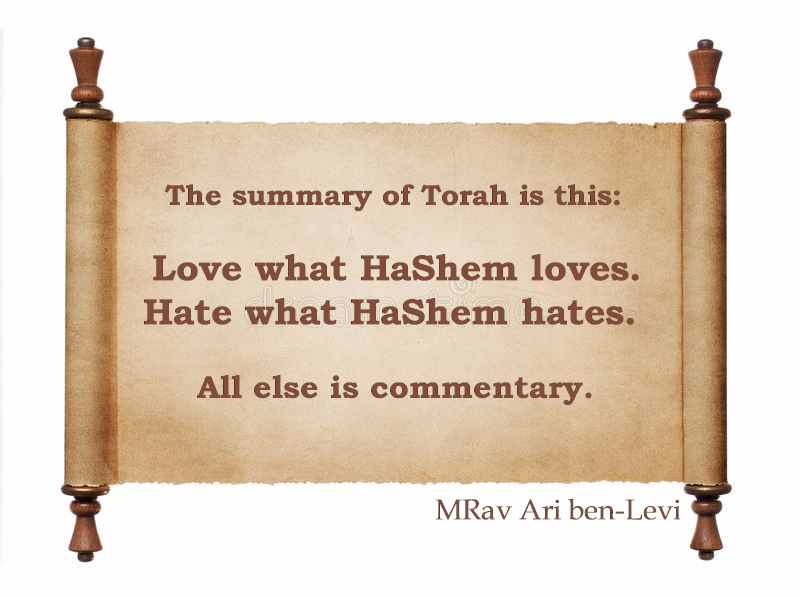
The%20summary%20of%20Torah.png


I think there is something to ponder here.

Jesus was the Messiah of prophecy in the Tanakh. He arrived in 1st century AD. And,he was a Jew.
He said in one of his sermons, I am sent only to the lost sheep of the house of Israel.

Who is of that house?
The Covenant with Abraham,the Abrahamic Covenant, is the foundation of the Old Testament. And the precursor for the New.

Abraham,a Gentile, was the father of the Jewish nation through his seed,his offspring, his sons,Isaac and Jacob.

But for Abraham the father,this would not be so. But it was through God's will.

Messianic Jews believe in Yeshua,Jesus. And follow Torah.

When we are all who hold faith in Christ as his sealed people of The Way of Righteousness, can we truly see as wrong,deluded, heretic, or any insult one might levy so to dismiss the faithfuls Torah observance, as wrong? And condemned by God for doing so?

What would the sacred writings read by those who would as Jews follow the Messiah once arrived be called?
In the New Testament they were people of The Way. And later were called Christians by those in Antioch.

But,what were they first to be known as?
Jews! Because he was the Messiah of their faith.

If you are Messianic,God Bless you. If you identify as Messianic Jew, God Bless you.
If you identify as Christian or a follower of The Way,God Bless you.


Jesus,Yeshua,suffered unimaginable excruciating pain before he died on the cross so to take away our sins covered with his holy precious shed blood.

Is he going to condemn us to damnation because of semantics? Or,because we honored him by participating in the practices first taught before our New Testament, in his Torah?


I'm going to step away from this conversation after inputting these thoughts.

I don't want to see angry debate develop from something added to the discussion in hopes it would stop making us consider the OP proposal is anti-Jesus.
 

Pavel Mosko

Active Member
Dec 19, 2021
266
120
43
58
Boyertown
Faith
Christian
Country
United States
Gender
Male
I do not trust AI for theology. This is muddled by being a commentary on another article. It is poorly composed, too.

I get your not liking some of the grammatic glitches that I had trouble having the AI fix but the rest of your comment is not well founded. There is a huge difference in Grok or AI using trusted or verified sources than what happened in earlier days with Chat GPT using fictitious textbook examples.