Christians are in Rebellion against God for not following Torah

  • Welcome to Christian Forums, a Christian Forum that recognizes that all Christians are a work in progress.

    You will need to register to be able to join in fellowship with Christians all over the world.

    We hope to see you as a part of our community soon and God Bless!

Pavel Mosko

Active Member
Dec 19, 2021
310
134
43
59
Boyertown
Faith
Christian
Country
United States
Gender
Male
(As I said on another thread, this to most of us is common sense and basic Biblical literacy, I let Grok take care of most of the work, unlike my favorite projects where Grok is my editor and I brainstorm and write most everything except the last editing fixes).


Acts 15 context and the core debate.
The Jerusalem Council in Acts 15 addressed whether Gentile converts needed circumcision "according to the custom of Moses" to be saved (v. 1), and more broadly, whether they must keep the full law of Moses (v. 5, from Pharisee believers). The decision: no circumcision or full Torah yoke for salvation or basic inclusion; instead, four key abstentions (idols/polluted things, sexual immorality, strangled things, blood—vv. 20, 29), with the letter calling these a "no greater burden" (v. 28) that would let them "do well." James adds in v. 21: "For from ancient generations Moses has had in every city those who proclaim him, for he is read every Sabbath in the synagogues."

This isn't a "full Torah later" curriculum for Gentiles as a default expectation. The council resolved a salvation-and-fellowship crisis by affirming grace-based inclusion (Peter's speech, vv. 7-11) while addressing practical Jewish-Gentile table fellowship and idolatry avoidance. Paul and Barnabas's ministry to Gentiles already showed the Spirit's work without full Torah observance upfront.

Rabbi K's claims: "In rebellion," "starting point," and "hearing Moses"​

Your description matches common Torah-observant / Hebrew Roots / Pronomian interpretations (e.g., "starter set" language from channels like Biblical Roots/Professor Solberg, though he critiques the full Torahist spin). Rabbi Kevin (or similar voices) frames non-full-Torah Christians as rebellious, treating the four rules as minimal entry then synagogue learning toward broader obedience. Here's a granular breakdown from every major angle.

1. "Starting point / starter set" claim (minimal requirements, then full Torah via growth). This views the four as a "beginner pack" to cut pagan sins, with ongoing synagogue attendance (v. 21) implying progressive Torah observance for Gentiles. Proponents say it aligns with God-fearers in synagogues who gradually adopted more, and that full law was always the ideal post-faith.

Counter-evidence and problems:

  • Textual flow: The letter presents these as sufficient ("no greater burden," "you will do well if you keep yourselves from these"). No "for now" or "until you learn more" language. The council explicitly rejects the Pharisee demand to "command them to keep the law of Moses" (v. 5). Adding "and then more later" as normative re-imposes the yoke Peter called unbearable (v. 10).
  • Historical/practical context: These four echo Leviticus 17-18 (universal rules for sojourners in Israel: idolatry, blood, strangled meat, sexual sin) to enable mixed fellowship without forcing full conversion/circumcision. They address real 1st-century issues (temple prostitution, pagan meat, etc.), not a Torah ladder. Gentiles weren't expected to become de facto proselytes.
  • Paul's later practice: In Acts 21:25, the decree is reiterated for Gentiles without expansion. Paul's letters (Galatians strongly against law for justification; Romans 14 on food/Sabbath as non-essential; Colossians 2:16-17 on shadows) treat broader Torah commands (circumcision, festivals, dietary beyond basics) as non-binding for Gentiles in Christ. He circumcised Timothy for Jewish mission strategy (Acts 16), not as rule.
  • Solberg critique angle (which you mentioned): Even if "starting point," it risks shifting focus from Christ to performance. Hebrew Roots can subtly turn obedience into the center, echoing the very legalism the council opposed. Growth in holiness is via the Spirit and Scripture, not mandated synagogue Torah curriculum for all Gentiles.
2. "Hearing Moses read" (v. 21) as proof of progressive full Torah. Common Torahist reading: Gentiles will attend synagogue weekly, hear full Moses, and naturally adopt Sabbath, feasts, kosher, etc., over time. It's "evidence" the apostles expected ongoing Torah learning.

Stronger scholarly and contextual readings:

  • Sensitivity to Jews: "Moses is read every Sabbath" explains why these four (already in Torah, familiar to Jews) won't shock synagogue-goers. Gentiles should accommodate Jewish scruples for unity—practical wisdom, not a curriculum mandate. David Wilber and others note it as continuity with prophets (Amos 9 quoted earlier), but not full law imposition.
  • Contrast, not addition: It contrasts the new Gentile inclusion with long-standing Jewish practice. Jews have Moses preached; Gentiles get minimal rules for fellowship. Scholarly consensus (e.g., Bock) leans toward sensitivity or Jewish concerns guidance, not "learn the rest as requirement." No evidence the apostles commanded Gentile Sabbath-keeping or full dietary later.
  • Broader NT: Hebrews, Galatians, etc., portray the old covenant as preparatory/shadow, fulfilled in Christ. "Moses" points to Christ (John 5:46; Luke 24:27). Synagogue attendance happened (Acts), but wasn't a Torah bootcamp for Gentiles. Many dispersed churches didn't center on it.
  • Rebellion angle weakness: Labeling non-full-Torah observance "rebellion against God" elevates one interpretation to salvific/test-of-obedience level. The council and Paul warned against the opposite: adding law as yoke burdens grace (Galatians 5:1-4). Disobeying clear apostolic decree (idols, immorality, etc.) would be rebellion; not adopting extra-Torah commands isn't, per the text.
3. "In rebellion" thesis. This is strong rhetoric. If the apostles set a floor (not ceiling) and Spirit-led growth varies, calling standard Christian practice "rebellion" over-reads. Empirical NT church: diverse observance, unity around Christ/essentials (1 Cor 8-10 on idols/meat; Rom 14). Early church fathers moved away from mandatory Torah elements. Rebellion language fits rejecting the decree itself or core morality, not this debate.

Other angles (granular):

  • Salvation vs. sanctification: Council was about salvation/entry (not "you cannot be saved" without circumcision). Post-salvation growth is discipleship, not uniform Torah.
  • One Law vs. two-house views: Some Torahists distinguish Jew/Gentile roles; others say one law for all. Acts 15 leans against uniform application.
  • Prophetic fulfillment: James quotes Amos 9 (rebuilding David's tent so Gentiles seek the Lord)—inclusion, not conversion to Judaism.
  • Modern application: Christians should study OT deeply (all Scripture profitable, 2 Tim 3:16), avoid idolatry/immorality, pursue holiness. Many do via church, personal study—not requiring synagogue. Disagreement here is secondary, not rebellion. Sarcasm in debate often arises when one side frames the other as disobedient to God.
Overall assessment: The "starting point + hearing Moses = full Torah" view is a creative but strained reading. It imports assumptions not explicit in the text or consistent with Paul's ministry. The council liberated Gentiles from the full yoke while preserving unity—grace + minimal essentials. Your relief at sarcasm makes sense; these debates get circular when positions harden into "thus saith the Lord" on inferences.
 
Last edited:

Anchorite

Well-Known Member
May 1, 2026
652
611
93
68
Peoria
Faith
Christian
Country
United States
Gender
Male
I do not trust AI for theology. This is muddled by being a commentary on another article. It is poorly composed, too.
 
  • Like
Reactions: Jack and ProDeo

Jack

Well-Known Member
May 3, 2022
16,352
6,074
113
Midwest
Faith
Christian
Country
United States

"Christians are in Rebellion against God for not following Torah"​


Lots of Law preachers but ZERO Law obeyers
 
Last edited:

Gray_Joy

Well-Known Member
May 23, 2026
674
445
63
California
Faith
Christian
Country
United States
Gender
Female
(As I said on another thread, this to most of us is common sense and basic Biblical literacy, I let Grok take care of most of the work, unlike my favorite projects where Grok is my editor and I brainstorm and write most everything except the last editing fixes).


Acts 15 context and the core debate.
The Jerusalem Council in Acts 15 addressed whether Gentile converts needed circumcision "according to the custom of Moses" to be saved (v. 1), and more broadly, whether they must keep the full law of Moses (v. 5, from Pharisee believers). The decision: no circumcision or full Torah yoke for salvation or basic inclusion; instead, four key abstentions (idols/polluted things, sexual immorality, strangled things, blood—vv. 20, 29), with the letter calling these a "no greater burden" (v. 28) that would let them "do well." James adds in v. 21: "For from ancient generations Moses has had in every city those who proclaim him, for he is read every Sabbath in the synagogues."

This isn't a "full Torah later" curriculum for Gentiles as a default expectation. The council resolved a salvation-and-fellowship crisis by affirming grace-based inclusion (Peter's speech, vv. 7-11) while addressing practical Jewish-Gentile table fellowship and idolatry avoidance. Paul and Barnabas's ministry to Gentiles already showed the Spirit's work without full Torah observance upfront.

Rabbi K's claims: "In rebellion," "starting point," and "hearing Moses"​

Your description matches common Torah-observant / Hebrew Roots / Pronomian interpretations (e.g., "starter set" language from channels like Biblical Roots/Professor Solberg, though he critiques the full Torahist spin). Rabbi Kevin (or similar voices) frames non-full-Torah Christians as rebellious, treating the four rules as minimal entry then synagogue learning toward broader obedience. Here's a granular breakdown from every major angle.

1. "Starting point / starter set" claim (minimal requirements, then full Torah via growth). This views the four as a "beginner pack" to cut pagan sins, with ongoing synagogue attendance (v. 21) implying progressive Torah observance for Gentiles. Proponents say it aligns with God-fearers in synagogues who gradually adopted more, and that full law was always the ideal post-faith.

Counter-evidence and problems:

  • Textual flow: The letter presents these as sufficient ("no greater burden," "you will do well if you keep yourselves from these"). No "for now" or "until you learn more" language. The council explicitly rejects the Pharisee demand to "command them to keep the law of Moses" (v. 5). Adding "and then more later" as normative re-imposes the yoke Peter called unbearable (v. 10).
  • Historical/practical context: These four echo Leviticus 17-18 (universal rules for sojourners in Israel: idolatry, blood, strangled meat, sexual sin) to enable mixed fellowship without forcing full conversion/circumcision. They address real 1st-century issues (temple prostitution, pagan meat, etc.), not a Torah ladder. Gentiles weren't expected to become de facto proselytes.
  • Paul's later practice: In Acts 21:25, the decree is reiterated for Gentiles without expansion. Paul's letters (Galatians strongly against law for justification; Romans 14 on food/Sabbath as non-essential; Colossians 2:16-17 on shadows) treat broader Torah commands (circumcision, festivals, dietary beyond basics) as non-binding for Gentiles in Christ. He circumcised Timothy for Jewish mission strategy (Acts 16), not as rule.
  • Solberg critique angle (which you mentioned): Even if "starting point," it risks shifting focus from Christ to performance. Hebrew Roots can subtly turn obedience into the center, echoing the very legalism the council opposed. Growth in holiness is via the Spirit and Scripture, not mandated synagogue Torah curriculum for all Gentiles.
2. "Hearing Moses read" (v. 21) as proof of progressive full Torah. Common Torahist reading: Gentiles will attend synagogue weekly, hear full Moses, and naturally adopt Sabbath, feasts, kosher, etc., over time. It's "evidence" the apostles expected ongoing Torah learning.

Stronger scholarly and contextual readings:

  • Sensitivity to Jews: "Moses is read every Sabbath" explains why these four (already in Torah, familiar to Jews) won't shock synagogue-goers. Gentiles should accommodate Jewish scruples for unity—practical wisdom, not a curriculum mandate. David Wilber and others note it as continuity with prophets (Amos 9 quoted earlier), but not full law imposition.
  • Contrast, not addition: It contrasts the new Gentile inclusion with long-standing Jewish practice. Jews have Moses preached; Gentiles get minimal rules for fellowship. Scholarly consensus (e.g., Bock) leans toward sensitivity or Jewish concerns guidance, not "learn the rest as requirement." No evidence the apostles commanded Gentile Sabbath-keeping or full dietary later.
  • Broader NT: Hebrews, Galatians, etc., portray the old covenant as preparatory/shadow, fulfilled in Christ. "Moses" points to Christ (John 5:46; Luke 24:27). Synagogue attendance happened (Acts), but wasn't a Torah bootcamp for Gentiles. Many dispersed churches didn't center on it.
  • Rebellion angle weakness: Labeling non-full-Torah observance "rebellion against God" elevates one interpretation to salvific/test-of-obedience level. The council and Paul warned against the opposite: adding law as yoke burdens grace (Galatians 5:1-4). Disobeying clear apostolic decree (idols, immorality, etc.) would be rebellion; not adopting extra-Torah commands isn't, per the text.
3. "In rebellion" thesis. This is strong rhetoric. If the apostles set a floor (not ceiling) and Spirit-led growth varies, calling standard Christian practice "rebellion" over-reads. Empirical NT church: diverse observance, unity around Christ/essentials (1 Cor 8-10 on idols/meat; Rom 14). Early church fathers moved away from mandatory Torah elements. Rebellion language fits rejecting the decree itself or core morality, not this debate.

Other angles (granular):

  • Salvation vs. sanctification: Council was about salvation/entry (not "you cannot be saved" without circumcision). Post-salvation growth is discipleship, not uniform Torah.
  • One Law vs. two-house views: Some Torahists distinguish Jew/Gentile roles; others say one law for all. Acts 15 leans against uniform application.
  • Prophetic fulfillment: James quotes Amos 9 (rebuilding David's tent so Gentiles seek the Lord)—inclusion, not conversion to Judaism.
  • Modern application: Christians should study OT deeply (all Scripture profitable, 2 Tim 3:16), avoid idolatry/immorality, pursue holiness. Many do via church, personal study—not requiring synagogue. Disagreement here is secondary, not rebellion. Sarcasm in debate often arises when one side frames the other as disobedient to God.
Overall assessment: The "starting point + hearing Moses = full Torah" view is a creative but strained reading. It imports assumptions not explicit in the text or consistent with Paul's ministry. The council liberated Gentiles from the full yoke while preserving unity—grace + minimal essentials. Your relief at sarcasm makes sense; these debates get circular when positions harden into "thus saith the Lord" on inferences.
I have a feeling this discussion is going to escalate quickly.

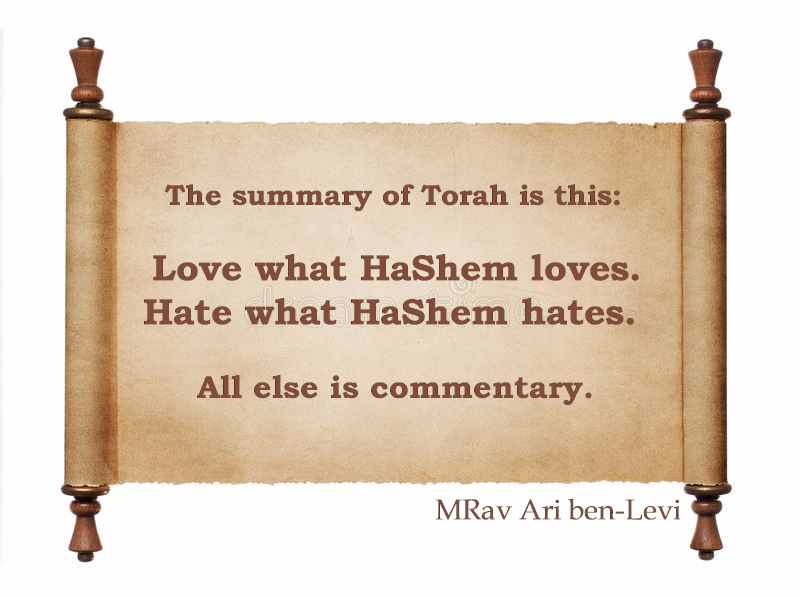
The%20summary%20of%20Torah.png


I think there is something to ponder here.

Jesus was the Messiah of prophecy in the Tanakh. He arrived in 1st century AD. And,he was a Jew.
He said in one of his sermons, I am sent only to the lost sheep of the house of Israel.

Who is of that house?
The Covenant with Abraham,the Abrahamic Covenant, is the foundation of the Old Testament. And the precursor for the New.

Abraham,a Gentile, was the father of the Jewish nation through his seed,his offspring, his sons,Isaac and Jacob.

But for Abraham the father,this would not be so. But it was through God's will.

Messianic Jews believe in Yeshua,Jesus. And follow Torah.

When we are all who hold faith in Christ as his sealed people of The Way of Righteousness, can we truly see as wrong,deluded, heretic, or any insult one might levy so to dismiss the faithfuls Torah observance, as wrong? And condemned by God for doing so?

What would the sacred writings read by those who would as Jews follow the Messiah once arrived be called?
In the New Testament they were people of The Way. And later were called Christians by those in Antioch.

But,what were they first to be known as?
Jews! Because he was the Messiah of their faith.

If you are Messianic,God Bless you. If you identify as Messianic Jew, God Bless you.
If you identify as Christian or a follower of The Way,God Bless you.


Jesus,Yeshua,suffered unimaginable excruciating pain before he died on the cross so to take away our sins covered with his holy precious shed blood.

Is he going to condemn us to damnation because of semantics? Or,because we honored him by participating in the practices first taught before our New Testament, in his Torah?


I'm going to step away from this conversation after inputting these thoughts.

I don't want to see angry debate develop from something added to the discussion in hopes it would stop making us consider the OP proposal is anti-Jesus.
 

Pavel Mosko

Active Member
Dec 19, 2021
310
134
43
59
Boyertown
Faith
Christian
Country
United States
Gender
Male
I do not trust AI for theology. This is muddled by being a commentary on another article. It is poorly composed, too.

I get your not liking some of the grammatic glitches that I had trouble having the AI fix but the rest of your comment is not well founded. There is a huge difference in Grok or AI using trusted or verified sources than what happened in earlier days with Chat GPT using fictitious textbook examples.
 

Angelina

Seer - eagle
Staff member
Admin
Feb 4, 2011
44,360
31,522
113
Hawkes Bay
Faith
Christian
Country
New Zealand
Gender
Female
(As I said on another thread, this to most of us is common sense and basic Biblical literacy, I let Grok take care of most of the work, unlike my favorite projects where Grok is my editor and I brainstorm and write most everything except the last editing fixes).


Acts 15 context and the core debate.
The Jerusalem Council in Acts 15 addressed whether Gentile converts needed circumcision "according to the custom of Moses" to be saved (v. 1), and more broadly, whether they must keep the full law of Moses (v. 5, from Pharisee believers). The decision: no circumcision or full Torah yoke for salvation or basic inclusion; instead, four key abstentions (idols/polluted things, sexual immorality, strangled things, blood—vv. 20, 29), with the letter calling these a "no greater burden" (v. 28) that would let them "do well." James adds in v. 21: "For from ancient generations Moses has had in every city those who proclaim him, for he is read every Sabbath in the synagogues."

This isn't a "full Torah later" curriculum for Gentiles as a default expectation. The council resolved a salvation-and-fellowship crisis by affirming grace-based inclusion (Peter's speech, vv. 7-11) while addressing practical Jewish-Gentile table fellowship and idolatry avoidance. Paul and Barnabas's ministry to Gentiles already showed the Spirit's work without full Torah observance upfront.

Rabbi K's claims: "In rebellion," "starting point," and "hearing Moses"​

Your description matches common Torah-observant / Hebrew Roots / Pronomian interpretations (e.g., "starter set" language from channels like Biblical Roots/Professor Solberg, though he critiques the full Torahist spin). Rabbi Kevin (or similar voices) frames non-full-Torah Christians as rebellious, treating the four rules as minimal entry then synagogue learning toward broader obedience. Here's a granular breakdown from every major angle.

1. "Starting point / starter set" claim (minimal requirements, then full Torah via growth). This views the four as a "beginner pack" to cut pagan sins, with ongoing synagogue attendance (v. 21) implying progressive Torah observance for Gentiles. Proponents say it aligns with God-fearers in synagogues who gradually adopted more, and that full law was always the ideal post-faith.

2. "Hearing Moses read" (v. 21) as proof of progressive full Torah. Common Torahist reading: Gentiles will attend synagogue weekly, hear full Moses, and naturally adopt Sabbath, feasts, kosher, etc., over time. It's "evidence" the apostles expected ongoing Torah learning.


3. "In rebellion" thesis. This is strong rhetoric. If the apostles set a floor (not ceiling) and Spirit-led growth varies, calling standard Christian practice "rebellion" over-reads. Empirical NT church: diverse observance, unity around Christ/essentials (1 Cor 8-10 on idols/meat; Rom 14). Early church fathers moved away from mandatory Torah elements. Rebellion language fits rejecting the decree itself or core morality, not this debate.

Other angles (granular):

  • Salvation vs. sanctification: Council was about salvation/entry (not "you cannot be saved" without circumcision). Post-salvation growth is discipleship, not uniform Torah.
  • One Law vs. two-house views: Some Torahists distinguish Jew/Gentile roles; others say one law for all. Acts 15 leans against uniform application.
  • Prophetic fulfillment: James quotes Amos 9 (rebuilding David's tent so Gentiles seek the Lord)—inclusion, not conversion to Judaism.
  • Modern application: Christians should study OT deeply (all Scripture profitable, 2 Tim 3:16), avoid idolatry/immorality, pursue holiness. Many do via church, personal study—not requiring synagogue. Disagreement here is secondary, not rebellion. Sarcasm in debate often arises when one side frames the other as disobedient to God.
Overall assessment: The "starting point + hearing Moses = full Torah" view is a creative but strained reading. It imports assumptions not explicit in the text or consistent with Paul's ministry. The council liberated Gentiles from the full yoke while preserving unity—grace + minimal essentials. Your relief at sarcasm makes sense; these debates get circular when positions harden into "thus saith the Lord" on inferences.

Greetings brother @Pavel Mosko,
Acts 15 is not describing a “starter phase” of Torah obedience; it is a covenant ruling on whether Gentiles are required to come under the Law of Moses.

1. The decision is explicit: no Torah burden for Gentiles
The issue raised was circumcision “according to Moses” for salvation. The council’s answer is clear:
No such requirement
No placing the “yoke” of the Law on Gentile believers
“No greater burden” is laid on them (Acts 15:28)
Nothing in the text suggests a later transition into full Torah obligation.

2. The four requirements are about holiness and fellowship, not progression
The restrictions (idols, blood, strangled meat, and sexual immorality) reflect Leviticus 17–18 type boundaries for Gentile presence among God’s people. They are minimal moral and table-fellowship boundaries, not an introductory level of covenant law.

3. Acts 15:21 is descriptive, not a hidden instruction
“Moses is read every Sabbath…” simply explains Jewish context and sensitivity in mixed communities.
It is not a command for Gentiles to enter synagogue instruction or gradually adopt Torah observance.

4. The apostolic interpretation confirms this
Galatians: rejects returning to law as covenant requirement
Romans: food and days are matters of conscience
Colossians: Sabbaths and festivals are shadows fulfilled in Christ

The New Testament never builds a “progressive Torah adoption” framework.

The Bottom Line Is:
Acts 15 is a boundary-setting decision, not a training program. Gentiles are fully included in Christ without becoming Torah-bound proselytes. Reading it as a “starter set leading to full Torah” adds something the text itself never states. :coff
 

Jack

Well-Known Member
May 3, 2022
16,352
6,074
113
Midwest
Faith
Christian
Country
United States
Greetings brother @Pavel Mosko,
Acts 15 is not describing a “starter phase” of Torah obedience; it is a covenant ruling on whether Gentiles are required to come under the Law of Moses.

1. The decision is explicit: no Torah burden for Gentiles
The issue raised was circumcision “according to Moses” for salvation. The council’s answer is clear:
No such requirement
No placing the “yoke” of the Law on Gentile believers
“No greater burden” is laid on them (Acts 15:28)
Nothing in the text suggests a later transition into full Torah obligation.

2. The four requirements are about holiness and fellowship, not progression
The restrictions (idols, blood, strangled meat, and sexual immorality) reflect Leviticus 17–18 type boundaries for Gentile presence among God’s people. They are minimal moral and table-fellowship boundaries, not an introductory level of covenant law.

3. Acts 15:21 is descriptive, not a hidden instruction
“Moses is read every Sabbath…” simply explains Jewish context and sensitivity in mixed communities.
It is not a command for Gentiles to enter synagogue instruction or gradually adopt Torah observance.

4. The apostolic interpretation confirms this
Galatians: rejects returning to law as covenant requirement
Romans: food and days are matters of conscience
Colossians: Sabbaths and festivals are shadows fulfilled in Christ

The New Testament never builds a “progressive Torah adoption” framework.

The Bottom Line Is:
Acts 15 is a boundary-setting decision, not a training program. Gentiles are fully included in Christ without becoming Torah-bound proselytes. Reading it as a “starter set leading to full Torah” adds something the text itself never states. :coff
Amen!
 
  • Like
Reactions: Anchorite

Gottservant

Well-Known Member
Oct 19, 2022
2,942
885
113
47
Greensborough
Faith
Christian
Country
Australia
Gender
Male
I am just going to answer, as I felt lead:

The spirit of responding to Torah, is responding to God, as He has responded to you.

As Jesus said 'is like loving your neighbour' (Gospels)
 

amigo de christo

Well-Known Member
Sep 12, 2020
38,008
61,733
113
54
San angelo
Faith
Christian
Country
United States
Gender
Male
Many many christains are in rebellion against GOD
for not following HE WHOM TORAH and the PROPHETS pointed too .
And though they cry the name of JESUS beware them for they follow another jesus .
What many are not aware of at all is
That a harlot , the mother of all harlots , has infiltrated christendom
and yes the false religoins . She did so by means of HER LOVE .
She cried to them all come and let us take our fill of LOVE
of all inclusive love .
And sold her cup of love , of fornication and rebellion , under the guise it was the LOVE OF GOD .
And now she merges them all to be as one with a promise of THIS BE THE WAY to attain PEACE n saf ety .
And yet her peace HAS DENIED the dire necessity to even have to BELIEVE on JESUS and sold a lie to all .
And now a word .
FOR WHEN THEY SHALL SAY PEACE N SAFETY
SUDDEN destruction cometh upon them all and they will not escape .
 

Behold

Well-Known Member
Apr 11, 2020
24,594
9,246
113
Netanya or Pensacola
Faith
Christian
Country
Israel
Gender
Male
Here is where the Born again are to : Exist.
-
-
New International Version
For this reason Christ is the mediator of a new covenant, that those who are called may receive the promised eternal inheritance—now that he has died as a ransom to set them free from the sins committed under the first covenant.

New Living Translation
That is why he is the one who mediates a new covenant between God and people, so that all who are called can receive the eternal inheritance God has promised them. For Christ died to set them free from the penalty of the sins they had committed under that first covenant.

English Standard Version
Therefore he is the mediator of a new covenant, so that those who are called may receive the promised eternal inheritance, since a death has occurred that redeems them from the transgressions committed under the first covenant.

Berean Standard Bible
Therefore Christ is the mediator of a new covenant, so that those who are called may receive the promised eternal inheritance, now that He has died to redeem them from the transgressions committed under the first covenant.

Berean Literal Bible
And because of this, He is the mediator of a new covenant, so that, death having taken place for redemption of the transgressions upon the first covenant, those having been called might receive the promise of the eternal inheritance.

King James Bible
And for this cause he is the mediator of the new testament, that by means of death, for the redemption of the transgressions that were under the first testament, they which are called might receive the promise of eternal inheritance.

New King James Version
And for this reason He is the Mediator of the new covenant, by means of death, for the redemption of the transgressions under the first covenant, that those who are called may receive the promise of the eternal inheritance.

New American Standard Bible
For this reason He is the mediator of a new covenant, so that, since a death has taken place for the redemption of the violations that were committed under the first covenant, those who have been called may receive the promise of the eternal inheritance.

NASB 1995
For this reason He is the mediator of a new covenant, so that, since a death has taken place for the redemption of the transgressions that were committed under the first covenant, those who have been called may receive the promise of the eternal inheritance.

NASB 1977
And for this reason He is the mediator of a new covenant, in order that since a death has taken place for the redemption of the transgressions that were committed under the first covenant, those who have been called may receive the promise of the eternal inheritance.

Legacy Standard Bible
And for this reason He is the mediator of a new covenant, so that, since a death has taken place for the redemption of the trespasses that were committed under the first covenant, those who have been called may receive the promise of the eternal inheritance.

Amplified Bible
For this reason He is the Mediator and Negotiator of a new covenant [that is, an entirely new agreement uniting God and man], so that those who have been called [by God] may receive [the fulfillment of] the promised eternal inheritance, since a death has taken place [as the payment] which redeems them from the sins committed under the obsolete first covenant.

Berean Annotated Bible
Therefore Christ is the mediator (reconciler) of a new covenant {diathēkēs}, so that those who are called may receive the promised eternal inheritance, now that He has died to redeem them from the transgressions committed under the first covenant {diathēkē}.

Christian Standard Bible
Therefore, he is the mediator of a new covenant, so that those who are called might receive the promise of the eternal inheritance, because a death has taken place for redemption from the transgressions committed under the first covenant.

Holman Christian Standard Bible
Therefore, He is the mediator of a new covenant, so that those who are called might receive the promise of the eternal inheritance, because a death has taken place for redemption from the transgressions committed under the first covenant.

American Standard Version
And for this cause he is the mediator of a new covenant, that a death having taken place for the redemption of the transgressions that were under the first covenant, they that have been called may receive the promise of the eternal inheritance.

Contemporary English Version
Christ died to rescue those who had sinned and broken the old agreement. Now he brings his chosen ones a new agreement with its guarantee of God's eternal blessings!
 

amigo de christo

Well-Known Member
Sep 12, 2020
38,008
61,733
113
54
San angelo
Faith
Christian
Country
United States
Gender
Male
Here is where the Born again are to : Exist.
-
-
New International Version
For this reason Christ is the mediator of a new covenant, that those who are called may receive the promised eternal inheritance—now that he has died as a ransom to set them free from the sins committed under the first covenant.

New Living Translation
That is why he is the one who mediates a new covenant between God and people, so that all who are called can receive the eternal inheritance God has promised them. For Christ died to set them free from the penalty of the sins they had committed under that first covenant.

English Standard Version
Therefore he is the mediator of a new covenant, so that those who are called may receive the promised eternal inheritance, since a death has occurred that redeems them from the transgressions committed under the first covenant.

Berean Standard Bible
Therefore Christ is the mediator of a new covenant, so that those who are called may receive the promised eternal inheritance, now that He has died to redeem them from the transgressions committed under the first covenant.

Berean Literal Bible
And because of this, He is the mediator of a new covenant, so that, death having taken place for redemption of the transgressions upon the first covenant, those having been called might receive the promise of the eternal inheritance.

King James Bible
And for this cause he is the mediator of the new testament, that by means of death, for the redemption of the transgressions that were under the first testament, they which are called might receive the promise of eternal inheritance.

New King James Version
And for this reason He is the Mediator of the new covenant, by means of death, for the redemption of the transgressions under the first covenant, that those who are called may receive the promise of the eternal inheritance.

New American Standard Bible
For this reason He is the mediator of a new covenant, so that, since a death has taken place for the redemption of the violations that were committed under the first covenant, those who have been called may receive the promise of the eternal inheritance.

NASB 1995
For this reason He is the mediator of a new covenant, so that, since a death has taken place for the redemption of the transgressions that were committed under the first covenant, those who have been called may receive the promise of the eternal inheritance.

NASB 1977
And for this reason He is the mediator of a new covenant, in order that since a death has taken place for the redemption of the transgressions that were committed under the first covenant, those who have been called may receive the promise of the eternal inheritance.

Legacy Standard Bible
And for this reason He is the mediator of a new covenant, so that, since a death has taken place for the redemption of the trespasses that were committed under the first covenant, those who have been called may receive the promise of the eternal inheritance.

Amplified Bible
For this reason He is the Mediator and Negotiator of a new covenant [that is, an entirely new agreement uniting God and man], so that those who have been called [by God] may receive [the fulfillment of] the promised eternal inheritance, since a death has taken place [as the payment] which redeems them from the sins committed under the obsolete first covenant.

Berean Annotated Bible
Therefore Christ is the mediator (reconciler) of a new covenant {diathēkēs}, so that those who are called may receive the promised eternal inheritance, now that He has died to redeem them from the transgressions committed under the first covenant {diathēkē}.

Christian Standard Bible
Therefore, he is the mediator of a new covenant, so that those who are called might receive the promise of the eternal inheritance, because a death has taken place for redemption from the transgressions committed under the first covenant.

Holman Christian Standard Bible
Therefore, He is the mediator of a new covenant, so that those who are called might receive the promise of the eternal inheritance, because a death has taken place for redemption from the transgressions committed under the first covenant.

American Standard Version
And for this cause he is the mediator of a new covenant, that a death having taken place for the redemption of the transgressions that were under the first covenant, they that have been called may receive the promise of the eternal inheritance.

Contemporary English Version
Christ died to rescue those who had sinned and broken the old agreement. Now he brings his chosen ones a new agreement with its guarantee of God's eternal blessings!
And yet many with christendom sure seem to call the FATHER and THE SON a liar .
THIS do not the sheep DO .
Now you probably wondering what on earth is this ol amigo even talking about .
SO allow me to expound YET AGAIN on this interfaith ecumeincal dialogue
THEY say ALL religoins serve the same GOD
They said , ALL religoins are coming to HIM in different ways
JESUS SAID I AM THE ONLY WAY and THAT ONE MUST BELEIVE HE IS the CHRIST
John said , HE who believes NOT the testimony that GOD gave of the SON ,
IS CALLING GOD A LIAR . not coming to him some different way .
SO , may i and might i suggest , beg and even plead and warn direly
GET THE HECK OUT OF and far away from ANYTHING ecumenical intefaith . THAT WHOLE HOUSE
is coming DOWN ON JESUS DAY . And unto all who made , love a lie , were partakers of it and co helpers to it
OH THEY GOING DOWN TOO . GET OUT now . Get everyone out of it and warn against it now .
 

Soyeong

Active Member
Jan 29, 2024
682
150
43
44
Hudson
Faith
Christian
Country
United States
Acts 15 is not describing a “starter phase” of Torah obedience; it is a covenant ruling on whether Gentiles are required to come under the Law of Moses.'
In Matthew 4:15-23, Christ began his ministry with the Gospel message to repent for the Kingdom of God is at hand, which was a light to the Gentiles, and the Torah was how his audience knew what sin is (Romans 3:20), so repenting from our disobedience to it is a central part of the Gospel. Christ also set a sinless example for us to follow of how to walk in obedience to the Torah and as his followers we are told to follow his example (1 Peter 2:21-22) and that those who are in Christ are obligated to walk in the same way that he walked (1 John 2:6). So Christ spent his ministry teaching his followers to obey the Torah by word and by example and the topic that they were debating in Acts 15 was not whether followers of Christ are required to follow Christ but whether salvation is by grace (Acts 15:11) or by circumcision (Acts 15:1).

In Acts 15:6-7, Peter argued that Gentiles had heard and believed the Gospel, which calls for obedience to the Torah (Matthew 4:15-23), so he was taking the side of the Pharisees from among the believers (Acts 15:1) against the men from Judea (Acts 15:1). In Ezekiel 36:26-27, God will take away our hearts of stone, give us hearts of flesh, and send His Spirit to lead us in obedience to the Torah, which is in accordance with Peter arguing in Acts 15:8-9 that Gentiles had received the Spirit and had their hearts cleansed, so again he was siding with the Pharisees. In Psalm 119:29-30, he wanted to put false ways far from him, for God to be gracious to him by teaching him to obey the Torah, and he chose the way of faith by setting it before him, so this has always been the one and only way of salvation by grace through faith, which is in accordance with Peter arguing in Acts 15:10-11 that Gentiles are saved by grace just as we are, so everything that Peter argued came down on the side of the Pharisees against the men from Judea.

The issue raised was circumcision “according to Moses” for salvation. The council’s answer is clear:
No such requirement
No placing the “yoke” of the Law on Gentile believers
“No greater burden” is laid on them (Acts 15:28)
The reason why God commanded circumcision was not in order to become saved as the result, so the Jerusalem Council upheld the Torah by correctly ruling against requiring circumcision for an incorrect reason. In Exodus 12:48, Gentiles who want to eat of the Passover lamb are required to become circumcised, so the Jerusalem Council should not be interpreted as ruling against Gentiles correctly obeying what God has commanded as if they had the authority to countermand God.

In Romans 10:5-8, Paul referred to Deuteronomy 30 as the word of faith that we proclaim in regard to the righteousness that is by faith proclaiming that the Torah is not too difficult for us to obey and that obedience to it brings life and a blessing while disobedience brings death and a curse, so choose life! So if the heavy yoke that no one could bear had referred to the Torah instead of salvation by circumcision, then the Jerusalem Council would have been denying the word of faith that we proclaim, they would have been in disagreement with God, and they would have been ruling that Gentiles should choose death and a curse instead of life and a blessing. In 1 John 5:3, to love God is to obey His commandments, which are not burdensome, so if the yoke had been referring to God's commandments, then they would have been ruling that Gentiles should not love God and been denying that His commandments are not burdensome. The Psalms also express an extremely positive view of obeying the Torah, such as with David repeatedly saying that he loved it and delighted in obeying it, so if the yoke had been referring to the Torah, then they would have been expressing a view that is incompatible with the view that the Psalms are Scripture.

The restrictions (idols, blood, strangled meat, and sexual immorality) reflect Leviticus 17–18 type boundaries for Gentile presence among God’s people. They are minimal moral and table-fellowship boundaries, not an introductory level of covenant law.
While it is possible for someone to interpret Acts 15:19-21 as ruling that Gentiles shouldn't follow over 99% of what Christ taught, I don't think that it makes much sense to do that. Either Acts 15:19-21 contains an exhaustive list for mature believers or it does not, so it would be contradictory to treat it as being an exhaustive list in order to limit which ways followers of Christ should follow Christ while also treating it as being a non-exhaustive list by taking the position that there are obviously other laws that Gentiles should follow. It was not given as an exhaustive list for mature believers, but rather it was given as a list intended to avoid making things too difficult for those coming to faith, which they excused in Acts 15:21 by saying that Gentiles would continue to learn about how to obey Moses by hearing him taught every Sabbath in the synagogues.

“Moses is read every Sabbath…” simply explains Jewish context and sensitivity in mixed communities.
It is not a command for Gentiles to enter synagogue instruction or gradually adopt Torah observance.
I don't see any reason for Acts 15:21 to make that point if they did not expect that Gentiles would continue to learn about how to obey Moses by hearing him taught every Sabbath in the synagogues.

Galatians: rejects returning to law as covenant requirement
Paul's problem in Galatians was not with those who were teaching Gentiles how to follow what Christ taught but with those who were wanting to require Gentiles to obey "works of the law" in order to become justified. In Romans 3:27, Paul contrasted a law of works with a law of faith, in Galatians 3:10-12, he contrasted the Book fo the Law with "works of the law", and in Romans 3:31, he said that our faith upholds the Law of God in contrast with saying that "works of the law" are not of faith, so that phrase does not refer to the Law of God, which is why it is not of faith.

Romans: food and days are matters of conscience
In Romana 14:1, the topic of the chapter is in regard to how to handle disputable matters of opinion, not in regard to whether followers of God should follow His commands, so nothing in the chapter should be interpreted in a way that turns it against following what God has commanded. For example, in Romans 14:2-3, they were judging and resenting each other based on whether or not someone chose to eat only vegetables even though God gave no command to do that. In Romans 14:4-6, Paul spoke about those who eat or refrain from eating unto the Lord, so he was speaking about those who esteems certain days for fasting as a disputable matter of opinion. For example, it had become a common practice to fast twice a week even though God did not command to do that and people were judging and resenting each other about whether or not they chose to fast or about which two days of the week they chose to fast (Luke 18:12). Paul was not saying that we are free to commit murder, adultery, theft, kidnapping, break the Sabbath, or eat unclean animals just as long as we are convinced in our own minds that it is ok to disobey what God has commanded, but rather that was only said in regard to disputable matters of opinion in which God has given no command.

Colossians: Sabbaths and festivals are shadows fulfilled in Christ
In Colossians 2:16-23, the Colossians were celebrating God's feasts, they were being judged for doing that by pagans who were promoting human traditions and precepts, self-made religion, asceticism, and severity to the body, and Paul was encouraging them not to let anyone judge them for obeying what God has commanded. Those promoting asceticism and severity to the body would be judging people for celebrating feasts, not for refraining from doing that. God's feasts are foreshadows of what I stop come and we should live in a way that testifies about the truth of what is to come by celebrating them rather than a way that bears false witness against what is to come, so Paul was emphasizing the importance of not allowing anyone to prevent us from obeying God, which makes it especially ironic that these verses are commonly used by people to try to justify their refusal to obey what God has commanded.

The New Testament never builds a “progressive Torah adoption” framework.
The NT calls for us to repent from our sins and says that it is by the Torah that we have knowledge of what sin is (Romans 3:20).

Gentiles are fully included in Christ without becoming Torah-bound proselytes.
Those who are in Christ are obligated to walk in the same way that he walked (1 John 2:6), so it is contradictory for someone to want to be in Christ while also not wanting to follow his example of walking in obedience to the Torah.
 

amigo de christo

Well-Known Member
Sep 12, 2020
38,008
61,733
113
54
San angelo
Faith
Christian
Country
United States
Gender
Male
Greetings brother @Pavel Mosko,
Acts 15 is not describing a “starter phase” of Torah obedience; it is a covenant ruling on whether Gentiles are required to come under the Law of Moses.

1. The decision is explicit: no Torah burden for Gentiles
The issue raised was circumcision “according to Moses” for salvation. The council’s answer is clear:
No such requirement
No placing the “yoke” of the Law on Gentile believers
“No greater burden” is laid on them (Acts 15:28)
Nothing in the text suggests a later transition into full Torah obligation.

2. The four requirements are about holiness and fellowship, not progression
The restrictions (idols, blood, strangled meat, and sexual immorality) reflect Leviticus 17–18 type boundaries for Gentile presence among God’s people. They are minimal moral and table-fellowship boundaries, not an introductory level of covenant law.

3. Acts 15:21 is descriptive, not a hidden instruction
“Moses is read every Sabbath…” simply explains Jewish context and sensitivity in mixed communities.
It is not a command for Gentiles to enter synagogue instruction or gradually adopt Torah observance.

4. The apostolic interpretation confirms this
Galatians: rejects returning to law as covenant requirement
Romans: food and days are matters of conscience
Colossians: Sabbaths and festivals are shadows fulfilled in Christ

The New Testament never builds a “progressive Torah adoption” framework.

The Bottom Line Is:
Acts 15 is a boundary-setting decision, not a training program. Gentiles are fully included in Christ without becoming Torah-bound proselytes. Reading it as a “starter set leading to full Torah” adds something the text itself never states. :coff
if even the jews could not be justified by the law , well nor can the gentiles .
But i mus admit that one man did bring up a real good point when he wrote
it is contradictory for one to want to be in Christ while not having to walk as HE did .
Many , and sister i do mean many , are in love with another jesus all together .
One that accepts their sin and still cliams to give them salvation . NOW THAT JESUS do not exist .
OR i should say IT AINT JESUS . NOR would JESUS ever once have taught UNBELIEF .
Many say dont judge , when i say all them other religoins are in darkness and trapped still under the power of satan .
THEY say HEY dont judge they have good fruits .
OH BUT DO THEY . Just cause one can hug a grandma and feed the poor
dont mean squat if HIS FAITH BE NOT IN JESUS THE CHRIST .
IN fact allow me to remind us all about something .
WHEN Looking at the fruits , MAKE SURE TO EXAMINE what the FRUIT OF THE SPIRIT actually IS and DOES .
FOR the fruit of the SPIRIT is in all righteousness , godliness , and LETS NOT FORGET , T RUTH .
And aint no lie of the truth . In fact WHO calls GOD a liar . HE who beleives NOT the testimony that GOD gave of the SON .
IN FACT if one has THE SPIRIT OF GOD , they CALL JESUS LORD , CHRIST . and NO MAN by THE SPIRIT
can call him accursed , as all them false religoins SURELY DO .
THEY DO NOT HAVE THE SPIRIT of GOD and i will NOT tolerate one more word from the mouth
of that ecumeincial harlot and her anti christ intefaith and its false all inclusive love .
NOT ONE more word . HE who is of GOD hears us . HE who is not of GOD hears us not . plain and simple .
IN fact if one beleives not JESUS IS THE CHRIST , tHEN i tell us all THERE IS NO T RUTH IN THEM .
THOUGH JESUS SAID IT FIRST .
 

amigo de christo

Well-Known Member
Sep 12, 2020
38,008
61,733
113
54
San angelo
Faith
Christian
Country
United States
Gender
Male
As despised as i am ,
and called a hater and judgmental man who has no love .
JUST REMEMBER , I POINTED TO JESUS and ONLY JESUS , to HIS OWN WORDS and HIS GOSPEL
and exactly what the apostels pointed to as well .
Now if that makes me seem a hater and jugmental , THEN the fault be on the accuser , NOT ME .
 

Soyeong

Active Member
Jan 29, 2024
682
150
43
44
Hudson
Faith
Christian
Country
United States
Nobody obeys the Law of Moses! Lots of law preachers tho!
The fact that followers of Christ should follow his example of obedience to the Law of Moses is true regardless of whether or not anyone does that, though it is false that nobody does that. For example, it is false that no one has ever loved God or their neighbor.

In Romans 10:5-8, Paul referred to Deuteronomy 30 as the word of faith that we proclaim in regard to the righteousness that is by faith proclaiming that the Law of Moses is not too difficult for us to obey and that obedience to it brings life and a blessing while disobedience brings death and a curse, so choose life! So it was presented as a possibility and as a choice, not as something that no one can obey. Moreover, there are many examples in the Bible of people who did obey the Law of Moses, such as with those in Joshua 22:1-3 Luke 1:5-6, Revelation 14:12, and Revelation 22:14.
 

Jack

Well-Known Member
May 3, 2022
16,352
6,074
113
Midwest
Faith
Christian
Country
United States
The fact that followers of Christ should follow his example of obedience to the Law of Moses is true regardless of whether or not anyone does that, though it is false that nobody does that. For example, it is false that no one has ever loved God or their neighbor.

In Romans 10:5-8, Paul referred to Deuteronomy 30 as the word of faith that we proclaim in regard to the righteousness that is by faith proclaiming that the Law of Moses is not too difficult for us to obey and that obedience to it brings life and a blessing while disobedience brings death and a curse, so choose life! So it was presented as a possibility and as a choice, not as something that no one can obey. Moreover, there are many examples in the Bible of people who did obey the Law of Moses, such as with those in Joshua 22:1-3 Luke 1:5-6, Revelation 14:12, and Revelation 22:14.
Why don't YOU obey the Law of Moses?
 

Angelina

Seer - eagle
Staff member
Admin
Feb 4, 2011
44,360
31,522
113
Hawkes Bay
Faith
Christian
Country
New Zealand
Gender
Female
@Soyeong. I think you're reading Romans 10 differently than Paul intended.

Paul's argument isn't that Christians are required to keep the Law of Moses. He has just stated that "Christ is the end (goal or fulfillment) of the law for righteousness to everyone who believes" (Romans 10:4). When he quotes Deuteronomy 30, he immediately identifies it as "the word of faith which we preach" (Romans 10:8), applying Moses' words to the gospel rather than returning believers to the Mosaic Covenant.

The examples from Joshua and Luke describe people living under the Old Covenant before Christ's work on the cross. They don't establish that New Covenant believers remain under the Law of Moses.

The New Testament consistently teaches that while the Law is holy and reveals God's character, our righteousness comes through faith in Christ, and believers are led by the Spirit rather than being under the Mosaic Law (Romans 6:14; Galatians 5:18; Romans 7:6).

So I don't agree that Romans 10 is calling Christians back under the Law of Moses but pointing them to Christ, in whom the Law finds its fulfillment.
 
  • Like
Reactions: Anchorite and Jack