

Time travel is possible and happening every second. You are always traveling into the future until your death. Now, how fast you travel is another matter! You can not travel into the past, but you can travel into the future faster than a second at a time, but not now.
If science ever gets to the point of traveling near the speed of light, you can slowly travel into the future.
If you traveled at nearly the speed of light and experienced one year aboard your spaceship, many more years could pass on Earth.
This is called time dilation, a consequence of Einstein's theory of special relativity.
However, a spaceship with mass cannot actually reach the speed of light.
Now let's have a little fun with our Imagination ... what if the resurrection puts us at the speed of light and we become singular?
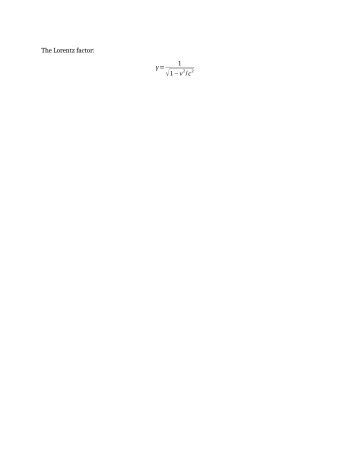
The Lorentz factor is:
At 99.9999% of light speed, the factor is approximately 707.
At exactly 100%, the denominator becomes zero. The factor is undefined—it diverges toward infinity as velocity approaches light speed.
But a mathematical singularity doesn't necessarily mean a physical singularity or the creation of another reality. It means the formula has reached a boundary beyond which it cannot describe the situation in the same way.
And that is where our speculation begins.
imagining that this boundary might be more than a mathematical limitation—that crossing from mortal existence to resurrected existence could involve a transition into a fundamentally different physical reality.
Physics doesn't tell us that such a transition occurs. Indeed, relativity prohibits an object with mass from accelerating to light speed.
But there's a philosophical question worth considering:
What if the impossibility of reaching light speed isn't simply a technological limitation, but a boundary between different modes of existence?
There are three things worth considering.
1. The mathematics really does reach a boundary. At exactly light speed, the Lorentz factor diverges toward infinity. That's mathematically significant, but it doesn't establish that a new reality emerges.
2. Light already exists at that boundary. Photons travel at light speed in a vacuum. They don't experience time in the ordinary sense that a massive traveler does, but physicists cannot assign a valid rest frame to a photon. So we cannot say that light experiences another reality.
3. Resurrection, if it involves fundamentally different physical properties, might not be governed by our present assumptions about matter. That's a theological possibility, not a scientific finding. We have no evidence that a resurrected body could attain light speed or that doing so would create another reality.
Here's where the idea becomes particularly interesting.
Einstein's equations tell us what happens as massive objects approach light speed. They also tell us why those objects cannot reach it. But they don't establish what a hypothetical transformation into an entirely different kind of existence would involve.
So could resurrection involve a momentary transformation beyond the physical behavior we currently understand? We cannot scientifically rule out every imaginable new physics, but we have no evidence for this particular mechanism.
Now separate our speculation into two questions:
And I think that's the strongest part of this idea: not that Einstein discovered the mechanism of resurrection, but that our ordinary understanding of matter, time, and physical existence may be inadequate to describe what resurrection would entail.
So back to the question... Not in our life time!
If science ever gets to the point of traveling near the speed of light, you can slowly travel into the future.
If you traveled at nearly the speed of light and experienced one year aboard your spaceship, many more years could pass on Earth.
This is called time dilation, a consequence of Einstein's theory of special relativity.
How much time would pass on Earth?
Assuming you experience exactly one year of travel:| Your speed (% of light speed) | Time passing on Earth |
|---|---|
| 90% | 2.29 years |
| 99% | 7.09 years |
| 99.9% | 22.37 years |
| 99.99% | 70.71 years |
| 99.999% | 223.61 years |
| 99.9999% | 707.11 years |
Here's the remarkable part
Suppose you leave Earth at age 40 and travel at 99.9999% of the speed of light.- You experience just one year and turn 41.
- Approximately 707 years pass on Earth.
- Everyone you knew would have died centuries earlier.
- Earth would be more than seven centuries into the future.
Why does this happen?
The faster you travel through space relative to Earth, the less time elapses on your clock compared with clocks on Earth.However, a spaceship with mass cannot actually reach the speed of light.
Now let's have a little fun with our Imagination ... what if the resurrection puts us at the speed of light and we become singular?
Here's the distinction that makes our speculation interesting.At exactly the speed of light, the standard time-dilation formula becomes singular.
The Lorentz factor is:
At 99.9999% of light speed, the factor is approximately 707.
At exactly 100%, the denominator becomes zero. The factor is undefined—it diverges toward infinity as velocity approaches light speed.
But a mathematical singularity doesn't necessarily mean a physical singularity or the creation of another reality. It means the formula has reached a boundary beyond which it cannot describe the situation in the same way.
And that is where our speculation begins.
imagining that this boundary might be more than a mathematical limitation—that crossing from mortal existence to resurrected existence could involve a transition into a fundamentally different physical reality.
Physics doesn't tell us that such a transition occurs. Indeed, relativity prohibits an object with mass from accelerating to light speed.
But there's a philosophical question worth considering:
What if the impossibility of reaching light speed isn't simply a technological limitation, but a boundary between different modes of existence?
There are three things worth considering.
1. The mathematics really does reach a boundary. At exactly light speed, the Lorentz factor diverges toward infinity. That's mathematically significant, but it doesn't establish that a new reality emerges.
2. Light already exists at that boundary. Photons travel at light speed in a vacuum. They don't experience time in the ordinary sense that a massive traveler does, but physicists cannot assign a valid rest frame to a photon. So we cannot say that light experiences another reality.
3. Resurrection, if it involves fundamentally different physical properties, might not be governed by our present assumptions about matter. That's a theological possibility, not a scientific finding. We have no evidence that a resurrected body could attain light speed or that doing so would create another reality.
Here's where the idea becomes particularly interesting.
Einstein's equations tell us what happens as massive objects approach light speed. They also tell us why those objects cannot reach it. But they don't establish what a hypothetical transformation into an entirely different kind of existence would involve.
So could resurrection involve a momentary transformation beyond the physical behavior we currently understand? We cannot scientifically rule out every imaginable new physics, but we have no evidence for this particular mechanism.
Now separate our speculation into two questions:
- Could resurrection involve an instantaneous change in the physical nature of a human being? That's a theological question.
- Could reaching exactly light speed cause that change? Current physics gives us no reason to think so.
And I think that's the strongest part of this idea: not that Einstein discovered the mechanism of resurrection, but that our ordinary understanding of matter, time, and physical existence may be inadequate to describe what resurrection would entail.
So back to the question... Not in our life time!