Judas Went to His Own Place – A Biblical Verdict of Eternal Judgment

  • Welcome to Christian Forums, a Christian Forum that recognizes that all Christians are a work in progress.

    You will need to register to be able to join in fellowship with Christians all over the world.

    We hope to see you as a part of our community soon and God Bless!

According to the Bible, did Judas Iscariot go to hell or was he ultimately saved?


  • Total voters
    10
  • Poll closed .

Sabé

Active Member
Dec 25, 2024
509
83
43
Pacific Northwest
Faith
Christian
Country
United States
Gender
Female

Part I

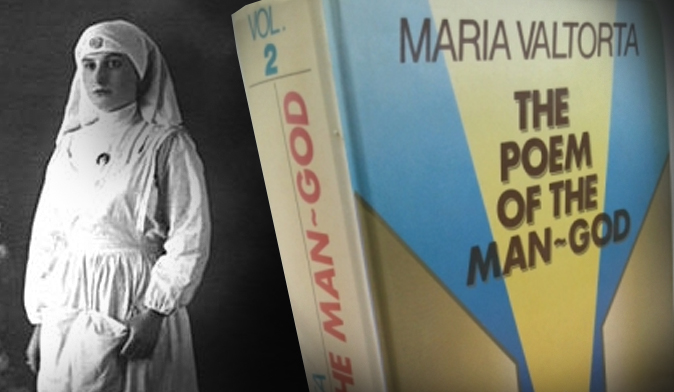
(I) The results from the astronomical and meteorological analysis of Maria Valtorta's Work by Professor Emilio Matricciani and Dr. Liberato De Caro, where they concluded:

"The richness of narrative elements contained in The Gospel as Revealed to Me (or The Poem of the Man-God) by Maria Valtorta has allowed to pursue both astronomical and meteorological studies, suited to verify as much as possible what she states. Indeed, Maria Valtorta affirmed to have witnessed in mystic visions the life of Jesus, and in particular his three years of public life, reporting detailed descriptions of landscapes, costumes, uses, roads, towns with their buildings (including the Temple in Jerusalem) and streets, rivers, lakes, hills, valleys, plantations, climate and rainfall rainy days, night sky with its constellations, stars and planets in the Holy Land, all information that should belong to a period of 2000 years ago. This is not possible from a rational point of view, but from this study a surprising and unexpected result emerges: Maria Valtorta narration seems to be not a fruit of her fantasy. In fact, thanks to a complex and rigorous astronomical analysis of the narrative elements present in her writings, it has been possible to determine a precise chronology of every event of Jesus’ life that she tells us, even if no explicit calendar date is reported in her writings. In particular, this study has led to dating the crucifixion of Jesus in Friday, April 23 of the year 34, a date already proposed by da I. Newton.

Maria Valtorta has also recorded in the EMV the presence of rain and this has suggested to compare her observations with the current meteorological data concerning the number of rainy days in the Holy Land, as recorded by the Israel Meteorological Service (IMS), because this random variable, as shown, seems to be quite independent by the limited climatic changes that have characterized the Holy Land in the last 2000 years. What has emerged is, once more, surprising and unexpected because the annual and even the monthly frequencies of rainy days found in the EMV correspond to what we find today in the IMS data bank. It seems that she has written down observations and facts really happened at the time of Jesus’ life, as a real witness of them would have done. The question arises, unsolved from a point of view exclusively rational, how all this is possible because what Maria Valtorta writes down cannot, in any way, be traced back to her fantasy or to her astronomical and meteorological knowledge.

In conclusion, if from one hand the scientific inquire has evidenced all the surprising and unexpected results reported and discussed in this paper, on the other hand our actual scientific knowledge cannot readily explain how these results are possible."

__________________________________________
(II) The results from the mathematical analysis of Maria Valtorta's Work by Professor Emilio Matricciani and Dr. Liberato De Caro, where they concluded:

"We have examined and studied the huge amount of literary works written by the Italian mystic Maria Valtorta, to assess similarities and differences. We have used mathematical and statistical tools developed for specifically studying deep linguistic aspects of texts, such as the readability index, the number of characters per word, the number of words per sentence, the number of punctuation marks per sentence and the number of words per punctuation marks, known as the word interval, an index that links the previous indices to fundamental aspects of the short−term memory of reader/listener.

The general trend obtained with statistical confidence tests is enough clear. The literary works explicitly attributable to Maria Valtorta (Autobiography and Descriptions) differ significantly from those of the literary works that, according to her claim, are attributable to the alleged characters Jesus and Mary, and when this is not true, as with the number of words per sentence, PF, (Figure 11a, right panel) and the word interval IP (Figure 12a, right panel), this happens only with Jesus says and Mary says. It seems that when Jesus and Mary allegedly speak directly to her, according to her claim, they adapt their communication to the capacity and robust processing time of her short−term memory. On the contrary, when Jesus speaks to a general audience (Parables and Sermons and Speeches) he adopts a significant lower word interval and shorter sentences, because the people may not have had such a good short-term memory as Maria Valtorta did.

Another interesting finding is the great similarity of the texts attributed to Jesus (Parables and Sermons and Speeches), a fact that should be expected in a real situation because this character, in both cases, allegedly speaks to a popular audience.


The comparison with the Italian literature is very striking. A single author, namely Maria Valtorta, seems to be able to write texts so diverse to cover the entire range of the Italian literature.

In conclusion, what do these findings mean? That Maria Valtorta is such a good writer to be able to modulate the linguistic parameters in so many different ways and as a function of character of the plot and type of literary text, so as to cover almost the entire range of the Italian literature? Or that visions and dictations really occurred and she was only a mystical, very intelligent and talented “writing tool”? Of course, no answer grounded in science can be given to the latter question.

As a final observation, the analysis performed in this paper could be done, of course, on other similar mystics’ writings. This could help theologians, working in team with scholars accustomed to using mathematics in their research, to better study mystical revelations by mathematically studying the alleged divine texts."

__________________________________________​

(III) "Prof. Leo A. Brodeur, M.A., Lèsl., Ph.D., H.Sc.D., the Director of the Valtorta Research Center, actively read, researched, and wrote in defense of Maria Valtorta’s writings. Here is one prominent excerpt he wrote:

Arguments for a Supernatural Origin [For those who state] that Valtorta's writings were not supernatural in origin, did they investigate to see what kind of person Valtorta was? Had they done so, they would have quickly found that she was a good, earnest, devout Catholic, an invalid who had a deep prayer life and lived according to high moral standards. They would have found that she often claimed, explicitly, in no uncertain terms that she was having visions and dictations from Jesus and other heavenly persons, and that she fully realized the gravity of her claims.

Now had her visions and dictations been mere literary forms of her own deliberate invention, she would have been an unscrupulous liar; but this hypothesis is excluded by the testimonies of all the priests and nuns and lay people who knew her.

Or what if Valtorta had been insane and had imagined all those visions and dictations and mistaken them for real mystical occurrences (and thus escaped the accusation of being a hoaxer)? This hypothesis of lunacy falls flat in the light of her daily living during the years that she wrote. Within the limits of her physical handicaps, she functioned very well: she cared for people, kept up-to-date on current world events, wrote coherent, insightful letters, and had a witty, bright, keen mind as observed by all her visitors, some of whom were Church scholars or university educated laymen." (A Summa and Encyclopedia to Maria Valtorta’s Extraordinary Work)
 

Sabé

Active Member
Dec 25, 2024
509
83
43
Pacific Northwest
Faith
Christian
Country
United States
Gender
Female
@shepherdsword

Part II

(IV) Jean Aulagnier describes what he did and his findings in this excerpt from his book:

"Some, even sincere Catholics, may still have doubts about Maria’s work. Is it an authentic revelation? Or is it just the roaming imaginations of a suffering mystical soul? After all, her writings could have been no more than personal reactions to her religious upbringing.

It is in this connection that a scientific approach to Maria Valtorta’s work was timely. I thus began to analyze her writings with the same method that I had used in my previous historical research, which had yielded such positive results.

First of all, I noticed that Maria Valtorta’s work consists of over 700 scenes. More than 600 concern Jesus’ Public Ministry alone, which spanned approximately 1200 days. This gives us an average of one scene every second day. I sought to determine whether it would be possible to use these writings to establish a precise chronology of Jesus’ Public Ministry.

There were three possibilities.

1. It might be possible to use Maria Valtorta’s writings to establish a chronology that would be confirmed by all other historical data on the life of Christ. In this case, my test would 199 be successful. We would have an excellent reason to disregard the possibility that Maria Valtorta’s writings were the result of her own imagination.

2. It might be possible to use Maria Valtorta’s writings to establish a chronology that was internally consistent, but would contradict known historical facts.

3. It might be impossible to use Maria Valtorta’s writings to establish any kind of chronology at all. In the last two cases, my test would fail since Maria Valtorta’s writings would have little or no historical value. This, however, still would not mean that Maria Valtorta’s writings were merely the fruit of her own imagination, since many mystical writings in the past did not have any particular historical value either. Furthermore, there is already evidence that Maria Valtorta’s visions provide an accurate picture of Palestine in Jesus’ time. She had never traveled to Israel or perused the literature of experts describing their archeological finds. Her writings were not revised by anyone else. Therefore, there is no explanation for the archeological and geographical accuracy of her writings except an intervention from the beyond. These factors exclude the possibility of a hoax or a mental disorder.
I proceeded with my research, and discovered that it was possible to establish the exact dates of the events described by Maria Valtorta. These dates do match all the historical data found in the Gospels and in other reliable sources. Her writings withstood the test of my complex analytical method, and my book reveals the chronology that I was able to derive.

There is no way that Maria Valtorta could have composed thousands of pages of fiction that would be so historically accurate. She only obtained the average education of well-to-do girls in early 20th century Italy. She never went to a university. She had no reference books at her disposal, except for the Bible and Pope Pius X’s catechism. In spite of this, some of the things that she wrote are only known by Biblical scholars and experts on ancient Israel. She did not have a gift for long, involved calculations. Yet, by our standards, the Jewish calendar in Jesus’ time was rather complicated, and it is impossible that Maria Valtorta could have imagined, let alone chanced upon, all kinds of chronological details that would stand up to historical scrutiny." (A Summa and Encyclopedia to Maria Valtorta’s Extraordinary Work)

__________________________________________​

(V) "David J. Webster observed that Valtorta named nine towns and villages that were not discovered until after her death. He posted a landmark 31-page article that fundamentally proves the authenticity of Maria Valtorta's writings. The Poem of the Man-God may be the very first private revelation ever to be scientifically proven genuine.

In the above article David Webster summarizes his findings below (some of this is similar to what you read on the last page, but this is worded a little differently here):

Of the staggering total of all 255 geographical sites from Palestine mentioned in the Poem 79 (all marked * &**) were not listed in the 1939 International Standard Bible Encyclopedia Atlas which represented the scholarship of her day. 62 (all marked **) of these 79 were listed neither by the ISBE Atlas or the 184-page 1968 McMillan Bible Atlas. Where did Maria Valtorta in the mid 1940’s get all these names? Are they fictitious? Of those 17 missed by the 1939 ISBE but included in the 1968 MBA, 9 have been confirmed by an “ancient external source.” Since then an additional 20 sites have been confirmed in the 1989 HarperCollins Atlas of the Bible. This is a total number of 29 confirmations of the original 79 unknown or obscure geographical 229 sites in Palestine mentioned in the Poem since the ISBE Atlas was published in 1939. 24 of these 29 do not even have an obscure reference in the Bible!" (A Summa and Encyclopedia to Maria Valtorta’s Extraordinary Work)

and so on...
 

shepherdsword

Encounter Team - Eagle
Staff member
Encounter Team
Feb 12, 2009
2,034
1,632
113
Millington
Faith
Christian
Country
United States
Gender
Male
Part I

(I) The results from the astronomical and meteorological analysis of Maria Valtorta's Work by Professor Emilio Matricciani and Dr. Liberato De Caro, where they concluded:

"The richness of narrative elements contained in The Gospel as Revealed to Me (or The Poem of the Man-God) by Maria Valtorta has allowed to pursue both astronomical and meteorological studies, suited to verify as much as possible what she states. Indeed, Maria Valtorta affirmed to have witnessed in mystic visions the life of Jesus, and in particular his three years of public life, reporting detailed descriptions of landscapes, costumes, uses, roads, towns with their buildings (including the Temple in Jerusalem) and streets, rivers, lakes, hills, valleys, plantations, climate and rainfall rainy days, night sky with its constellations, stars and planets in the Holy Land, all information that should belong to a period of 2000 years ago. This is not possible from a rational point of view, but from this study a surprising and unexpected result emerges: Maria Valtorta narration seems to be not a fruit of her fantasy. In fact, thanks to a complex and rigorous astronomical analysis of the narrative elements present in her writings, it has been possible to determine a precise chronology of every event of Jesus’ life that she tells us, even if no explicit calendar date is reported in her writings. In particular, this study has led to dating the crucifixion of Jesus in Friday, April 23 of the year 34, a date already proposed by da I. Newton.

Maria Valtorta has also recorded in the EMV the presence of rain and this has suggested to compare her observations with the current meteorological data concerning the number of rainy days in the Holy Land, as recorded by the Israel Meteorological Service (IMS), because this random variable, as shown, seems to be quite independent by the limited climatic changes that have characterized the Holy Land in the last 2000 years. What has emerged is, once more, surprising and unexpected because the annual and even the monthly frequencies of rainy days found in the EMV correspond to what we find today in the IMS data bank. It seems that she has written down observations and facts really happened at the time of Jesus’ life, as a real witness of them would have done. The question arises, unsolved from a point of view exclusively rational, how all this is possible because what Maria Valtorta writes down cannot, in any way, be traced back to her fantasy or to her astronomical and meteorological knowledge.

In conclusion, if from one hand the scientific inquire has evidenced all the surprising and unexpected results reported and discussed in this paper, on the other hand our actual scientific knowledge cannot readily explain how these results are possible."

__________________________________________
(II) The results from the mathematical analysis of Maria Valtorta's Work by Professor Emilio Matricciani and Dr. Liberato De Caro, where they concluded:

"We have examined and studied the huge amount of literary works written by the Italian mystic Maria Valtorta, to assess similarities and differences. We have used mathematical and statistical tools developed for specifically studying deep linguistic aspects of texts, such as the readability index, the number of characters per word, the number of words per sentence, the number of punctuation marks per sentence and the number of words per punctuation marks, known as the word interval, an index that links the previous indices to fundamental aspects of the short−term memory of reader/listener.

The general trend obtained with statistical confidence tests is enough clear. The literary works explicitly attributable to Maria Valtorta (Autobiography and Descriptions) differ significantly from those of the literary works that, according to her claim, are attributable to the alleged characters Jesus and Mary, and when this is not true, as with the number of words per sentence, PF, (Figure 11a, right panel) and the word interval IP (Figure 12a, right panel), this happens only with Jesus says and Mary says. It seems that when Jesus and Mary allegedly speak directly to her, according to her claim, they adapt their communication to the capacity and robust processing time of her short−term memory. On the contrary, when Jesus speaks to a general audience (Parables and Sermons and Speeches) he adopts a significant lower word interval and shorter sentences, because the people may not have had such a good short-term memory as Maria Valtorta did.

Another interesting finding is the great similarity of the texts attributed to Jesus (Parables and Sermons and Speeches), a fact that should be expected in a real situation because this character, in both cases, allegedly speaks to a popular audience.


The comparison with the Italian literature is very striking. A single author, namely Maria Valtorta, seems to be able to write texts so diverse to cover the entire range of the Italian literature.

In conclusion, what do these findings mean? That Maria Valtorta is such a good writer to be able to modulate the linguistic parameters in so many different ways and as a function of character of the plot and type of literary text, so as to cover almost the entire range of the Italian literature? Or that visions and dictations really occurred and she was only a mystical, very intelligent and talented “writing tool”? Of course, no answer grounded in science can be given to the latter question.

As a final observation, the analysis performed in this paper could be done, of course, on other similar mystics’ writings. This could help theologians, working in team with scholars accustomed to using mathematics in their research, to better study mystical revelations by mathematically studying the alleged divine texts."

__________________________________________​

(III) "Prof. Leo A. Brodeur, M.A., Lèsl., Ph.D., H.Sc.D., the Director of the Valtorta Research Center, actively read, researched, and wrote in defense of Maria Valtorta’s writings. Here is one prominent excerpt he wrote:

Arguments for a Supernatural Origin [For those who state] that Valtorta's writings were not supernatural in origin, did they investigate to see what kind of person Valtorta was? Had they done so, they would have quickly found that she was a good, earnest, devout Catholic, an invalid who had a deep prayer life and lived according to high moral standards. They would have found that she often claimed, explicitly, in no uncertain terms that she was having visions and dictations from Jesus and other heavenly persons, and that she fully realized the gravity of her claims.

Now had her visions and dictations been mere literary forms of her own deliberate invention, she would have been an unscrupulous liar; but this hypothesis is excluded by the testimonies of all the priests and nuns and lay people who knew her.

Or what if Valtorta had been insane and had imagined all those visions and dictations and mistaken them for real mystical occurrences (and thus escaped the accusation of being a hoaxer)? This hypothesis of lunacy falls flat in the light of her daily living during the years that she wrote. Within the limits of her physical handicaps, she functioned very well: she cared for people, kept up-to-date on current world events, wrote coherent, insightful letters, and had a witty, bright, keen mind as observed by all her visitors, some of whom were Church scholars or university educated laymen." (A Summa and Encyclopedia to Maria Valtorta’s Extraordinary Work)
Dude...you need to get off this misplaced hero worship and focus on the one who died for you...that wasn't Maria, it was The Lord Jesus Christ.
 

amigo de christo

Well-Known Member
Sep 12, 2020
37,040
60,741
113
54
San angelo
Faith
Christian
Country
United States
Gender
Male
Dude...you need to get off this misplaced hero worship and focus on the one who died for you...that wasn't Maria, it was The Lord Jesus Christ.
What a lovely wonderful good reminder my friend .
Too many have been caught up with a voluntary worshipping of saints and angels and etc .
Idolatry is not good at all .
Thanks again for such a lovely reminder that is so needed to be said to many peoples .
 
  • Love
Reactions: Marvelloustime

Sister-n-Christ

Well-Known Member
May 3, 2025
1,028
992
113
USA
Faith
Christian
Country
United States
Dude...you need to get off this misplaced hero worship and focus on the one who died for you...that wasn't Maria, it was The Lord Jesus Christ.
Amen.

You'd think his promoting Maria over Christ would get the attention of higher board member powers. You'd think.
 

shepherdsword

Encounter Team - Eagle
Staff member
Encounter Team
Feb 12, 2009
2,034
1,632
113
Millington
Faith
Christian
Country
United States
Gender
Male
You need humility. Without even having read Maria Valtorta's writings, you presented the baseless assertion that she was "delusional" during the time she wrote. So, I laid at your feet professional studies done on The Poem of the Man-God and their conclusions, where they ruled out that Maria Valtorta had mental illness, and lend credence to her claims of the writings having a supernatural origin. And, all you could reply with is another baseless assertion, this time about me, saying that I "worship" Maria Valtorta, but that's just a knee-jerk reaction out of frustration and pride.
She was delusional. I didn't say you worshipped her. I said you need to shift your focus onto Jesus.
 

Sister-n-Christ

Well-Known Member
May 3, 2025
1,028
992
113
USA
Faith
Christian
Country
United States
She was delusional. I didn't say you worshipped her. I said you need to shift your focus onto Jesus.
None are so blind as those who refuse to see.

From the earlier article I posted.
I don't think Maria's apostle actually read anything I shared and that proves she was not considered credible by the church.

" on April 17, 1993, the Congregation for the Doctrine of the Faith directed the Italian Bishops’ Conference to order this disclaimer placed in future re-issues of the Poem: “…the ‘visions’ and ‘dictations’ referred to in it are simply literary forms used by the author to narrate in her own way the life of Jesus. They cannot be considered supernatural in origin.” "

This is important for anyone reading his Maria copy/paste and think to give the mystic's work respect.
Btw,what did God say about mystic's?

" The Poem’s (The Poem of the Man-God) fundamental flaw is its claim to compensate for the inadequacies of the Gospels. As Jesus himself explains to Valtorta, the New Testament needs to be supplemented (I: p. 432) because of the evangelists’ “unbreakable Jewish frame of mind.” Their “flowery and pompous” Hebrew style kept them from writing everything that God wished. (V: p. 947) So nineteen centuries later, he finds a worthy secretary in Valtorta, his “Little John,” to expand what the Apostle St. John and the others wrote. “There is nothing of my own in this work,” she insists. (I: p. 57) She presents herself as a mere transmitter of Divine content."
 

amigo de christo

Well-Known Member
Sep 12, 2020
37,040
60,741
113
54
San angelo
Faith
Christian
Country
United States
Gender
Male
Veneration of Jesus's Mother, the saints, the angels, isn't the same as worship of God.
to call her blessed would not have been ,
but what i see folks doing and calling veneration , IT IS worship and it must be ceased .
Praying to saints , to mary , to etc is no good .
 
  • Like
Reactions: Marvelloustime

amigo de christo

Well-Known Member
Sep 12, 2020
37,040
60,741
113
54
San angelo
Faith
Christian
Country
United States
Gender
Male
"Because he hath regarded the humility of his handmaid; for behold from henceforth all generations shall call me blessed." (Lk. 1:48)


You say that because you don't understand the difference between veneration of Jesus's Mother, the Saints, and angels vs the worship of God.


Then you've never googled why Catholics pray to Mary, the Saints, and the angels. Well, that's the problem with most non-Catholics. They don't take the time to properly learn about Catholicism.
As i said to call her blessed was never the problem .
But that veneration stuff is total bad news .
And beleive me i have reasoned with a deacon or two about this .
As always its the same party line , OH ITS not worship . OH but IT IS WORSHIP .
Truth is we got two sisters at work
Holetta which is the protestant realm
and Ho etta which is of the RCC .
This people is being deceived . What , did ya think i was not going to also expose
much of that protestant realm too .
So its time to listen to a real simple truth .
MEN DID THIS NOT GOD . I highly suggest bibles get opened and people just learn for themselves .
Cause men be fleecing the hoot out of this people and been doing it for years .
 
  • Love
Reactions: Marvelloustime

Scott Downey

Well-Known Member
Dec 19, 2021
11,458
6,981
113
66
St. Thomas
Faith
Christian
Country
Virgin Islands, U.S.
Gender
Male
How about it, Catholic Mariology
Co-Redemptrix (also spelled Coredemptrix; Co-Redemptress is an equivalent term) is a title used by some Catholics for the Blessed Virgin Mary, and refers to Mary's role in the redemption of all peoples.[1]

According to those who use the term, Co-Redemptrix refers to a subordinate but essential participation by the Blessed Virgin Mary in redemption, notably that she gave free consent to give life to the Redeemer, which meant sharing his life, suffering, and death, which were redemptive for the world. Related to this belief is the concept of Mary as Mediatrix, which is a separate concept but regularly included by Catholics who use the title Co-Redemptrix. Some, in particular the adherents of the Amsterdam visions, have petitioned for a dogmatic definition, along with Mediatrix.[2]

The concept was especially common in the late Middle Ages, when it was promoted heavily among the Franciscans, and often resisted by the Dominicans. By the early 16th century the hopes of the concept becoming Catholic doctrine had receded, and have never seriously revived. In more recent times, the title has received some support from the Catholic Magisterium[3] though it is not included in the concluding chapter of the apostolic constitution Lumen gentium of the Second Vatican Council, which chapter many theologians hold to be a comprehensive summary of Catholic Mariology.

When still just a cardinal, Pope Benedict XVI said that the Marian title caused confusion and did not sufficiently reflect scripture.[4] Pope Francis has repeatedly said the title should not be used.[4]

Doctrine and context​

[edit]
The concept of Mary offering Christ's sufferings is theologically complex. Christ offered himself alone; “the Passion of Christ did not need any assistance.”[5] It is according to the spirit of the offertory or preparation of the gifts within the Mass to prepare to offer oneself with Christ as a part of the Eucharistic Prayer, being members of his mystical body, acknowledging that not even the greatest effort, of itself and apart from Christ, can be of any significance to God. A priest participates in the Eucharistic Celebration as an icon of Christ.

Theologians distinguish between "remote cooperation", by which she consents to the Incarnation and gives birth to the Son of God, and "immediate cooperation", in which she willingly unites herself to her Son's Passion and offers him back to the Father.[6] Philosophers also draw a distinction between merit de condigno (Christ's merit), which is based on justice, and merit proprie de congruo (Mary's merit), founded on the friendship of charity.[7] In his encyclical on the Immaculate Conception, Ad diem illum, Pope Pius X said, "...since Mary carries it over all in holiness and union with Jesus Christ, and has been associated by Jesus Christ in the work of redemption, she merits for us de congruo, in the language of theologians, what Jesus Christ merits for us de condigno."[8] Where it concerns post-Assumption graces, it is a pious opinion that the entirety of them come through the "intercession" of Mary,[9] a concept that is in itself in need of clarification.[10]

Proponents view the title Co-Redemptrix as not implying that Mary participates as equal part in the redemption of the human race, since Christ is the only redeemer.[11] Mary herself needed redemption and was redeemed by Jesus Christ. Being redeemed by Christ, implies that she cannot be his equal part in the redemption process.[12] Similarly, if Mary is described as the mediatrix of all graces, it “is to be so understood that it neither takes away from nor adds anything to the dignity and efficaciousness of Christ the one Mediator”.[13]
 

Sister-n-Christ

Well-Known Member
May 3, 2025
1,028
992
113
USA
Faith
Christian
Country
United States
to call her blessed would not have been ,
but what i see folks doing and calling veneration , IT IS worship and it must be ceased .
Praying to saints , to mary , to etc is no good .
The idol worshippers,necromancers, can't show any scripture where Jesus said to revere the dead.
 
  • Love
Reactions: amigo de christo

Sister-n-Christ

Well-Known Member
May 3, 2025
1,028
992
113
USA
Faith
Christian
Country
United States
"Then shall the dust return to the earth as it was: as the spirit [soul] shall return to God Who gave it." (Ecc. 12:7)

A spirit, such as the soul, is incorporeal (Lk. 24:39), which means it isn't subject to the limits of physical death, and thus is immortal [Note: while all spirits are immortal, the only Spirit Who is eternal, as in "without beginning or end", is God]. Eve's and Adam's first act of disobedience (sin) is what brought death into the world, not just physical death of the body, but a spiritual death of the soul, which is separation from God (Rom. 5:12), and thus Satan did lie when he told them that they would not die.

With God's sacrifice, Grace was restored to humankind, Heaven re-opened, and all just souls live with Him eternally in Heaven, and the unjust souls live with Satan and his demons eternally in Hell, of their own free will. Therefore, upon the death of our physical body, our immortal soul will receive judgement. When Jesus returns, our physical body will be resurrected and reunited with our soul, and then we will return to our eternal dwelling place, be it Heaven or Hell. (Ezek. 18:4;5;17, Matt. 25: 31:46, 1 Cor. 15:35-58)

In summary, the body dies, but the spirit He gives every man is immortal, and when our body dies, the spirit (soul) continues to live either in Heaven with God, or in Hell with Satan and his demons.

God is not of the dead, but the living. (Matt. 22:32, Mk. 12:27)
"Honor your Mother and Father" (Ex. 20:12, Deut. 5:16, Eph. 6:2)

Mary is alive in Heaven, She is humankind's holy Mother, and we honor Her as God commands.
None of those scriptures actually answer the question.


God has no mother. Jesus was born to Mary however, she is not a co-redemptrix in heaven. She was the vessel for the arrival of The Word made flesh,Immanuel.

And scripture tells us Jesus said we are to ask him for aid,help, in his name. Not in the name of the dead a church deemed to be saints.

All Christians are saints.
Of course God is God of the living. Which refutes the authority of veneration of dead people.

When we are dead,as scripture says,our bodies return to the dust from which it sprang. This then nullifies relics.
And our soul,spirit,returns to God who gave it.

When dead we are with God. We no longer see God as we did when in mortal flesh.
 
Last edited:
  • Like
Reactions: amigo de christo

Sabé

Active Member
Dec 25, 2024
509
83
43
Pacific Northwest
Faith
Christian
Country
United States
Gender
Female
I don't think Maria's apostle actually read anything I shared and that proves she was not considered credible by the church.

" on April 17, 1993, the Congregation for the Doctrine of the Faith directed the Italian Bishops’ Conference to order this disclaimer placed in future re-issues of the Poem: “…the ‘visions’ and ‘dictations’ referred to in it are simply literary forms used by the author to narrate in her own way the life of Jesus. They cannot be considered supernatural in origin.” "

In the February 2025 statement put out by the Dicastery for the Doctrine of the Faith (DDF) regarding Maria Valtorta's writings, they said, "It should be reiterated that alleged “visions”, “revelations,” and “messages” contained in the writings of Maria Valtorta—or, in any case, attributed to them—cannot be regarded as having a supernatural origin. Rather, they should be considered simply as literary forms that the author used to narrate the life of Jesus Christ in her own way". Any honest objective investigator wouldn't and shouldn't automatically take their word for it, especially when they failed to give any indication of whether they reviewed the proof in support of her writings having a supernatural origin. My response to the DDF's decision mirrors that of those given by the Maria Valtorta's Readers' Group, as expressed in the following article: Response to the Vatican's 2025 Press Release on Maria Valtorta.

As Jesus himself explains to Valtorta, the New Testament needs to be supplemented (I: p. 432) because of the evangelists’ “unbreakable Jewish frame of mind.”

Firstly, according to your source, the words "unbreakable Jewish frame of mind" are found in The Poem of the Man-God: Vol. I, p. 432, but they aren't. Rather Vol. V, p. 479.

Secondly, your source claims that Jesus told Maria Valtorta that "the New Testament needs to be supplemented because of the evangelists’ “unbreakable Jewish frame of mind.” Jesus actually said, "Some people, when reading this Work, will object: "It does not appear from the Gospel that Jesus was in touch with Romans and Greeks, and consequently we reject these pages." How many things do not appear from the Gospel, or can just be detected behind thick curtains of silence, drawn by the Evangelists on episodes, of which they did not approve, because of their unbreakable Jewish frame of mind! Do you think that you know everything I did? I solemnly tell you that not even after reading and accepting this illustration of My public life will you know everything about Me. I would have killed My little John, in the fatigue of reporting all the days of My ministry and all the actions performed on each day, if I had made him acquainted with everything so that he might transmit everything to you! "Then there were other things done by Jesus, which if written one by one, I think that the world would not be able to contain the books that should be written" says John. Apart from the hyperbole, I solemnly tell you that if all My single actions had to be written, all My particular lessons, My penances and prayers to save a soul, it would have taken the halls of one of your libraries, and one of the largest, to contain the books speaking of Me. And I also solemnly tell you that it would be much more advantageous for you to burn so much useless dusty poisonous science, to make room for My books, than to know so little of Me and worship so much that press that is almost always soiled with lust and heresy."

Their “flowery and pompous” Hebrew style kept them from writing everything that God wished. (V: p. 947). So nineteen centuries later, he finds a worthy secretary in Valtorta, his "Little John," to expand what the Apostle St. John and the others wrote.

Firstly, according to your source, the words “flowery and pompous” are found in The Poem of the Man-God: Vol. V, p. 947, but they aren't. Rather Vol. V, p. 479.

Secondly, by "their" your source is referring to the apostles and is claiming that Jesus said the apostle's flowery and pompous Hebrew style kept them from writing everything that God wished for, which is a LIE. Jesus was actually referring to Maria Valtorta and what she heard Mary say to Jesus in the visions she received and described when He said, "To those who consider Mary's love for Jesus too affectionate, I say that they should consider who Mary was: the Woman without sin and therefore without fault in Her love towards God, towards Her relatives, towards Her spouse, towards Her Son, towards Her neighbor; they should consider what the Mother saw in Me beside seeing the Son of Her womb, and finally that they should consider the nationality of Mary. Hebrew race, eastern race, and times very remote from the present ones. So the explanation of certain verbal amplifications, that may seem exaggerated to you, ensues from these elements. The eastern and Hebrew styles are flowery and pompous also when commonly spoken. All the writings of that time and of that race prove it, and in the course of ages the eastern style has not changed very much.

As twenty centuries later
you have to examine these pages, when the wickedness of life has killed so much love, would you expect Me to give you a Mary of Nazareth similar to the arid superficial woman of your days? Mary is what She is, and the sweet, pure, loving Girl of Israel, the Spouse of God. The Virgin Mother of God cannot be changed into an excessively morbidly exalted woman, or into a glacially selfish one of your days."

And, Jesus gave Maria Valtorta the nickname "little John" for the following reason: "John, to place her close to the Evangelist who was the favorite disciple. Little, because of the dependence of her Work, although quite extensive, on those of the Evangelists who, in short manuscripts, enclosed what is essential." And, Jesus's seven reasons for The Poem of the Man-God can be read here.

“There is nothing of my own in this work,” she insists. (I: p. 57) She presents herself as a mere transmitter of Divine content."

Firstly, according to your source, the words "There is nothing of my own in this work" are found in The Poem of the Man-God: Vol. I, p. 432, but they aren't. Rather Vol. I, p. 34.

Secondly, after a vision Maria Valtorta received and described on September 2nd, 1944, Maria Valtorta added the following: "A note of mine. All day yesterday I thought I was going to see the news of the death of Her parents being given to Mary by Zacharias, I do not know why. I also thought, in my way, that Jesus would have dealt with the point « remembrance of God by the saints ». This morning, when the vision started, I said to myself: « Here we are, they will now tell Her that She is an orphan » and my heart was already trembling because I would have experienced my own sadness of these past days. Instead there has been absolutely nothing of what I thought I was going to see or hear. Not even one word by mistake. I am very happy about this because it confirms that there is nothing of my own in this work, not even an honest suggestion with regard to one situation. It all comes from a different source. My continuous fear ceases... until the next time because I shall always be afraid of being deceived and deceiving."

This is why it's important to be properly informed about a subject, and verify your source's claims, @Sister-n-Christ.
 
Last edited:

Scott Downey

Well-Known Member
Dec 19, 2021
11,458
6,981
113
66
St. Thomas
Faith
Christian
Country
Virgin Islands, U.S.
Gender
Male
Firstly, according to your source, the words “flowery and pompous” are found in The Poem of the Man-God: Vol. V, p. 947, but they aren't, rather Vol. V, p. 479.

Secondly, by "their" your source is referring to the apostles and is claiming that Jesus said the apostle's flowery and pompous Hebrew style kept them from writing everything that God wished for, which is a LIE. Jesus was actually referring to what Maria Valtorta heard Mary say to Jesus in the visions she received and described when He said, "To those who consider Mary's love for Jesus too affectionate, I say that they should consider who Mary was: the Woman without sin and therefore without fault in Her love towards God, towards Her relatives, towards Her spouse, towards Her Son, towards Her neighbor; they should consider what the Mother saw in Me beside seeing the Son of Her womb, and finally that they should consider the nationality of Mary. Hebrew race, eastern race, and times very remote from the present ones. So the explanation of certain verbal amplifications, that may seem exaggerated to you, ensues from these elements. The eastern and Hebrew styles are flowery and pompous also when commonly spoken. All the writings of that time and of that race prove it, and in the course of ages the eastern style has not changed very much."
You said "I say that they should consider who Mary was: the Woman without sin and therefore without fault in Her love towards God, towards Her relatives, towards Her spouse, towards Her Son, towards Her neighbor; they should consider what the Mother saw in Me beside seeing the Son of Her womb, and finally that they should consider the nationality of Mary."

Thing is no one is without sin, but we are forgiven our sin, as in God does not recall them to judgment. Our sin is not imputed against us.
All have sinned, but that does not mean they continue to sin after they are converted.
Mary was not a sinner, but she must have had sin, as all have sinned.
Believers are not sinners, as that which is born of God cannot and does not sin.
And it is our spirit that is born again, but we still live in a sinful world, and our mind and body can and does sin.
So in that sense we all have sinned.

Romans 8:10
And if Christ is in you, the body is dead because of sin, but the Spirit is life because of righteousness.

1 John 3:8-10
New King James Version
8 He who sins is of the devil, for the devil has sinned from the beginning. For this purpose the Son of God was manifested, that He might destroy the works of the devil. 9 Whoever has been born of God does not sin, for His seed remains in him; and he cannot sin, because he has been born of God.

10 In this the children of God and the children of the devil are manifest: Whoever does not practice righteousness is not of God, nor is he who does not love his brother.
https://www.biblegateway.com/passage/?search=1 John 3&version=NKJV

Romans 3
19 Now we know that whatever the law says, it says to those who are under the law, that every mouth may be stopped, and all the world may become [e]guilty before God. 20 Therefore by the deeds of the law no flesh will be justified in His sight, for by the law is the knowledge of sin.

God’s Righteousness Through Faith​

21 But now the righteousness of God apart from the law is revealed, being witnessed by the Law and the Prophets, 22 even the righteousness of God, through faith in Jesus Christ, to all [f]and on all who believe. For there is no difference; 23 for all have sinned and fall short of the glory of God, 24 being justified [g]freely by His grace through the redemption that is in Christ Jesus, 25 whom God set forth as a [h]propitiation by His blood, through faith, to demonstrate His righteousness, because in His forbearance God had passed over the sins that were previously committed, 26 to demonstrate at the present time His righteousness, that He might be just and the justifier of the one who has faith in Jesus.
*****************************************
No one should believe that Mary was born without sin, specially conceived.
 
  • Like
Reactions: Sister-n-Christ

Big Boy Johnson

Well-Known Member
Sep 28, 2023
6,328
2,311
113
North America
Faith
Christian
Country
United States
explain to me why Mary couldn't have been without sin through God's and Her own will?

Here's a couple of things she did that were falling short of God's absolute perfection (sin) we see recorded in God's Word:

In Luke 2:41-52, Mary was unaware Jesus was not in their group traveling back from Jerusalem reflecting poor motherhood skills in that she did not verify where her Son was when they started their journey home which is not an error a sinless mother would be making (verses 43,44,45)

In verse 48 Mary is accusing the Son of God of wrongdoing which is not an error a sinless mother would be making.
 

Big Boy Johnson

Well-Known Member
Sep 28, 2023
6,328
2,311
113
North America
Faith
Christian
Country
United States
Firstly, nowhere in that post is my question that you quoted answered. Secondly, sin is defined as a deliberate transgression of God's law, specifically a thought, word, or deed that is contrary to the eternal law, not being unaware someone left their company, and once finding them asking them why they had left...

The references I provided prove Mary made a mistake when she lost Jesus when packing up to go home. In that situation she made a mistake and fell short of God's absolute perfection which she would not have done had she actually been sinless.

The other one is a straight up sin in that she accused Jesus, the Son of the Living God who never made any mistakes or did any sin, of wrongdoing. Anybody that claims God is doing wrong is committing sin.

:face palm:
 

Gottservant

Well-Known Member
Oct 19, 2022
2,917
884
113
47
Greensborough
Faith
Christian
Country
Australia
Gender
Male
The Gate in Heaven, that Judas overlooked, remains closed (not locked, closed).

The Gate in Heaven, that Thomas overlooked, remains nearly closed (not always nearly closed, but mostly).
 

Big Boy Johnson

Well-Known Member
Sep 28, 2023
6,328
2,311
113
North America
Faith
Christian
Country
United States
Upon finding Jesus after three days of searching, Mary asked Him, "Why have You done this to us? Behold, Your Father and I were anxiously looking for You" (Lk. 2:48), highlighting Their anxiety, fatigue, and frustration at the situation, which wasn't a sin, because sin is defined as a deliberate transgression of God's law, specifically a thought, word, or deed that is contrary to the eternal law.

Accusing Jesus, Who is God and Who is perfect in every way, of wrong doing is sin.

Try telling God he made a mistake by failing to put in the Bible that people should pray to Mary and see how it works out for ya.

Clearly Mary’s actions in these situations demonstrate that she did make some errors showing that she was not sinless as someone who is without sin would not be making errors and doing things that were in error as Mary had done.


In ancient Israel, men walked together and women walked together in separate groups within a caravan. Therefore, Jesus would've been preparing for departure from Jerusalem with Joseph and the other men, not Mary and the other women, before deciding to stay behind, unbeknownst to Joseph and Mary, Who both presumed He was with the caravan, until after the groups of men and women gathered together a day into the journey, and They realized that He wasn't with them (Lk. 2:43-45). But, whether your reproach is directed at Joseph or Mary, Their presumption of Jesus's whereabouts wasn't a sin, because sin is defined as a deliberate transgression of God's law, specifically a thought, word, or deed that is contrary to the eternal law.

Nice story sounding of presumption, non the less what mother does not see to it that her 12 year old son is not taken care of?

No good mother that actually loved her son I've ever heard of.

If it was actually Joseph's responsibility then a good mother would have made sure her young son was properly accounted for but she did not which is a mistake which is falling short of God's absolute perfection for which she needs Jesus to be her Savior in order for failure to literally be perfect to be cleansed.

Feel free to worship Jesus' momma, but I'll pass seeing Jesus is Lord and the only mediator between God and man.