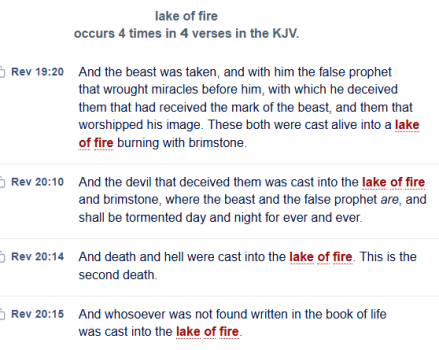
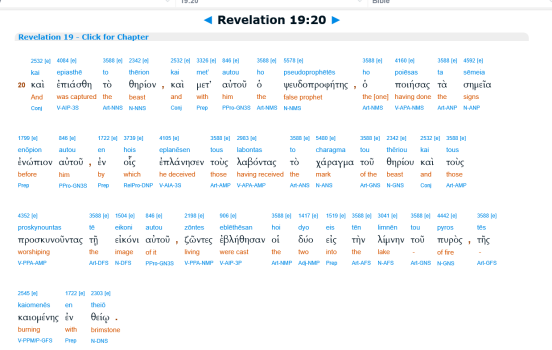
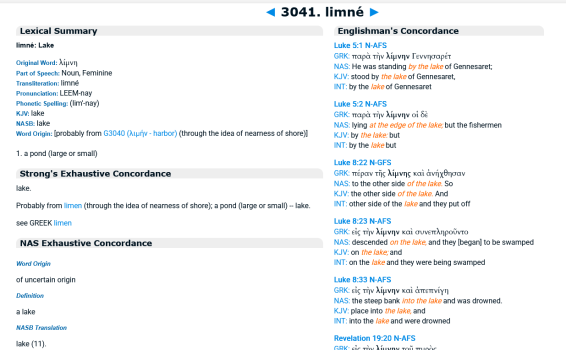
Nope. STV doesn't believe what Jesus said about Hell Fire! He said "no wonder I don't trust the Bible".
Yes... my post is long Jack... It's the narrow path... wide and easy is your tik tok!
1. Reframing “Salvation” in Scripture
A strictly text-driven reading of Scripture suggests that “salvation” is not primarily framed as escape from an eternal heaven/hell binary, but as deliverance from death, corruption, and exile from life. From the opening chapters of Genesis,
the consequence of sin is not eternal torment but mortality—
“dust you are, and to dust you shall return.” This trajectory continues throughout the biblical narrative.
Paul’s summary in Romans—
“the wages of sin is death”—is not an isolated theological statement but a direct continuation of this pattern. Likewise, in 1 Corinthians 15, salvation is presented almost entirely in terms of
resurrection, not post-mortem relocation to heaven. Death is the enemy; life restored is the victory.
If eternal conscious torment were central to the biblical framework,
one would expect explicit articulation in the Torah or clear covenantal warnings tied to it. Instead, Scripture consistently emphasizes:
- Historical covenant consequences
- Death as the ultimate curse
- Restoration through resurrection
This strongly supports the conclusion that “being saved” fundamentally means
being rescued from death and brought into restored life.
2. The Kingdom of God as the Central Gospel
Jesus’ proclamation is not centered on “going to heaven,” but on the
arrival of the Kingdom of God. His message is consistent:
- “Repent, for the Kingdom of God is at hand.”
- “Blessed are the meek, for they shall inherit the earth.”
- “Your will be done on earth as it is in heaven.”
Even after the resurrection, the disciples ask about the restoration of the kingdom (Acts 1:6), and Jesus does not correct the premise—only the timing.
The implication is clear:
The early Christian hope was not disembodied existence, but
resurrection, inheritance, and participation in a restored creation under God’s reign.
3. Resurrection and the Structure of Redemption
Revelation 20 introduces a layered eschatology:
- First resurrection → participation in Christ’s reign
- Second resurrection → judgment
This structure only makes sense if salvation is understood as
restored life within God’s Kingdom, not simply relocation to heaven. If salvation were merely
“going to heaven,” resurrection would be unnecessary. Instead, resurrection is central because it restores embodied life within a renewed creation.
4. The Language of “Hell” and Its Development
The biblical terminology often translated as “hell” reflects a range of meanings that do not inherently imply eternal torment:
- Sheol / Hades: the realm of the dead, not a place of punishment
- Gehenna: a historical symbol of covenant judgment rooted in the Valley of Hinnom
- Tartarus: a temporary holding place for spiritual beings
None of these terms, in their original linguistic and cultural contexts, clearly denote an eternal torture chamber. That concept emerges later through translation traditions and theological synthesis, not from the Hebrew or Greek texts themselves.
5. “Eternal” as Age-Related, Not Infinite
The biblical terms often translated as “eternal” (Hebrew
olam, Greek
aion,
aionios) are better understood as referring to
ages or
age-related realities, not necessarily endless duration.
This distinction matters. An “age-lasting” judgment:
- Preserves divine justice
- Allows for correction and restoration
- Aligns with God’s stated desire that all be saved
An endless punishment with no restorative purpose introduces tension with the broader biblical portrayal of God’s character and intentions.
6. The Nature of Judgment
Biblically, judgment is consistently portrayed as restorative and corrective, not merely punitive. The Hebrew concept of
mishpat and the Greek
krisis both carry the sense of setting things right.
Scripture repeatedly presents divine discipline as purposeful:
- God’s anger is temporary
- His mercy endures
- Judgment leads to learning righteousness (Isaiah 26:9)
Even images such as fire are frequently associated with
purification, not destruction for its own sake.
7. The Question of Final Restoration
The idea that God ultimately restores all things is not sentimental—it arises from internal biblical logic. Texts such as Romans 11:32 (
“God has consigned all to disobedience, that He may have mercy on all”) present a vision in which divine judgment and mercy are not opposed but sequential and integrated.
Rejecting this trajectory typically requires assuming:
- God’s purposes ultimately fail
- God eternally wills division
- Justice permanently overrides mercy
Each of these positions introduces tension with the broader narrative arc of Scripture.
8. Second Temple Jewish Context
This framework aligns closely with the worldview of Second Temple Judaism, the environment in which both Jesus and Paul operated. That worldview emphasized:
- Resurrection as the central hope
- The coming Kingdom of God
- Restoration of creation
- Age-based history (this age vs. the age to come)
- Judgment as covenantal correction
Within this context:
- Gehenna was commonly understood as temporary and purifying
- Resurrection preceded final judgment
- The ultimate goal was God’s victory over death and evil
While universal restoration was not universally held, it was present as a minority but legitimate stream within Jewish thought.
9. Jesus and Gehenna in Context
When Jesus speaks of Gehenna, he is operating within this existing Jewish framework. His warnings are severe, but they do not redefine Gehenna into an eternal torture realm.
Key features of his teaching include:
- Use of prophetic and hyperbolic language
- Emphasis on moral urgency
- Focus on accountability and transformation
Terms such as “fire,” “destruction,” and “unquenchable” reflect
irresistible and thorough judgment, not necessarily endless duration. His audience would have understood these images as
serious but corrective.
10. Coherence of the Kingdom Framework
When the biblical narrative is read through this lens, its internal coherence becomes clearer:
- Death is the central problem
- Resurrection is the solution
- The Kingdom is the goal
- Judgment is the process
- Restoration is the outcome
This framework preserves:
- The seriousness of judgment
- The necessity of repentance
- The centrality of Christ’s reign
- The ultimate defeat of death
Final Synthesis
A non-biased, textually grounded reading of Scripture supports the conclusion that:
- “Salvation” fundamentally means rescue from death and corruption
- The biblical hope is resurrection and participation in the Kingdom of God
- Judgment is real, severe, and purposeful
- The language of “hell” does not require eternal torment
- God’s redemptive purpose moves toward restoration
In this vision, the gospel is not weakened but strengthened. It presents a reality in which:
- Death is truly defeated
- Justice is meaningfully enacted
- Mercy is ultimately fulfilled
- And God’s purposes reach their intended completion