Reason for The Crusades explained

  • Welcome to Christian Forums, a Christian Forum that recognizes that all Christians are a work in progress.

    You will need to register to be able to join in fellowship with Christians all over the world.

    We hope to see you as a part of our community soon and God Bless!

Matthias

Well-Known Member
May 3, 2022
32,113
24,069
113
Kentucky
Faith
Other Faith
Country
United States
Gender
Male
Untrue as there were plenty of Christian Crusaders who got martyered.

A “new model;” a convenient redefinition of the term “martyrdom”.

Extract

The First Crusade was an important episode in the history of martyrdom. While some of the crusaders were martyrs in the old style, giving up their lives rather than renounce Christ, the expedition established in the consciousness of Western Europeans the idea of a new route to the status of martyr, which could be earned by those who fell in battle against the unbeliever, righting for Christ and for his people. From this time onwards crusading preachers regularly offered the stole of martyrdom to those who served in Palestine, Spain, and elsewhere, in the war against the Muslims. It is not surprising that recent historians, in particular Jonathan Riley-Smith, John Cowdrey, and Jean Flori, have given close attention to the establishment of this new model of martyr in the closing years of the eleventh century. It may seem that there is little more to add on the subject, but the development is so significant in the context of our present conference that it may be worth while to return to this well-trodden battlefield. What I want to do in this paper is to examine the foundation of this new style of martyrdom in the thinking of earlier centuries, and then to look once more at its impact upon the early stages of the Crusade itself.”

(Colin Morris, “Martyrs on the Field of Battle and during the First Crusade”)


You’re following the lead of the Pope.

What I’ve been urging upon my readers is to instead follow the lead of Jesus and the apostles, which is what Christians did in regard to this matter in the first three centuries of Church history.
 
Last edited:
  • Like
Reactions: Anchorite

Matthias

Well-Known Member
May 3, 2022
32,113
24,069
113
Kentucky
Faith
Other Faith
Country
United States
Gender
Male
Anabaptism

I’ve mentioned elsewhere that my faith is located in certain groups in the Anabaptist movement. The following information will help interested readers better understand my position, whether they agree with it or not.

”These men and women were not political revolutionaries engaging in anarchy and rebellion. They were simple peasants for the most part who, basing their faith in the Bible, believed that each local church should be made up of believers in Jesus Christ who had publicly professed their faith in believer’s baptism, and voluntarily placed themselves under the authority of the congregation.

With such a strong New Testament definition of the church, they could not hold to a church entwined with the state, an idea that Paul would have deemed ridiculous. The state Church was involuntary as every citizen born in that territory was automatically a member of the local assembly. Furthermore, it was the town council or princes who authorized the acceptance of the church in that region, a power never given to the state in the New Testament. …

… the magistrates and their religious leaders feared this decentralizing and depoliticizing of Christianity. A citizen was one who was baptized as an infant and thereby counted as one of the brethren in the community. In addition, the unity of the community was based on a common, state-sanctioned religion.To advocate another reason for baptism would be the equivalent of asking for a new constitution of the government. Hence, in a way, the Anabaptists were radicals, not because they wanted government to act according to the mandate of the New Testament - as a supporter of peace and enforcer of civil laws.

The government was not the church, and the church was not the government. They were separate entities that had entirely different purposes. One was sent to keep peace; the other was to herald the Prince of Peace. One was sent to bring fear to lawbreakers; the other was to bring hope to sinners. One was sent to wield the sword against those who would harm citizens in society; the other was to wield the sword of the Word of God, proclaiming the good news of Jesus Christ that brings about a new citizenship in heaven. The Anabaptists wanted to restore the purity of both organizations.”

(Christian Jihad, pp. 156-157)

This is why you will hear me say that I’m neither Catholic nor Protestant. The Anabaptists were persecuted severely by both Catholics and Protestants. (See The Bloody Theatre or Martyrs Mirror, which I’ve referenced in this thread and elsewhere.)
 
  • Like
Reactions: Anchorite

Anchorite

Well-Known Member
May 1, 2026
376
310
63
68
Peoria
Faith
Christian
Country
United States
Gender
Male
Untrue as there were plenty of Christian Crusaders who got martyered.
Crusaders were not martyred, they were killed by superior forces.

If you are attacking people and die in the fight, you are no martyr.

A serial killer is not martyred when a cop shoots them dead.

A martyr is someone who does not fight back when attacked, and thus dies for their faith.

Stephen, the first martyr, was stoned to death. He did not pull out a sword to defend himself.

Acts 7

57 The council members shouted and covered their ears. At once they all attacked Stephen

58 and dragged him out of the city. Then they started throwing stones at him. The men who had brought charges against him put their coats at the feet of a young man named Saul.

59 As Stephen was being stoned to death, he called out, “Lord Jesus, please welcome me!” 60 He knelt down and shouted, “Lord, don't blame them for what they have done.” Then he died.
 
Last edited:

  • Like
Reactions: Matthias

Matthias

Well-Known Member
May 3, 2022
32,113
24,069
113
Kentucky
Faith
Other Faith
Country
United States
Gender
Male
“But the magisterial reformers, who merged church and state, had one strong argument on their side: tradition. History recorded that the last one thousand years was filled with this marriage between two strange bedfellows. Now the Anabaptists wanted a divorce between the couple which had seen many anniversaries come and go. Indeed, the minister who performed the wedding was none other than an emperor who lived in the fourth century, Constantine the Great. Constantine has sometimes been regarded as one of the great heroes of the faith, creating a union that lasted longer than any other empire in the history of the world. Alternatively, he is one of the greatest corrupters of the faith, creating a marriage that should never have been, a union leading to the slaughter of countless thousands by joining the two swords of church and state. In this case, the church - the Bride of Christ - became a whore for the state, her beauty and purity defiled.”

(Christian Jihad, p. 157)

I think the authors have done a reasonable job of presenting a thumbnail sketch of Anabaptism. Readers who grasp this will gain greater insight about me.
 

Matthias

Well-Known Member
May 3, 2022
32,113
24,069
113
Kentucky
Faith
Other Faith
Country
United States
Gender
Male
… my Christian identity - an identity which I voluntarily laid aside (temporarily, and only on this platform) as a gesture of peace, made almost four years ago …

If “Anabaptist” had been a registration option here, that is how I would have registered. Since it isn’t, and since I’m neither Catholic nor Protestant, I requested a change in my registration from “Christian” to “Other Faith”. Administration graciously approved my request.
 

Matthias

Well-Known Member
May 3, 2022
32,113
24,069
113
Kentucky
Faith
Other Faith
Country
United States
Gender
Male
“Anabaptism is a Christian tradition that emerged in the 16th century during the Protestant Reformation. While Anabaptism has its roots in historical Christianity, it has some distinct beliefs and practices that sets it apart from other Christian traditions. …

Anabaptists believed that the Reformers had not gone far enough in their efforts to purify the church, and that true discipleship required a more radical approach. Anabaptists believed in the separation of church and state, and rejected the idea of infant baptism, instead insisting on believers baptism. This belief, along with their rejection of the state church, led to persecution and martyrdom for many Anabaptists. …”

 
  • Like
Reactions: Anchorite

Matthias

Well-Known Member
May 3, 2022
32,113
24,069
113
Kentucky
Faith
Other Faith
Country
United States
Gender
Male
When the Catholic crusader / inquisitor mind collided with the Anabaptist pacifist mind ... an example, not for the faint of heart.

”On May 21, 1527, former Benedictine monk turned Anabaptist evangelist Michael Sattler (1490-1527) was gruesomely executed for the crime of theological heresy. …

Hence, on a calm Tuesday morning in the city of Rottenburg, Germany, Sattler, along with nine other men and eight other women of the Anabaptists - including his faithful wife Margaret - finally witnessed their faith with their own blood. …

The executioners joyously carried out the orders with meticulous measure and painful precision. They cut out a part of his tongue, yet he was still heard praying for his inquisitors. They then began mutilating his body with red-hot tongs, tearing pieces from his flesh as if he were a mere animal. On the mile-long journey to the place of his execution, the persecutors five times more ripped pieces of flesh from his worn and tattered person. Sattler, however, stayed courageous as well as compassionate. He pleaded for his persecutors to repent of their sins against God and place their faith in Jesus Christ as ‘the way and the truth.’

… After being tied to a stake, the fire was lighted and burned through the ropes which were tying his hands. Free from the hindrance, Sattler, bloodied but bold, raised his forefingers to heaven indicating the strength given by God in the cruelest of persecutions. He had paid the ultimate price for an unending faith.

Still, the irony of such a circumstance cannot elude the student of history. Here was a minister of God who at one time had been accorded power to forgive sins, placed under the political and spiritual judgment of temporal rulers. Furthermore, these rulers were not of another faith, but were self-acclaimed Christians who had much in common with the ‘heretic.’ They both worshipped the same God and believed in the same authority - the Bible. Nevertheless, the deadly combination of church and state, found within the history of Christianity but not within the pages of the Scripture, found its illustrative apex that auspicious day when Sattler was slaughtered.”

(Christian Jihad, pp. 155,156)

1778639669742.jpeg

Another pyrrhic victory @Armour of God @Wrangler @NayborBear

P.S.

Sattler was a trinitarian. (Not all Anabaptists are trinitarian, but the majority of them are.)

Whatever else one might say about Sattler and the Anabaptists, they aren’t lazy, cowardly, etc.- Wrangler (out of ignorance, perhaps) implied in post #2006 that they were. History sets the record straight.
 
Last edited:

Wrangler

Well-Known Member
Feb 14, 2021
20,731
8,987
113
57
Shining City on a Hill
Faith
Christian
Country
United States
Gender
Male
If you are attacking people and die in the fight, you are no martyr.
If you fight for your faith and your people and die in the effort, you are a martyr and a hero, honored for all time and over centuries by statues built for you and having schools named after you. It's like you have no familiarity with Jesus of the Bible, who said there is no greater love than to lay down your life for your friends. That's what these Crusading martyrs did!

From AI, Schools Using "Crusaders" as Athletic Nickname/Mascot. Christians honoring Christian martyrs.
  1. College of the Holy Cross (Worcester, Massachusetts) - One of the most well-known; they decided to keep the Crusader mascot in 2018
  2. Belmont Abbey College (Belmont, North Carolina)
  3. University of Dallas (Irving, Texas)
  4. Capital University (Columbus, Ohio)
  5. North Greenville University (Tigerville, South Carolina)
  6. Northwest Nazarene University (Nampa, Idaho)
  7. Alvernia University (Reading, Pennsylvania)
  8. University of Mary Hardin-Baylor (Belton, Texas)
  9. Schools that have dropped the name:
  10. Valparaiso University (Indiana)
  11. Susquehanna University (Pennsylvania)
  12. Evangel University (Missouri) - Changed to "Valor" in 2021 (That is, "Crusader" is synonymous with the virtue of Valor)
  13. Several high schools including New Canaan High School
Godfrey of Bouillon statue Brussels
1778658624908.png

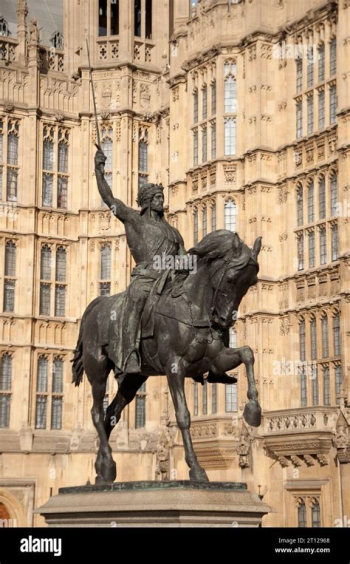
Richard the Lionheart statue London Parliament
1778658721044.png

BTW, do you know what it means for one leg raised in the statue? It means the rider died in battle! We honor their sacrifice for God and country, for all times.

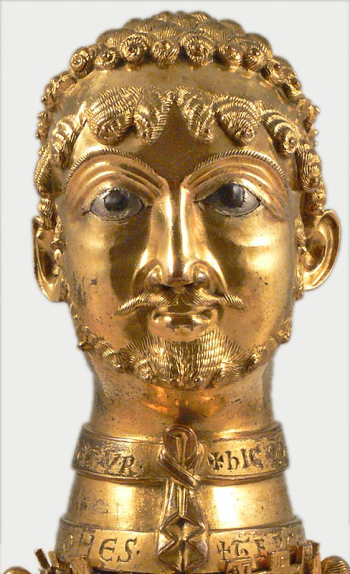
Frederick I, Holy Roman Emperor, led the Third Crusade
1778658810229.png

By contrast, there is not one school in all of human history honored by named for the evil ideology of pacifism.
 
  • Like
Reactions: Armour of God

Matthias

Well-Known Member
May 3, 2022
32,113
24,069
113
Kentucky
Faith
Other Faith
Country
United States
Gender
Male
If you fight for your faith and your people and die in the effort, you are a martyr and a hero, honored for all time and over centuries by statues built for you and having schools named after you.

1778666597402.jpeg

It's like you have no familiarity with Jesus of the Bible,

”Jesus of the Bible” doesn’t look like you portray him.

… who said there is no greater love than to lay down your life for your friends.

He modeled it for us.

That's what these Crusading martyrs did!

The crusaders weren’t typically martyrs. What they actually did was to treat others the way they didn’t want others to treat them. Compare that with the Golden Rule.

By contrast, there is not one school in all of human history honored by named for the evil ideology of pacifism.

There are, in fact, many schools named after pacifists.

And as for pacifism being an “evil ideology,” history - both Christian and non-Christian - proves that it isn’t.
 
  • Like
Reactions: Anchorite

Matthias

Well-Known Member
May 3, 2022
32,113
24,069
113
Kentucky
Faith
Other Faith
Country
United States
Gender
Male
By contrast, there is not one school in all of human history honored by named for the evil ideology of pacifism.

I used AI to search for “Schools which are named after pacifists.”

A suggestion for you: Use AI to search for schools named after pacifists. Once you find them for yourself - and you will - then revisit your post and revise your statement accordingly.
 
  • Like
Reactions: Anchorite

Matthias

Well-Known Member
May 3, 2022
32,113
24,069
113
Kentucky
Faith
Other Faith
Country
United States
Gender
Male
“… Christianity was born as a pacifistic religion. Jesus of Nazareth and his early followers preached radical nonviolence, and for three hundred years after his crucifixion Christian leaders were unambiguously opposed to warfare of any kind.

The evidence for Christian pacifism begins with the Gospels themselves, in which Jesus’s teachings were preserved, first orally, then in the accounts that eventually written, edited, and published in the versions preserved in the New Testament. It continues in the second and third centuries, in which many of the most influential Christian theologians and writers amplify and extend the nonviolence of the early church, teaching that Christians should oppose killing in general, warfare in particular, and any form of military service.

The pacifism of the early church has been called into question by some modern scholars, who note that we know - from tombstones, funerary inscriptions, and some historical records - that some Christians in fact served as Roman soldiers. Some have also argued that the Christians were more bothered by the idolatrous practices and licentiousness of the Roman army than by any aversion to killing per se.

But the writings of the early Christian theologians, which privide most of what we know about the early church taught and how it saw itself, are at odds with these views. As the scholar George Kalantzis … puts it: ‘The literary evidence confirms the cery strong internal coherence of the Church’s non-violent stance for the first three centuries.’

It was only in the fourth century CE, during which the Roman Catholic Church became the state religion of the Roman Empire, that the early commitment to pacifism began to become conditional.”

(Rob Norton, “The Radical Pacifism of Jesus and his Early Followers”)


@Wrangler @Armour of God @NayborBear

Calling pacifism “evil ideology” (see post #2029) is either declaring war on Jesus, the apostles, and the early Christians or ignoring the history of the church during the Apostolic and Ante Nicene eras. Either way, you would be making a serious mistake.

1778683753113.jpeg

These writers offer a powerful and convincing witness against you Wrangler.
 
Last edited:
  • Like
Reactions: Anchorite

Matthias

Well-Known Member
May 3, 2022
32,113
24,069
113
Kentucky
Faith
Other Faith
Country
United States
Gender
Male
“If one simply looks to the New Testament, there is an abundance of evidence in favor of pacifism …

I think in terms of the New Testament, the message is clear, and I simply do not understand those who think that violence is at all compatible with the New Testament teaching. Over and over again, the New Testanent urges Christians to love. This sometimes refers to love within church communities, but it also refers to love of our enemies. Simply put, we cannot live our enemies and try to do harn towards them in the name of national defense (or national offense).

This was the stance of the early church until about the time of Saint Augustine. He was the first major Christian theologian to discuss the concept of a ‘just war,’ and he lived in a time when the Roman Empire was becoming a ‘Christian Empire.’ However, even Augustine strongly advocated for peace and love, and almost no war has ever met the conditions of a just war. …

The early church - the church of the apostles and their disciples - was pacifistic. Even when a slight tolerance for violence emerged a few centuries later, there were strict limitations on it through just war doctrine. However, Jesus’ urging for us to be peacemakers still stands, and the Church constantly needs reminded that we are calked to follow His example of self-sacrificing love and charity.”

(Kevin R. Daugherty, “Was The Early Church Pacifist?”)


Jesus, the apostles, and the early Christians weren’t “armed, ready to kill” - I pause here to point out once again that being “armed, ready to kill” has never been a requirement to become a follower of Jesus - and the church didn’t even begin to develop a “just war“ concept until the 4th century. There was obviously a shift in the Christian attitude and teaching which brought about the need for it.

@Wrangler @Armour of God @NayborBear
 
Last edited:
  • Like
Reactions: Anchorite

NayborBear

Active Member
Jan 21, 2020
678
226
43
73
Midwest
Faith
Christian
Country
United States
Gender
Male
“… Christianity was born as a pacifistic religion. Jesus of Nazaretg and his early followers preached radical nonviolence, and for three hundred years after his crucifixion Christian leaders were unambiguously opposed to warfare of any kind.

The evidence for Christian pacifism begins with the Gospels themselves, in which Jesus’s teachings were preserved, first orally, then in the accounts that eventually written, edited, and published in the versions preserved in the New Testament. It continues in the second and third centuries, in which many of the most influential Christian theologians and writers amplify and extend the nonviolence of the early church, teaching that Christians should oppose killing in general, warfare in particular, and any form of military service.

The pacifism of the early church has been called into question by some modern scholars, who note that we know - from tombstones, funerary inscriptions, and some historical records - that some Christians in fact served as Roman soldiers. Some have also argued that the Christians were more bothered by the idolatrous practices and licentiousness of the Roman army than by any aversion to killing per se.

But the writings of the early Christian theologians, which privide most of what we know about the early church taught and how it saw itself, are at odds with these views. As the scholar George Kalantzis … puts it: ‘The literary evidence confirms the cery strong internal coherence of the Church’s non-violent stance for the first three centuries.’

It was only in the fourth century CE, during which the Roman Catholic Church became the state religion of the Roman Empire, that the early commitment to pacifism began to become conditional.”

(Rob Norton, “The Radical Pacifism of Jesus and his Early Followers”)


@Wrangler @Armour of God @NayborBear

Calling pacifism “evil ideology” (see post #2029) is either declaring war on Jesus, the apostles, and the early Christians or ignoring the history of the church during the Apostolic and Ante Nicene eras. Either way, you would be making a serious mistake.

View attachment 84052

These writers offer a powerful and convincing witness against you Wrangler.
I DO believe there's a lot of "Good Revealings" located here:
Early Christian Writings: New Testament, Apocrypha, Gnostics, Church Fathers
Especially in the "gnostics" section.
That somehow didn't get included in the "canon", And? IMHO does "limit" or perhaps even "hinder" a more fuller understanding of especially Today's Churches. Concerning the (how can I say) "Governmental Structure" of the Kingdom of God!
Which is pretty cool!
Which is (again IMHO) REASONS WHY, "CONTENTIONS FOR" the Faith is not only to be sought after, but REQUIRED!
And, yet again! In, or during these "Contentions?" It gets CRAZY! And things happen that ones' with no stomach for conflicts at these levels of CONTENTION?
Are simply BLIND to!
And teach or indoctrinate others as to disdain MIGHTILY against such "Contending's in avoiding Extinction!"
Meaning? Ones' that decry: "Oh GOD!!" "Hear our prayer to END this suffering and persecution!"
When GOD may well say?:
"Now WHY would I, or SHOULD I?"
"Will you stand and FIGHT and CONTEND WITH ME?"
"When so many times?" "NOBODY SHOWS UP!"
"Yet?!" "When I send a "Proxy" to fight INSTEAD of YOU?"
"Then you cry: OH!!!.......HOW HORRIBLE!!....HOW savage and Barbaric!!"
"I'll Tell you this!"
"These MERCENARYS stand a BETTER chance at Redemption then you who chide and chastise and criminalize them!" :vgood:
 
  • Like
Reactions: Armour of God

Matthias

Well-Known Member
May 3, 2022
32,113
24,069
113
Kentucky
Faith
Other Faith
Country
United States
Gender
Male
I DO believe there's a lot of "Good Revealings" located here:
Early Christian Writings: New Testament, Apocrypha, Gnostics, Church Fathers
Especially in the "gnostics" section.
That somehow didn't get included in the "canon", And? IMHO does "limit" or perhaps even "hinder" a more fuller understanding of especially Today's Churches. Concerning the (how can I say) "Governmental Structure" of the Kingdom of God!
Which is pretty cool!
Which is (again IMHO) REASONS WHY, "CONTENTIONS FOR" the Faith is not only to be sought after, but REQUIRED!
And, yet again! In, or during these "Contentions?" It gets CRAZY! And things happen that ones' with no stomach for conflicts at these levels of CONTENTION?
Are simply BLIND to!
And teach or indoctrinate others as to disdain MIGHTILY against such "Contending's in avoiding Extinction!"
Meaning? Ones' that decry: "Oh GOD!!" "Hear our prayer to END this suffering and persecution!"
When GOD may well say?:
"Now WHY would I, or SHOULD I?"
"Will you stand and FIGHT and CONTEND WITH ME?"
"When so many times?" "NOBODY SHOWS UP!"
"Yet?!" "When I send a "Proxy" to fight INSTEAD of YOU?"
"Then you cry: OH!!!.......HOW HORRIBLE!!....HOW savage and Barbaric!!"
"I'll Tell you this!"
"These MERCENARYS stand a BETTER chance at Redemption then you who chide and chastise and criminalize them!" :vgood:

I’m glad to hear you checked out the Early Christian Writings website.

I’m opposed to Gnosticism and mildly surprised that you aren’t.
 
  • Like
Reactions: Anchorite

Matthias

Well-Known Member
May 3, 2022
32,113
24,069
113
Kentucky
Faith
Other Faith
Country
United States
Gender
Male
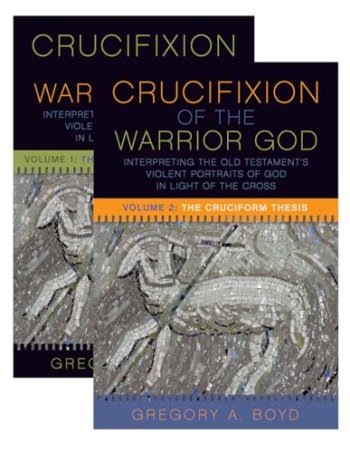
“In Crucifixion of the Warrior God (CWG) I argue that Jesus and Paul instruct Christians to love and bless their enemies and to unconditionally refrain from violence (e.g. Matt 5:39-45; Rom 12:14-21). Moreover, I argue that this was the prevailing attitude of Christians prior to the fourth century when the Church aligned itself with the Roman Empire. …

I trust this sampling of quotes suffices to demonstrate that the pre-Constantinian church was indeed pacifistic, not withstanding the fact that it permitted soldiers to remain in service after they converted. And it was this strong stance against violence that motivated many early Christian thinkers to explore non-violent interpretations of the OT’s violent depictions of God. I wrote CWG (and Cross Vision) because I believe it is time for the church to reembrace the pacifism of the early church and to take up the challenge of finding the non-violent God revealed in Christ in the OT’s warrior portraits of God.”

(Gregory A. Boyd, “Was the Early Church Pacifistic? A Response to Paul Copan (#11)”)


I invite you to read the quotes in the article @Wrangler.

1778713556941.jpeg
 
Last edited:

Matthias

Well-Known Member
May 3, 2022
32,113
24,069
113
Kentucky
Faith
Other Faith
Country
United States
Gender
Male
“The Crusades failed permanently to restore Christian control of Jerusalem, but they did have many other effects. The Crusaders strengthened the power and influence of the pope over the church in Europe. They seriously weakened the Byzantine Empire, which continued to lose territory to Islam until the city of Constantinople fell. Perhaps most seriously and most lastingly, the Crusades implanted a violent image of Christianity and the West in the minds of Islamic people.

Ironies surround the Crusades and their reputation. Islam initiated the wars against Christian lands, at times being as savage as Christians in war, and Islam continued aggressive war against the West for centuries after the end of the Christian Crusades. Yet today many Muslims continue to view Christianity as a violent religion and project their Islamic convictions that religion and state should be united on the West, as if Christianity and the state were still united there.

Most importantly, the history of the Crusades must teach us as Christians to recognize the great damage done to Christ by these wars. The very word crusade comes from a French word meaning ‘the way of the cross,’ first used a century after the beginning of the Crusades. What a betrayal of the Christ, who poured out His life on the cross, enduring injustice and making peace, to identify Him with the slaughter of political enemies. As Christians, we must seek always to advance Christ’s cause through truth joined by love and sacrifice, not through violence.”

(W. Robert Godfrey, “The Crusades”)


* Failed permanently to restore Christian control of Jerusalem
* Strengthened the power and influence of the pope
* Seriously weakened the Byzantine Empire
* Implanted a violent image of Christianity
* Great damage done to Christ
* Betrayal of Christ

@Wrangler @Armour of God @NayborBear

Dr. Godfrey (Ligonier Ministries) is addressing serious ramifications of the Crusades. I urge you to think deeply about the last three bullet points.

P.S.

The spirit of Messiah brought this scripture to mind after I posted:

1778719745038.jpeg

Dr. Godfrey wants us to learn a critically important lesson from the history of the Crusades and God’s people should not be skillful in doing evil. The two thoughts go hand in hand.

Surely we can agree that damaging and betraying the Messiah is extraordinarily evil. Can’t we?
 
Last edited:

NayborBear

Active Member
Jan 21, 2020
678
226
43
73
Midwest
Faith
Christian
Country
United States
Gender
Male
I’m glad to hear you checked out the Early Christian Writings website.

I’m opposed to Gnosticism and mildly surprised that you aren’t.

It's simply I don't "RELY" as much on the Credibility of those men that Canonized the Bible some 300 years afterwards than, you as well as many others do!
Of which in "my" eyes anyways?
Comes pretty danged CLOSE to "INERRANCY!"
Which IMHO?
Is a VERY SHORT hop, skip, and a jump TO IDOLATRY!

Which again? IMHO is NOT a GOOD thing!
Yet?.....THIS?.......Is WHERE "my" faith is!

Genesis 6:3
And the Lord said, My spirit shall not always strive with man, for that he also is flesh: yet his days shall be an hundred and twenty years.