Biblical justification for harming or killing followers of Jesus

  • Welcome to Christian Forums, a Christian Forum that recognizes that all Christians are a work in progress.

    You will need to register to be able to join in fellowship with Christians all over the world.

    We hope to see you as a part of our community soon and God Bless!

Matthias

Well-Known Member
May 3, 2022
33,049
24,570
113
Kentucky
Faith
Other Faith
Country
United States
Gender
Male
There are always conflicts in applying scripture for various reasons. This kind of problem was dealt in Judaism under such terms as Halacha, and is in Christianity when it comes to "Binding and Loosening" (Jesus using a Rabbinic term).

You may have heard me say that I’m a 1st century Christian living in the 21st century. My attitude toward enemies is that of Jesus and the apostles, and I see that attitude maintained during the Ante Nicene period.

If you want to persuade me, the Apostolic and Ante Nicene eras are where you’ll have to concentrate your effort.
 

Matthias

Well-Known Member
May 3, 2022
33,049
24,570
113
Kentucky
Faith
Other Faith
Country
United States
Gender
Male
A state religion of paganism is different than a secular state!

That’s right.

In general there is inconsistency to your viewpoint.

I’ll reiterate that my viewpoint is grounded in the Apostolic and Ante Nicene eras of church history. We live in a different era but the teaching of Jesus and the apostles remains the same.

It reminds me of the example I used talking about Orthodox Jews needing other people to do the work for them during Sabbath. It should always be to societies advantage to have Christians in involved doing the work of Law Enforcement and the Military.

That will be the case in the age to come.
 

Pavel Mosko

Active Member
Dec 19, 2021
310
133
43
59
Boyertown
Faith
Christian
Country
United States
Gender
Male
You may have heard me say that I’m a 1st century Christian living in the 21st century. My attitude toward enemies is that of Jesus and the apostles, and I see that attitude maintained during the Ante Nicene period.

If you want to persuade me, the Apostolic and Ante Nicene eras are where you’ll have to concentrate.

That is easy, I had Grok take everything from the Coptic Synaxeron. This is just martyrs and saints, while their is a much larger subset of people that we don't know about that were not martyred for the Faith.

The Coptic Synaxarion (also called Synaxarium or al-Sinaksār) is the official liturgical collection of short lives, passions, and commemorations of saints and martyrs used in the Coptic Orthodox Church. It follows the Coptic calendar and is read daily in the liturgy. The vast majority of its martyr entries concern Christians (including soldiers) who suffered and died before Christianity was legalized by the Edict of Milan in 313 AD—primarily during the Great Persecution under Diocletian and Maximian (intensified from 303 AD onward), but also earlier persecutions such as those under Decius (249–251 AD) and Valerian.
The Coptic Church begins its calendar in 284 AD (Anno Martyrum / “Year of the Martyrs”), marking Diocletian’s accession and the start of systematic persecution in Egypt. Tradition holds that hundreds of thousands of Egyptian Christians were martyred in this era (the Synaxarion itself does not give a single total but commemorates many named individuals and groups). It is impossible to list every example—the text serves as a liturgical calendar highlighting notable or locally significant martyrs rather than an exhaustive historical register. Many entries involve groups, unnamed multitudes in Alexandria or Upper Egypt, virgins, families, bishops, and laypeople who refused to offer incense to Roman gods or deny Christ.
Below are the explicitly named Christian soldiers (or those described as having military service/background and martyred for the faith) drawn from the Synaxarion, all pre-313 AD, followed by notable examples of other Christian martyrs.

Christian Soldiers in the Coptic Synaxarion (Pre-313 AD)​

These saints are commemorated on specific Coptic dates and are described as soldiers or military figures who refused pagan sacrifices:
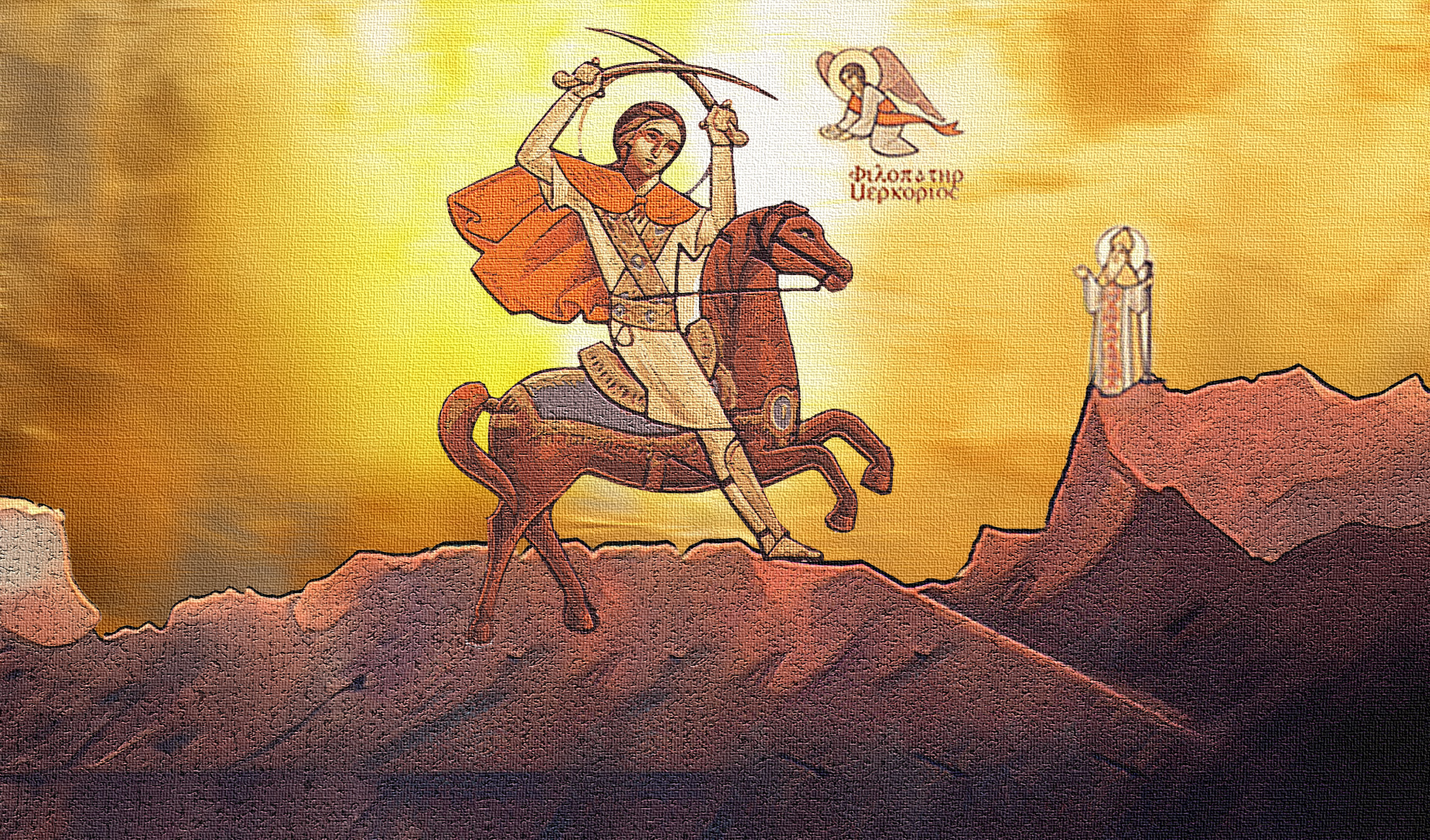
  • St. Mercurius (Philopateer / Abu Seifein, “of the Two Swords”) — Born in Rome to Christian parents; enlisted in the Roman army under Emperor Decius (249–251 AD). He rose in rank, received a miraculous second sword from an angel during battle against the Berbers, and attributed victory to God. After the victory, he refused to sacrifice to idols, publicly cast off his military girdle and attire, and declared faith in Christ alone. He was tortured and beheaded in Caesarea. One of the most prominent military martyr saints in Coptic tradition. Commemorated on 25 Baramhat (Paremhat).

Our Saint - St. Philopater Church | Coptic Orthodox Church | Guelph |  Ontario

stphilopater.ca
Our Saint - St. Philopater Church | Coptic Orthodox Church | Guelph | Ontario

  • St. Dasya the Soldier — From Tanda (or similar locale). Martyred by beheading under Arianus, governor of Ansena (Antinoopolis), during the Diocletianic persecution. Commemorated on 2 Thout (Tout).
  • St. Sina the Soldier — Martyred during the persecution era; associated with St. Isidore (his friend). Commemorated on 24 Baramouda (Pharmuthi).
  • St. Abaskhiroun the Soldier — Explicitly a soldier martyr. Commemorated on 7 Paona (Paoni).
  • St. Phoebammon (Abe-Fam / Epipham) the Soldier — Soldier who suffered martyrdom. Commemorated on 27 Toba (Tybi) (also linked to church consecrations in his name).
  • St. Eusignius (Eugenius) the Soldier — Soldier martyr. Commemorated on 5 Toba (Tybi).
  • St. John the Soldier — Martyred for the faith. Commemorated on 3 Baba (Paopi).
  • St. James the Soldier — Soldier who received the crown of martyrdom. Commemorated on 17 Mesra (Mesori).
  • St. Longinus the Soldier — Traditionally identified with the centurion who pierced Christ’s side (later converted); venerated as a martyr in the Coptic tradition. Commemorations include the appearance of his head (5 Hator / Hathor) and his martyrdom (23 Abib / Epip). Associated entries include Sts. Paul, Longinus, and Deenah (Zena) on Hator 24.
St. George (“Prince of Martyrs” in Coptic veneration) — Born ~280 AD in Cappadocia to a Christian family. As a young nobleman, he joined the Roman army and rose to officer/tribune rank in the imperial guard under Diocletian. He was martyred ~303 or 307 AD (during the Diocletianic persecution) after refusing to recant his faith and sacrifice to idols. He is one of the most beloved saints in Egypt, with hundreds of churches dedicated to him. His passion is included in Coptic hagiographical tradition and the Synaxarion cycle (commemorated around late Paremhat / early May in the Gregorian calendar).
St. Menas (Mari Mina the Wonderworker) — One of the greatest and most popular Coptic martyrs. He suffered under Diocletian (tortures, wild beasts, fire, beheading). While not always described primarily as a “soldier” in every variant, he is frequently associated with military contexts or iconographically linked to soldier-saints in Coptic tradition and is a central figure in the Synaxarion (major feast 15 Hator). His shrine at Maryut was a major pilgrimage site.
Note on St. Maurice and the Theban Legion: These Egyptian Christian soldiers from Thebes (Luxor), led by St. Maurice, form a famous legend of ~6,600 troops who refused to sacrifice or slaughter fellow Christians under Maximian (co-emperor with Diocletian) and were martyred in Gaul/Switzerland (~late 3rd century). They fit the criteria thematically and are venerated in Coptic devotion, but the standard current Coptic Synaxarion does not contain a dedicated entry for them (though some local or older traditions reference related commemorations around 25 Thout).

Other Notable Christian Martyrs (Non-Soldiers or General) in the Synaxarion (Pre-313 AD)​

The Synaxarion contains far more entries for civilian Christians, virgins, families, bishops, and groups. Examples include (selected prominent ones; dates are Coptic commemorations):
  • Apostolic and very early: St. Bartholomew the Apostle (1 Thout); St. Mark the Evangelist (founder of the Church in Alexandria, martyred ~68 AD under Nero); St. Stephen the Archdeacon (1 Toba); St. Thecla; St. Andrew the Apostle; St. Philip the Apostle; St. Barnabas (one of the Seventy); St. Timon the Apostle; St. Luke the Evangelist; St. Clement of Rome; St. Ignatius of Antioch.
  • Decian/Valerian era examples: St. Cyprian and St. Justina (21 Thout, ~257 AD context).
  • Diocletianic era (most numerous): St. Dimiana (Damiana) and the 40 virgins; St. Rebecca (Refka) and her five children (7 Thout); St. Sophia and the fifty virgins (10 Hator); St. Barbara and Juliana; St. Sarapamon, Bishop of Niku; St. George of Alexandria; numerous martyrs in Alexandria, Fayyum, Ansena, and Upper Egypt under governors like Arianus; families and virgins who refused sacrifice (e.g., Sts. Agathon, Peter, John, Amun, Amuna and their mother Rebecca; Sts. Basin and her children; Sts. Behnam and Sarah; Sts. Cosmas and Damian with their brothers and mother).
Many entries describe prolonged tortures (whipping, racks, wild animals, burning, beheading, sawing) followed by steadfast confession of Christ. The emphasis is on the “therapeutic” or witness aspect of martyrdom in Coptic theology.

Summary and Context​

The Coptic Synaxarion portrays these martyrs—soldiers and civilians alike—as models of unwavering faith who chose death over compromise with imperial pagan demands. Soldier saints like St. Mercurius and St. George are especially venerated because they publicly renounced military honors and insignia for Christ. The “Age of Martyrs” (post-284 AD) dominates the calendar, reflecting Egypt’s intense experience of the Great Persecution.
For complete texts, consult reliable English translations or the online edition at copticchurch.net/synaxarium (day-by-day summaries and full entries). Printed editions (e.g., those based on the work of Anba Butrus of Malij and others) provide the full Bohairic/Arabic liturgical versions.

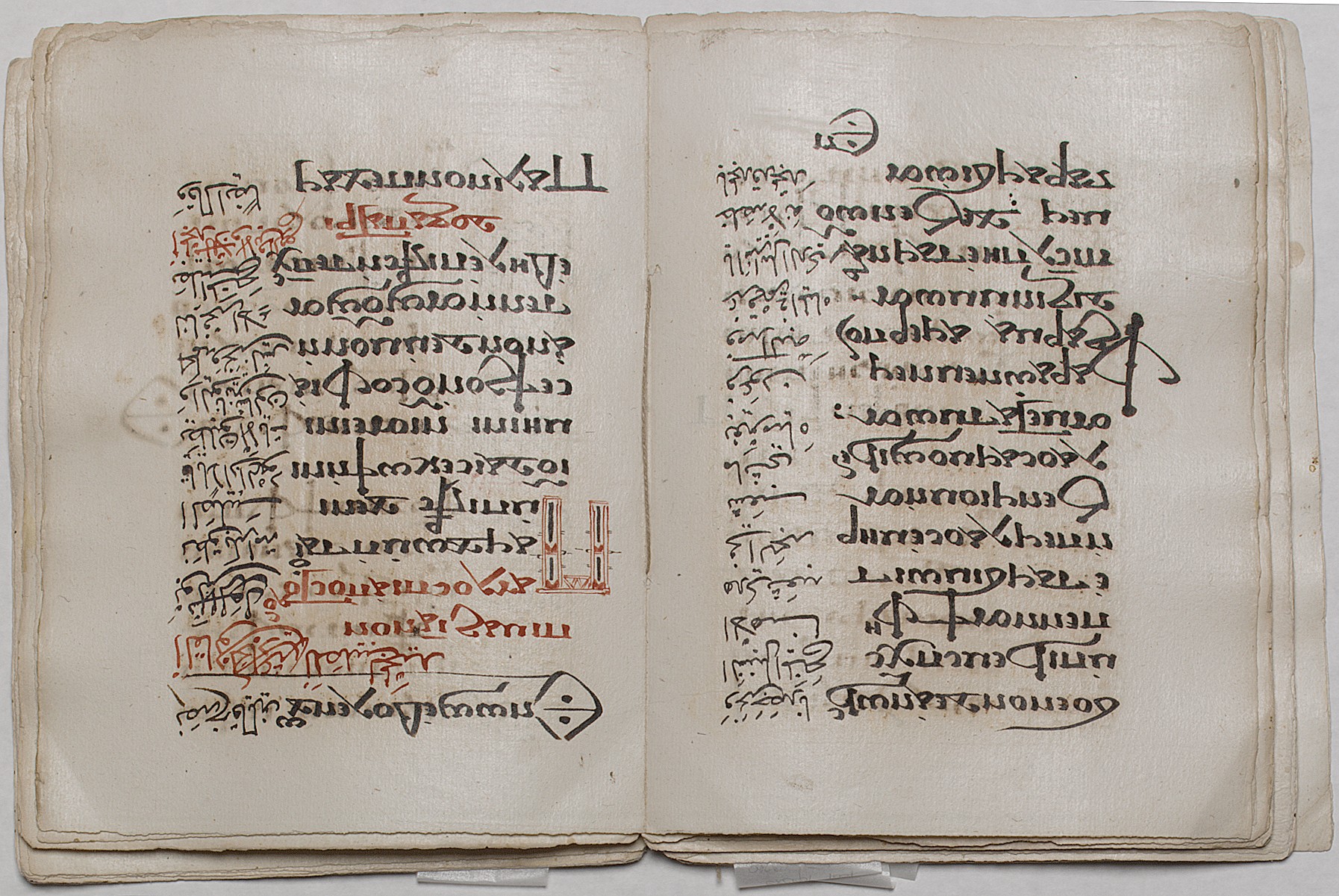
Coptic Manuscript : Free Download, Borrow, and Streaming : Internet Archive

archive.org
Coptic Manuscript : Free Download, Borrow, and Streaming : Internet Archive

These accounts continue to inspire Coptic faithful today as living witnesses to the cost and glory of Christian discipleship before legalization. If you would like full translated passages for any specific saint, more details on a particular date, or icons/stories of additional martyrs, let me know!

 

Matthias

Well-Known Member
May 3, 2022
33,049
24,570
113
Kentucky
Faith
Other Faith
Country
United States
Gender
Male
That is easy, I had Grok take everything from the Coptic Synaxeron. This is just martyrs and saints, while their is a much larger subset of people that we don't know about that were not martyred for the Faith.

The Coptic Synaxarion (also called Synaxarium or al-Sinaksār) is the official liturgical collection of short lives, passions, and commemorations of saints and martyrs used in the Coptic Orthodox Church. It follows the Coptic calendar and is read daily in the liturgy. The vast majority of its martyr entries concern Christians (including soldiers) who suffered and died before Christianity was legalized by the Edict of Milan in 313 AD—primarily during the Great Persecution under Diocletian and Maximian (intensified from 303 AD onward), but also earlier persecutions such as those under Decius (249–251 AD) and Valerian.
The Coptic Church begins its calendar in 284 AD (Anno Martyrum / “Year of the Martyrs”), marking Diocletian’s accession and the start of systematic persecution in Egypt. Tradition holds that hundreds of thousands of Egyptian Christians were martyred in this era (the Synaxarion itself does not give a single total but commemorates many named individuals and groups). It is impossible to list every example—the text serves as a liturgical calendar highlighting notable or locally significant martyrs rather than an exhaustive historical register. Many entries involve groups, unnamed multitudes in Alexandria or Upper Egypt, virgins, families, bishops, and laypeople who refused to offer incense to Roman gods or deny Christ.
Below are the explicitly named Christian soldiers (or those described as having military service/background and martyred for the faith) drawn from the Synaxarion, all pre-313 AD, followed by notable examples of other Christian martyrs.

Christian Soldiers in the Coptic Synaxarion (Pre-313 AD)​

These saints are commemorated on specific Coptic dates and are described as soldiers or military figures who refused pagan sacrifices:
  • St. Mercurius (Philopateer / Abu Seifein, “of the Two Swords”) — Born in Rome to Christian parents; enlisted in the Roman army under Emperor Decius (249–251 AD). He rose in rank, received a miraculous second sword from an angel during battle against the Berbers, and attributed victory to God. After the victory, he refused to sacrifice to idols, publicly cast off his military girdle and attire, and declared faith in Christ alone. He was tortured and beheaded in Caesarea. One of the most prominent military martyr saints in Coptic tradition. Commemorated on 25 Baramhat (Paremhat).

Our Saint - St. Philopater Church | Coptic Orthodox Church | Guelph |  Ontario

stphilopater.ca
Our Saint - St. Philopater Church | Coptic Orthodox Church | Guelph | Ontario

  • St. Dasya the Soldier — From Tanda (or similar locale). Martyred by beheading under Arianus, governor of Ansena (Antinoopolis), during the Diocletianic persecution. Commemorated on 2 Thout (Tout).
  • St. Sina the Soldier — Martyred during the persecution era; associated with St. Isidore (his friend). Commemorated on 24 Baramouda (Pharmuthi).
  • St. Abaskhiroun the Soldier — Explicitly a soldier martyr. Commemorated on 7 Paona (Paoni).
  • St. Phoebammon (Abe-Fam / Epipham) the Soldier — Soldier who suffered martyrdom. Commemorated on 27 Toba (Tybi) (also linked to church consecrations in his name).
  • St. Eusignius (Eugenius) the Soldier — Soldier martyr. Commemorated on 5 Toba (Tybi).
  • St. John the Soldier — Martyred for the faith. Commemorated on 3 Baba (Paopi).
  • St. James the Soldier — Soldier who received the crown of martyrdom. Commemorated on 17 Mesra (Mesori).
  • St. Longinus the Soldier — Traditionally identified with the centurion who pierced Christ’s side (later converted); venerated as a martyr in the Coptic tradition. Commemorations include the appearance of his head (5 Hator / Hathor) and his martyrdom (23 Abib / Epip). Associated entries include Sts. Paul, Longinus, and Deenah (Zena) on Hator 24.
St. George (“Prince of Martyrs” in Coptic veneration) — Born ~280 AD in Cappadocia to a Christian family. As a young nobleman, he joined the Roman army and rose to officer/tribune rank in the imperial guard under Diocletian. He was martyred ~303 or 307 AD (during the Diocletianic persecution) after refusing to recant his faith and sacrifice to idols. He is one of the most beloved saints in Egypt, with hundreds of churches dedicated to him. His passion is included in Coptic hagiographical tradition and the Synaxarion cycle (commemorated around late Paremhat / early May in the Gregorian calendar).
St. Menas (Mari Mina the Wonderworker) — One of the greatest and most popular Coptic martyrs. He suffered under Diocletian (tortures, wild beasts, fire, beheading). While not always described primarily as a “soldier” in every variant, he is frequently associated with military contexts or iconographically linked to soldier-saints in Coptic tradition and is a central figure in the Synaxarion (major feast 15 Hator). His shrine at Maryut was a major pilgrimage site.
Note on St. Maurice and the Theban Legion: These Egyptian Christian soldiers from Thebes (Luxor), led by St. Maurice, form a famous legend of ~6,600 troops who refused to sacrifice or slaughter fellow Christians under Maximian (co-emperor with Diocletian) and were martyred in Gaul/Switzerland (~late 3rd century). They fit the criteria thematically and are venerated in Coptic devotion, but the standard current Coptic Synaxarion does not contain a dedicated entry for them (though some local or older traditions reference related commemorations around 25 Thout).

Other Notable Christian Martyrs (Non-Soldiers or General) in the Synaxarion (Pre-313 AD)​

The Synaxarion contains far more entries for civilian Christians, virgins, families, bishops, and groups. Examples include (selected prominent ones; dates are Coptic commemorations):
  • Apostolic and very early: St. Bartholomew the Apostle (1 Thout); St. Mark the Evangelist (founder of the Church in Alexandria, martyred ~68 AD under Nero); St. Stephen the Archdeacon (1 Toba); St. Thecla; St. Andrew the Apostle; St. Philip the Apostle; St. Barnabas (one of the Seventy); St. Timon the Apostle; St. Luke the Evangelist; St. Clement of Rome; St. Ignatius of Antioch.
  • Decian/Valerian era examples: St. Cyprian and St. Justina (21 Thout, ~257 AD context).
  • Diocletianic era (most numerous): St. Dimiana (Damiana) and the 40 virgins; St. Rebecca (Refka) and her five children (7 Thout); St. Sophia and the fifty virgins (10 Hator); St. Barbara and Juliana; St. Sarapamon, Bishop of Niku; St. George of Alexandria; numerous martyrs in Alexandria, Fayyum, Ansena, and Upper Egypt under governors like Arianus; families and virgins who refused sacrifice (e.g., Sts. Agathon, Peter, John, Amun, Amuna and their mother Rebecca; Sts. Basin and her children; Sts. Behnam and Sarah; Sts. Cosmas and Damian with their brothers and mother).
Many entries describe prolonged tortures (whipping, racks, wild animals, burning, beheading, sawing) followed by steadfast confession of Christ. The emphasis is on the “therapeutic” or witness aspect of martyrdom in Coptic theology.

Summary and Context​

The Coptic Synaxarion portrays these martyrs—soldiers and civilians alike—as models of unwavering faith who chose death over compromise with imperial pagan demands. Soldier saints like St. Mercurius and St. George are especially venerated because they publicly renounced military honors and insignia for Christ. The “Age of Martyrs” (post-284 AD) dominates the calendar, reflecting Egypt’s intense experience of the Great Persecution.
For complete texts, consult reliable English translations or the online edition at copticchurch.net/synaxarium (day-by-day summaries and full entries). Printed editions (e.g., those based on the work of Anba Butrus of Malij and others) provide the full Bohairic/Arabic liturgical versions.

Coptic Manuscript : Free Download, Borrow, and Streaming : Internet Archive

archive.org
Coptic Manuscript : Free Download, Borrow, and Streaming : Internet Archive

These accounts continue to inspire Coptic faithful today as living witnesses to the cost and glory of Christian discipleship before legalization. If you would like full translated passages for any specific saint, more details on a particular date, or icons/stories of additional martyrs, let me know!


I’ve addressed all of this in other threads. Your posts to me are too long to respond to without becoming a tome answering a tome.
 
  • Like
Reactions: Anchorite

Pavel Mosko

Active Member
Dec 19, 2021
310
133
43
59
Boyertown
Faith
Christian
Country
United States
Gender
Male
I'm surprised they did not mention the Theban legion! There was an entire Roman legion staffed by Coptic Christians that was martyred for some reason like not wanting to burn incense to Cesar or not wanting to follow some unjust law or command.
 

Matthias

Well-Known Member
May 3, 2022
33,049
24,570
113
Kentucky
Faith
Other Faith
Country
United States
Gender
Male
I'm surprised they did not mention the Theban legion! There was an entire Roman legion staffed by Coptic Christians that was martyred for some reason like not wanting to burn incense to Cesar or not wanting to follow some unjust law or command.

Those were issues for soldiers who converted to Christianity.

That there were soldiers who converted to Christianity isn’t in dispute. What did the church say about them? What did the church say about Christians joining the military?
 

Matthias

Well-Known Member
May 3, 2022
33,049
24,570
113
Kentucky
Faith
Other Faith
Country
United States
Gender
Male
Did Jesus and the apostles instruct the followers of Jesus to join the Roman military? Did church leaders during the Ante Nicene period instruct the followers of Jesus to join the Roman military? Did any of them encourage it or discourage it? That’s where we need to be if you want to persuade me @Pavel Mosko.
 
  • Like
Reactions: Anchorite

Pavel Mosko

Active Member
Dec 19, 2021
310
133
43
59
Boyertown
Faith
Christian
Country
United States
Gender
Male
Those were issues for soldiers who converted to Christianity.

That there were soldiers who converted to Christianity isn’t in dispute. What did the church say about them? What did the church say about Christians joining the military?
Well naturally the Coptic Church agrees with saint Paul in the book of Romans about "the need to bear the sword to restrain evil" and Egyptian Christians are in good standing as being soldiers, law enforcement etc. No Christian Church has ever black balled Christians from this as a total category. The only issue is with people who want to be "men of the cloth", like King David was barred from building the temple, you cannot be a minister with the shedding of blood. I once knew an Antiochian orthodox policemen who served as a deacon and he was relieved when he retired and could go to seminary to be priest later, but thankfully had a desk job where he was off the frontline in his last years as an officer before retiring.
 

Matthias

Well-Known Member
May 3, 2022
33,049
24,570
113
Kentucky
Faith
Other Faith
Country
United States
Gender
Male
Well naturally the Coptic Church agrees with saint Paul in the book of Romans about "the need to bear the sword to restrain evil" and Egyptian Christians are in good standing as being soldiers, law enforcement etc. No Christian Church has ever black balled Christians from this.

1783523012369.jpeg

Let’s go there.

The only issue is with people who want to be "men of the cloth", like King David was barred from building the temple, you cannot be a minister with the shedding of blood.

Then, being a retired “man of the cloth“ myself, I’m personally off the hook.

I believe though in the priesthood of all believers.
 

Matthias

Well-Known Member
May 3, 2022
33,049
24,570
113
Kentucky
Faith
Other Faith
Country
United States
Gender
Male
You are not following Jesus if you aren’t armed, ready to kill.

I reject that teaching @Pavel Mosko. Do you?

Would Jesus? Would the apostles?

What church affirms and teaches it?
 

marks

Well-Known Member
Oct 10, 2018
39,186
25,213
113
SoCal USA
Faith
Christian
Country
United States

Jesus and the Centurions​

Jesus interacted with Roman centurions multiple times and never told them to abandon their military vocations. He healed the centurion’s servant and praised his faith as greater than any in Israel (Matthew 8 / Luke 7). John the Baptist, preparing people for the Messiah, told soldiers to “not extort money and be content with your pay” — not “lay down your arms” (Luke 3:14). This suggests the New Testament does not treat all soldiering or use of force as inherently incompatible with faith. Paul later affirms governing authorities bear the sword for a reason (Romans 13:1-4). There’s a distinction worth keeping between personal discipleship (non-retaliation) and the tragic responsibilities of justice and protection in society.
Good balance!

Much love!
 

Matthias

Well-Known Member
May 3, 2022
33,049
24,570
113
Kentucky
Faith
Other Faith
Country
United States
Gender
Male
“Before 313 AD, the Early Church Fathers and prominent writers almost universally taught that Christian participation in war was forbidden. They viewed killing and military service as incompatible with Jesus Christ’s commands to love enemies and refrain from violence.

Key early Christian writers consistently condemned warfare …”

AI Overview

The first thing we should do is go to their writings and see if that is so or not. That’s easy for us to do.
 

Matthias

Well-Known Member
May 3, 2022
33,049
24,570
113
Kentucky
Faith
Other Faith
Country
United States
Gender
Male
“The Shift in Perspective

The consensus shifted as Christianity transitioned from a persecuted minority to the state religion of the Roman Empire under Emperor Constantine. Facing threats to the empire and new civic responsibilities, Church leaders began to adapt their teachings.”

AI Overview

That’s partially true. The shift certainly occurred, and church leaders certainly did begin to adapt their teachings in response to the new circumstance, but Christianity did not become the state religion under Constantine.

A shift occurred and church leaders adapted their teachings -> the church shifted and changed its teaching from something - that something being the position of Christianity prior to the shift and change in teaching.

I recognize and acknowledge that history @Pavel Mosko.

You may criticize me (and others) for not going along with the shift and adapted teaching - “unrealism” and “extreme Christian Idealists” - but that leaves me still in the company of Jesus, the apostles, and Christians prior to the shift and change in teaching.
 
  • Like
Reactions: Anchorite

Pavel Mosko

Active Member
Dec 19, 2021
310
133
43
59
Boyertown
Faith
Christian
Country
United States
Gender
Male
@Mattias the first thing you should realize in your deck stacking comes from your concept of "Converting to Christianity". That was different from how the original believers saw it, namely Christianity was not separate from Judaism but the fulfillment of Judaism. This secondly has relevance to the Roman Judeo-Wars that followed on the heals of things (e.g. Christ warning believers to flee Jerusalem), and then after that Christianity is largely underground due to Roman persecution, prior to gaining acceptance mostly a few decades before Constantine.
 
Last edited:

Matthias

Well-Known Member
May 3, 2022
33,049
24,570
113
Kentucky
Faith
Other Faith
Country
United States
Gender
Male
@Mattias the first thing you should realize in your deck stacking …

“Deck stacking”? If you want to harden me in my position, that’s how to do it.

How would you respond if I said things like that about you?

… comes from your concept of "Converting to Christianity". That was different from how the original believers saw it, namely Christianity was not separate from Judaism but the fulfillment of Judaism.

From what you’ve written, it isn’t clear to me that you understand what “my“ concept of converting to Christianity is. (In “my“ concept, and based on extensive reading about the life of Constantine, I doubt that he ever converted to Christianity. However, I’ll leave that decision where it belongs, in Jesus’ hands.)

As for Christianity, my position has always been that Christianity began as a sect of, and within, Judaism. You will find this stated frequently in my discussions with others.

This secondly has relevance to the Roman Judeo-Wars that followed on the heals of things (e.g. Christ warning believers to flee Jerusalem), and then after that Christianity is largely underground due to Roman persecution, prior to gaining acceptance mostly a few decades before Constantine.
 
  • Like
Reactions: Anchorite

Anchorite

Well-Known Member
May 1, 2026
609
545
93
68
Peoria
Faith
Christian
Country
United States
Gender
Male
That was different from how the original believers saw it, namely Christianity was not separate from Judaism but the fulfillment of Judaism. This secondly has relevance to the Roman Judeo-Wars that followed on the heals of things (e.g. Christ warning believers to flee Jerusalem), and then after that Christianity is largely underground due to Roman persecution, prior to gaining acceptance mostly a few decades before Constantine.
It didn’t take long for the Christians to realize that they were existing as a separate religion from Judaism. So they met in homes and catacombs, rather than the temple and synagogues.
 
  • Like
Reactions: marks and Matthias

Matthias

Well-Known Member
May 3, 2022
33,049
24,570
113
Kentucky
Faith
Other Faith
Country
United States
Gender
Male
1783538058317.jpeg

Christians killing fellow Christians and trying to rationalize it. We are here.

Christians killing non-Christians -> the mission field has become the killing field. We can’t get to that when we can’t get past Christians killing fellow Christians.
 
  • Like
Reactions: Anchorite

Pavel Mosko

Active Member
Dec 19, 2021
310
133
43
59
Boyertown
Faith
Christian
Country
United States
Gender
Male
It didn’t take long for the Christians to realize that they were existing as a separate religion from Judaism. So they met in homes and catacombs, rather than the temple and synagogues.

It was Ignatius of Antioch.
Ignatius of Antioch (c. AD 107–110) explicitly distinguishes Christianity as its own distinct faith and way of life in his seven genuine epistles (the shorter recension, widely accepted as authentic by scholars). These were written while he was being taken to Rome for martyrdom. He uses the term Christianismos (Christianity) substantively—among the earliest surviving examples of the word in this sense—and urges believers to live according to its principles rather than “Judaizing” (practicing Judaism or adopting its observances in a way that undermines grace and Christ’s centrality).

The strongest and most direct passages are in his Letter to the Magnesians (especially chapters 8 and 10) and Letter to the Philadelphians (especially chapter 6, with supporting material in 8–9). These reflect tensions with Judaizing tendencies in some early Christian communities (likely a mix of Gentile Christians adopting Jewish practices and certain Jewish-Christian emphases on Torah observance).

Letter to the Magnesians​

Chapter 8 (context of grace versus continuing in Jewish law):

“Be not deceived with strange doctrines, nor with old fables, which are unprofitable. For if we still live according to the Jewish law, we acknowledge that we have not received grace. For the divinest prophets lived according to Christ Jesus. On this account also they were persecuted, being inspired by His grace to fully convince the unbelieving that there is one God, who has manifested Himself by Jesus Christ His Son, who is His eternal Word...”
Chapter 10 (the core passage on living according to Christianity and the relationship to Judaism):

“Let us not, therefore, be insensible to His kindness. For were He to reward us according to our works, we should cease to be. Therefore, having become His disciples, let us learn to live according to the principles of Christianity. For whosoever is called by any other name besides this, is not of God. Lay aside, therefore, the evil, the old, the sour leaven, and be changed into the new leaven, which is Jesus Christ. Be salted in Him, lest any one among you should be corrupted, since by your savour you shall be convicted. It is absurd to profess Christ Jesus, and to Judaize. For Christianity did not embrace Judaism, but Judaism Christianity, that so every tongue which believes might be gathered together to God.
(The Greek of the key sentence in 10:3 is: Ὁ γὰρ Χριστιανισμὸς οὐκ εἰς Ἰουδαϊσμὸν ἐπίστευσεν, ἀλλ’ Ἰουδαϊσμὸς εἰς Χριστιανισμόν... — roughly, “Christianity did not put its faith toward Judaism, but Judaism toward Christianity, in which every tongue believing in God was gathered together.”)

This is the clearest early statement treating “Christianity” as a distinct, named reality with its own principles (kata Christianismon zēn — “to live according to Christianity”). Ignatius inverts the relationship: Judaism is oriented toward or embraced within Christianity, not the foundation for it. He calls mixing the two “absurd” or “monstrous.”

Letter to the Philadelphians​

Chapter 6 (direct preference for Christianity over Judaism):

“But if any one propound Judaism unto you, hear him not: for it is better to hear Christianity from a man who is circumcised than Judaism from one uncircumcised. But if either the one or the other speak not concerning Jesus Christ, I look on them as tombstones and graves of the dead, whereon are inscribed only the names of men.”
Chapters 8–9 (Christ and the Gospel as the true “archives”/fulfillment, superior to prior elements):

Ignatius recounts hearing some say they would not believe the Gospel unless it was confirmed in the “ancient Scriptures/charters.” He responds that his charter is Jesus Christ—His cross, death, resurrection, and the faith that comes through Him. The priests of old were good, “but better is the High-priest”; the prophets pointed to Him, “but the Gospel is the completion of immortality.” All things (including the prior dispensation) are good together if believed through love, with everything converging in the unity of God through Christ and the Church.

These passages portray Christianity as the distinct, fulfilled, and preeminent reality centered on Christ—not merely a Jewish sect or continuation, but the gathering point for all believers. The prophets and old covenant elements find their true meaning and completion in Him and the Gospel.
 

rwb

Well-Known Member
Nov 11, 2022
5,966
2,551
113
74
Branson
Faith
Christian
Country
United States
What biblical justification, if any, is there for followers of Jesus to harm or kill fellow followers of Jesus?

What biblical justification, if any, is there for Christians to call down harm or that God might kill any man? Have you ever heard of one praying a prayer of imprecation (a spoken curse) by elders in the church while praying in the presence of the congregation? I've recently been hearing this defended as though it's okay for believers to pray for God to physically remove (kill) our enemies???