Reason for The Crusades explained

  • Welcome to Christian Forums, a Christian Forum that recognizes that all Christians are a work in progress.

    You will need to register to be able to join in fellowship with Christians all over the world.

    We hope to see you as a part of our community soon and God Bless!

Matthias

Well-Known Member
May 3, 2022
32,115
24,069
113
Kentucky
Faith
Other Faith
Country
United States
Gender
Male
Ecclesiastes 3:
3 A time to kill, and a time to heal; a time to break down, and a time to build up;
8 A time to love, and a time to hate; a time of war, and a time of peace.

It’s true that there is a time for all of these things, isn’t it?

See a whole lot of peace. Don't see any war, nor killing!

There isn’t much peace in the world. History is filled with the curse of war and killing.

Christianity has become so empathetic pacifists! :sleepy:

Christianity is fractured and fragmented on the issue of Christians killing their enemies -> enemies of Christians being fellow Christians and non-Christians.

Pacifism - once the dominate belief and practice in the churches - continues to this day, but is no longer dominant in belief in practice.

Wrangler and his concealed identity church … paragons of transparency, in your mind? - teach “You are not following Jesus if you aren’t armed, ready to kill.“ Is that what you teach? Have you ever heard it preached from the pulpit? Do you know any people who self-identified as followers of Jesus but weren’t “armed, ready to kill”? If you have, do you are with his teaching that those persons were “Man in form but without substance”?
 
  • Like
Reactions: Anchorite

Matthias

Well-Known Member
May 3, 2022
32,115
24,069
113
Kentucky
Faith
Other Faith
Country
United States
Gender
Male
Yes. My church has armed men at each doorway. It's very reassuring to know they have my back.

I’m not a security expert but it doesn’t take a security expert to see how easy it would be for someone posing as a Christian and having the intention of killing you and / or other members of your concealed identity church to get past your gunmen stationed at each doorway without harming them. You have a false sense of security. Guns won’t save you. Your trust in them to deliver you from evil is misplaced.
 
  • Like
Reactions: Nancy and Anchorite

Matthias

Well-Known Member
May 3, 2022
32,115
24,069
113
Kentucky
Faith
Other Faith
Country
United States
Gender
Male
Please provide the names of the 12 people whom you are referring to.

All extant writings of the Early Church Fathers are available to read online at no cost.

View attachment 83506

This is what they look like in my personal library.

@Wrangler you have had over 12 hours to identify the 12 people you were alluding to. You are concealing that information from me and from your other readers. Why? That information would help us evaluate your claim.
 
  • Like
Reactions: Anchorite

Matthias

Well-Known Member
May 3, 2022
32,115
24,069
113
Kentucky
Faith
Other Faith
Country
United States
Gender
Male
“In the third century, a minister named Hippolytus … listed twenty-four forbidden or restricted vocations for believers in his book, Apostolic Traditions. …

The most pervasive restriction was against occupations that involved violence. Eight of the twenty-four involved brutality, including chariot drivers, gladiators, civil servants in gladiatorial shows, and executioners. With regard to the soldier, Hippolytus allows some conditional involvement. If the man was a soldier at conversion, he was allowed to continue in his work, but he was not allowed to take active part in killing an enemy, executing a prisoner, or taking a vow of allegiance.”

(Christian Jihad, p. 49)

Soldiers - men who were already in the military when they became followers of Jesus - were not allowed to take active part in killing an enemy. That would make it impossible for them to be “armed, ready to kill” - something which @Wrangler and his concealed identity church (not Jesus, nor the Apostles) have made a requirement for following Jesus.
 
  • Like
Reactions: Anchorite

Matthias

Well-Known Member
May 3, 2022
32,115
24,069
113
Kentucky
Faith
Other Faith
Country
United States
Gender
Male
“Even Clement of Alexandria, who had given such a vigorous condemnation of Christian involvement in the military (‘For it is not in war, but in peace, that we are trained.’) gives a qualified acceptance of the Christian in the army. … This provisional acceptance of the peaceful military officer may have been for purposes of service to the state, as in civil service or desk work. If the soldier were to transfer his commission into a field of peaceful order, then military service would not be prohibited. As Bainton notes:

‘That the actual objection to war lay in the scruple against killing rather than in social indifference is borne out by the willingness of a number of early Christian writers to sanction even military service provided it were restricted to police functions and did not involve bloodshed. A soldier might serve for a lifetime without killing in an empire at peace where the army is vested with the functions of a police force. For example, in the city of Rome fire protection and the keeping of the peace were assigned to a military unit known as the Vigiles. We have evidence of Christian participation in two branches of the service devoted primarily to police work.’

Therefore, a Christian could serve in some state protection functions without violating the commands of Scripture or offending the bishops and churches. The Christian soldier would in fact act in a servant role to humanity in doing so. Such work would actually be seen in a positive light. Bainton continues,

’Their function included the guarding of the emperor’s person, the custody of prisoners, care of public transport and the mails, supervision of ordinance, and even secretarial duty - the two latter both in military and civilian administration.’

Yet in any regard, this was a far cry from actual participation in warfare, as would become the case in just a number of years.”

(Christian Jihad, pp. 51-52)

This is the beginning of loosening of centuries of absolute restriction. Still no killing of enemies allowed but service to the state in military and in police work allowed. Things would soon become much looser, as we will see. The transition from the churches prohibiting Christians from killing their enemies to churches allowing Christians to kill their enemies takes time to accomplish.

There was a time when the churches did not allow Christians to kill their enemies - which contradicts the narrative of @Wrangler and his concealed church.

For a Christian who is prohibited by the churches to kill his or her enemies isn’t a Christian who is “armed, ready to kill.”

How did we get from the pacifism of churches in the first three centuries to the militarism of churches in the fourth century, and in most bit not all churches today?

How did we get from point A to point B? The Early Church Fathers tell us how. And it is in that telling that the false teaching of Wrangler and his concealed identity church is exposed and destroyed.

 
  • Like
Reactions: Anchorite

Anchorite

Well-Known Member
May 1, 2026
377
310
63
68
Peoria
Faith
Christian
Country
United States
Gender
Male
How did we get from the pacifism of churches in the first three centuries to the militarism of churches in the fourth century, and in most bit not all churches today?

How did we get from point A to point B? The Early Church Fathers tell us how.
It has always bothered me that in churches that I have attended, there will be prayers for God to protect our troops, but never prayers for wars to cease.

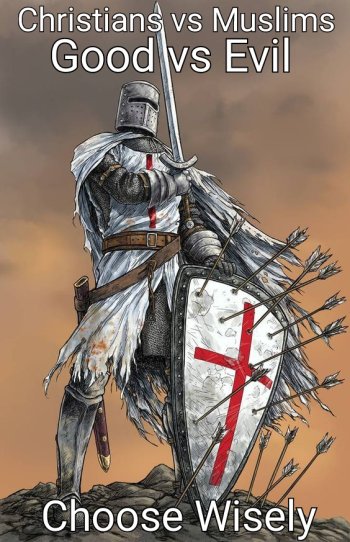
The Crusades (1095–1291) are widely viewed as a period of profound violence, sectarian bloodshed, and catastrophic failures, resulting in countless deaths, the massacre of Jews and Muslims, and the sacking of Christian Constantinople. While initiated to reclaim the Holy Land, they created a lasting negative legacy and deep conflict between Western Christianity, Eastern Christianity, and the Islamic world.

Key Arguments for the Negative Impact of the Crusades:
  • Violent Atrocities: Crusaders committed massacres, rapes, pillaging, and destruction, mainly against civilians, most notoriously in Jerusalem (1099), where thousands of Muslims and Jews were killed.
  • Antisemitic Violence: The First Crusade triggered massacres of Jewish communities in the Rhineland, with roughly 10,000 deaths, marking a rise in European antisemitism.
  • Internal Conflict: The Fourth Crusade famously turned against fellow Christians, sacking Constantinople in 1204, which severely weakened the Byzantine Empire.
    • High Casualties & Futility: The campaigns cost millions of lives, with little long-term gain, eventually failing to maintain control of the Levant.
 

Anchorite

Well-Known Member
May 1, 2026
377
310
63
68
Peoria
Faith
Christian
Country
United States
Gender
Male
Crusades were waged by Christians against Muslims, Jews and fellow Christians. They were launched in the Middle East, in the Baltic, in Italy, in France and beyond.

Crusading, or the idea of taking a holy vow to engage in military activity in exchange for spiritual reward, was refined over the next century, redirected to apply to whoever the pope decided might be an enemy of the faith (polytheists and Orthodox Christians in the north, Muslims in Iberia, heretics or rival European Christian powers in France and Italy).

In the Middle East, Jerusalem fell back into Islamic hands with the conquest of the city by the famed sultan Saladin in 1187. The last “Crusader” principality on the eastern Mediterranean coast, based out of the city of Acre, fell to the Mamluk ruler Baibars in 1291.

The word “Crusade” came into use late, long after medieval Christian holy wars began. The Latin word crucesignatus, or “one marked by the cross,” first appeared in the early 1200s, more than a century after Urban II’s call to action in 1095. In English, “Crusade” and “Crusader” don’t appear until around 1700; by the 1800s, the term—defined broadly as a military campaign in defense of one’s faith—had become a convenient way for Victorian historians to mark the past as a battle between what they saw as good and evil, represented respectively by Christianity and Islam.


Matthias

Well-Known Member
May 3, 2022
32,115
24,069
113
Kentucky
Faith
Other Faith
Country
United States
Gender
Male
It has always bothered me that in churches that I have attended, there will be prayers for God to protect our troops, but never prayers for wars to cease.

The Crusades (1095–1291) are widely viewed as a period of profound violence, sectarian bloodshed, and catastrophic failures, resulting in countless deaths, the massacre of Jews and Muslims, and the sacking of Christian Constantinople. While initiated to reclaim the Holy Land, they created a lasting negative legacy and deep conflict between Western Christianity, Eastern Christianity, and the Islamic world.

Key Arguments for the Negative Impact of the Crusades:
  • Violent Atrocities: Crusaders committed massacres, rapes, pillaging, and destruction, mainly against civilians, most notoriously in Jerusalem (1099), where thousands of Muslims and Jews were killed.
  • Antisemitic Violence: The First Crusade triggered massacres of Jewish communities in the Rhineland, with roughly 10,000 deaths, marking a rise in European antisemitism.
  • Internal Conflict: The Fourth Crusade famously turned against fellow Christians, sacking Constantinople in 1204, which severely weakened the Byzantine Empire.
    • High Casualties & Futility: The campaigns cost millions of lives, with little long-term gain, eventually failing to maintain control of the Levant.

I recall a fictional story about a man who, during a prayer service at his church for blessing and protection of Christian military personnel serving his country during a time of war, suddenly felt the urge to pray for blessing and protection of Christian military personnel serving the country his country was at war with.

As the service progressed his desire to pray for Christian soldiers and civilians on both sides of the conflict intensified. Finally, it became too much for him to keep inside and he publicly offered prayers asking God to bless and protect Christian combatants and non-combatants of both countries. He thought what he prayed for was right but at the same time absurd. After all, war by its very nature necessitates that God not bless and protect every combatant and non-combatant.

After the service he was reproached (I think by both the clergy and some of his fellow church members, but my mind is fuzzy on that detail) for offering his prayer for the enemy. Praying for the enemy not to be harmed was something they couldn’t countenance. Allegiance to country was greater than allegiance to fellow Christians. While not ideal, the enemy Christians simply had to be destroyed.

He wondered if there was anyone living in the country his country was at war with who had prayed for him and the Christians in his country what he had prayed for the Christians in theirs. If so, he wondered if that person was still alive or had been killed. He never found out.

The war continued. God did not answer his prayer in the way which he had hoped. Christians died by the scores at the hands of Christians.

Did the war finally end? The story ended without saying if it did or it didn’t. The reader was left to ponder the spectacle of Christians killing Christians.

P.S.

Welcome to the forum.
 
Last edited:
  • Like
Reactions: Brakelite

Matthias

Well-Known Member
May 3, 2022
32,115
24,069
113
Kentucky
Faith
Other Faith
Country
United States
Gender
Male
  • Like
Reactions: Nancy

Matthias

Well-Known Member
May 3, 2022
32,115
24,069
113
Kentucky
Faith
Other Faith
Country
United States
Gender
Male
The topic of this thread is the reasons FOR the Crusades - not the reasons against them.

The reasons for the Crusades was exhausted in post #1, which alluded to reasons against them. Discussing both sides of the issue is necessary.
 
  • Like
Reactions: Nancy

NayborBear

Active Member
Jan 21, 2020
678
226
43
73
Midwest
Faith
Christian
Country
United States
Gender
Male
You quote verses from the Old Testament. You wish you could see more war waged by Christians?

Jesus did not teach that war, violence, or killing is okay.
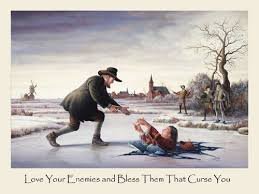
Jesus Christ of Nazareth said to "love" your enemies!
I remember when I was growing up, and did something wrong (which usually meant the board of education was going to be applied to the seat of knowledge in my near future)
My Dad would say: "This is going to hurt me, more than it's going to hurt you!"
Q) Now! Was that "love?"
A) At the time? I thought: "Depends on which side of the board you're on!" I didn't think it was! But it was/is!
So here, is where, (IMHO) I see Christianity is today:
Ezekiel 13:
19 And will ye pollute (water down) me among my people for handfuls of barley and for pieces of bread, to slay the souls that should not die, and to save the souls alive that should not live, by your lying to my people that hear your lies?
22 Because with lies (watered down Once Saved Always Saved Gospel) ye have made the heart of the righteous sad, whom I have not made sad; and strengthened the hands of the wicked, that he should not return from his wicked way, by promising him life:

Not only do I believe that "War, Violence, or Killing is okay?
I believe it's downright NECESSARY!
As necessary as it was for my Dad when putting the "board of education" to me!
It's the kind of "love" that to various degrees, many many are not very much motivated, if at all, in "Putting" to our enemies!
 

Matthias

Well-Known Member
May 3, 2022
32,115
24,069
113
Kentucky
Faith
Other Faith
Country
United States
Gender
Male
Jesus Christ of Nazareth said to "love" your enemies!
I remember when I was growing up, and did something wrong (which usually meant the board of education was going to be applied to the seat of knowledge in my near future)
My Dad would say: "This is going to hurt me, more than it's going to hurt you!"
Q) Now! Was that "love?"
A) At the time? I thought: "Depends on which side of the board you're on!" I didn't think it was! But it was/is!
So here, is where, (IMHO) I see Christianity is today:
Ezekiel 13:
19 And will ye pollute (water down) me among my people for handfuls of barley and for pieces of bread, to slay the souls that should not die, and to save the souls alive that should not live, by your lying to my people that hear your lies?
22 Because with lies (watered down Once Saved Always Saved Gospel) ye have made the heart of the righteous sad, whom I have not made sad; and strengthened the hands of the wicked, that he should not return from his wicked way, by promising him life:

Not only do I believe that "War, Violence, or Killing is okay?
I believe it's downright NECESSARY!
As necessary as it was for my Dad when putting the "board of education" to me!
It's the kind of "love" that to various degrees, many many are not very much motivated, if at all, in "Putting" to our enemies!

Could you describe for me the killing of enemies done by the Apostles?
 
  • Like
Reactions: Nancy

Wrangler

Well-Known Member
Feb 14, 2021
20,731
8,987
113
57
Shining City on a Hill
Faith
Christian
Country
United States
Gender
Male
Two things can be true at the same time.
  1. We can love our enemies on a personal level, especially in showing them grace AFTER they surrender.
  2. We can give to Caesar what is Caesar's in doing our duty to defend our country.