“Even Clement of Alexandria, who had given such a vigorous condemnation of Christian involvement in the military (‘For it is not in war, but in peace, that we are trained.’) gives a qualified acceptance of the Christian in the army. … This provisional acceptance of the peaceful military officer may have been for purposes of service to the state, as in civil service or desk work. If the soldier were to transfer his commission into a field of peaceful order, then military service would not be prohibited. As Bainton notes:
‘That the actual objection to war lay in the scruple against killing rather than in social indifference is borne out by the willingness of a number of early Christian writers to sanction even military service provided it were restricted to police functions and did not involve bloodshed. A soldier might serve for a lifetime without killing in an empire at peace where the army is vested with the functions of a police force. For example, in the city of Rome fire protection and the keeping of the peace were assigned to a military unit known as the
Vigiles. We have evidence of Christian participation in two branches of the service devoted primarily to police work.’
Therefore, a Christian could serve in some state protection functions without violating the commands of Scripture or offending the bishops and churches. The Christian soldier would in fact act in a servant role to humanity in doing so. Such work would actually be seen in a positive light. Bainton continues,
’Their function included the guarding of the emperor’s person, the custody of prisoners, care of public transport and the mails, supervision of ordinance, and even secretarial duty - the two latter both in military and civilian administration.’
Yet in any regard, this was a far cry from actual participation in warfare, as would become the case in just a number of years.”
(
Christian Jihad, pp. 51-52)
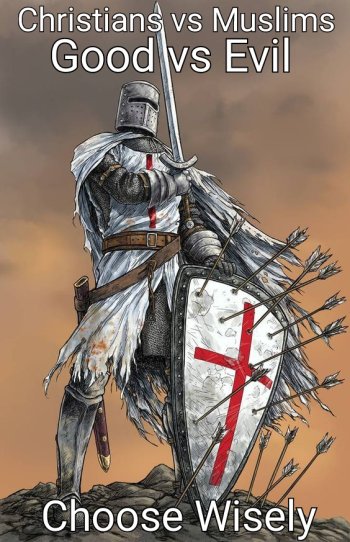
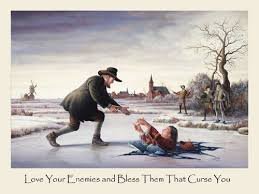
This is the beginning of loosening of centuries of absolute restriction. Still no killing of enemies allowed but service to the state in military and in police work allowed. Things would soon become much looser, as we will see. The transition from the churches prohibiting Christians from killing their enemies to churches allowing Christians to kill their enemies takes time to accomplish.
There was a time when the churches did not allow Christians to kill their enemies - which contradicts the narrative of
@Wrangler and his concealed church.
For a Christian who is prohibited by the churches to kill his or her enemies isn’t a Christian who is “
armed, ready to kill.”
How did we get from the pacifism of churches in the first three centuries to the militarism of churches in the fourth century, and in most bit not all churches today?
How did we get from point A to point B? The Early Church Fathers tell us how. And it is in that telling that the false teaching of Wrangler and his concealed identity church is exposed and destroyed.