A Textual Challenge to the “Mary and Joseph Had Later Relations” Position

  • Welcome to Christian Forums, a Christian Forum that recognizes that all Christians are a work in progress.

    You will need to register to be able to join in fellowship with Christians all over the world.

    We hope to see you as a part of our community soon and God Bless!

Lambano

Well-Known Member
Jul 13, 2021
10,667
13,313
113
Island of Misfit Toys
Faith
Christian
Country
United States
Gender
Male
The issue is why both Mary and Gabriel speak as though conception is impossible under Mary’s expected future circumstances.
Because they are talking about Mary's present circumstances. Did you miss the significance of Mary's use of the present tense?
 

Moonwood

Member
Aug 24, 2026
310
46
28
Here.
Faith
Christian
Country
United States
Gender
Female
Point is, Elizabeth was barren and elderly and apparently not secret, past timing she would not expect to have a child…

Point is, God did intervene and Elizabeth became Pregnant.


Point is, Mary was young, already promised to Joseph to become wedded to him.

Point is, Joseph and Mary were NOT wedded, Had Not intimately been together, but now she is being told she shall become pregnant BEFORE she is wedded….
By, through, of Divine intervention.

Pregnancy for any female would have been well known was through intimacy with a man…
But Mary Similarly Like her Cousin Elizabeth… would become pregnant via the intervention of God… and like Elizabeth each would have a son…

And other than that…
How do you conclude Mary thought …
She would not wed, have intimacy with her husband and naturally have children?

But none of this addresses the textual issue I’m raising.

I’m not arguing that Mary thought She would never wed Joseph or never have children. The question is why both Mary and Gabriel speak as though conception is impossible under Mary’s expected future circumstances.

Mary does not say, “I am not having sex right now.” She uses the idiom “I do not know man,” which refers to sexual relations in general, not merely the present moment. And She does not make a statement — she asks a mechanism question: “How will this be?”

If Mary expected future relations with Joseph, conception is not impossible — only not yet. In that situation the natural question would be “When?” not “How?” And since Gabriel never tells Mary when She will conceive, She would have even more reason to ask “When?” if this were simply a matter of pre‑consummation timing. Yet She does not ask “When,” but “How,” which only makes sense if She sees conception as impossible under Her expected future circumstances.

Gabriel reinforces this by describing a miraculous, non‑sexual conception and by pointing to Elizabeth’s naturally impossible conception. None of that fits a scenario where Mary expects natural conception through Joseph.

So the textual question remains:

If Mary expected normal marital relations with Joseph, why do both Mary and Gabriel speak as though conception is impossible without divine intervention.
 

Moonwood

Member
Aug 24, 2026
310
46
28
Here.
Faith
Christian
Country
United States
Gender
Female
Because they are talking about Mary's present circumstances. Did you miss the significance of Mary's use of the present tense?

But the present tense does not resolve the issue. Mary’s use of the idiom “I do not know man” refers to sexual relations in general, not merely Her present moment. The tense does not change the idiom’s meaning.

More importantly, the narrative logic still stands:

If Mary expected future relations with Joseph, then conception is not impossible — only not yet. In that situation the natural question would be “When?” not “How?” And since Gabriel never tells Mary when She will conceive, She would have even more reason to ask “When?” if this were simply a matter of pre‑consummation timing. Yet She does not ask “When,” but “How,” which only makes sense if She sees conception as impossible under Her expected future circumstances.

Gabriel reinforces this by describing a miraculous, non‑sexual conception and by pointing to Elizabeth’s naturally impossible conception. None of that fits a scenario where Mary expects natural conception through Joseph.

So the textual question remains:

If Mary expected normal marital relations with Joseph, why do both Mary and Gabriel speak as though conception is impossible without divine intervention.
 

Taken

Well-Known Member
Feb 6, 2018
30,858
16,054
113
United States
Faith
Christian
Country
United States
Your explanation still doesn’t resolve the textual issue I’m raising.

You say Mary had no thought of becoming pregnant without intercourse. I agree — that is exactly why Her question is so striking. If She expects future marital relations with Joseph, then conception is not impossible, only not yet. In that situation the natural question would be when, not how.

And this is where the narrative becomes clear:

Impossibilities in Scripture are tied to physical obstructions — barrenness, age, infertility, or lack of a husband. Mary has none of these. Under Her circumstances, natural conception through Joseph is entirely possible. Yet She speaks as though conception is impossible under Her expected future circumstances.

Gabriel never tells Mary when she will conceive — only that she will. If Her confusion were simply about being a virgin until consummation, She would ask when, not how. Her question only makes sense if She sees conception as impossible under Her expected future circumstances.

That is why She says, “I do not know a man,” not “I am not married yet.”

And Gabriel’s response reinforces the same point: He describes a miraculous, non‑sexual conception (“Holy Spirit will come upon you… power of the Most High will overshadow you”) and cites Elizabeth’s naturally impossible conception. None of that makes sense if Mary’s conception is expected to be natural.

So the textual issue remains:

Why do both Mary and Gabriel speak as though conception is impossible without divine intervention if Mary expected normal marital relations?
Your perplexing presumption and questioning has been Reasonably answered multiple times.

But now it has become clearer…
That your real issue is Scripture does not contain the “phrases” you think should have been stated to clarify and satisfy a logical conclusion.

Gods word was never intended to satisfy the minds logical understanding….

Rather … Giving of Scriptural knowledge to allow the logical mind to Reason…
And … for one to seek the Lord God for His Spiritual Understanding of the Knowledge presented in Scripture.

Glory to God,
Taken
 

shepherdsword

Encounter Team - Eagle
Staff member
Encounter Team
Feb 12, 2009
2,367
2,102
113
Millington
Faith
Christian
Country
United States
Gender
Male
Thank you for replying.

But your answer doesn’t resolve the textual issues I’m raising.

Gabriel never tells Mary when She will conceive, only that She will.
That contradicts your claim that Mary is referring only to Her current circumstances rather than Her expected future circumstances.
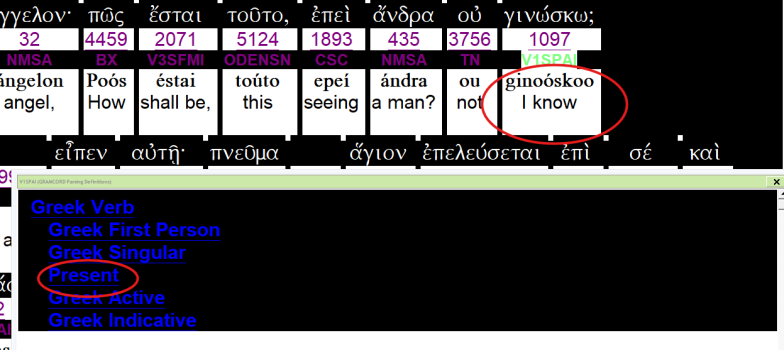
Mary was saying she was PRESENTLY a virgin, nothing was said about her future expectations.

1791093854373.png
And Mary wasn’t “making some statement,” but asking the question: “How will this be, since I know not man?”
Yes, because she was a virgin.
That is not a declaration of current status; it is a request for an explanation of mechanism. If She expected future relations with Joseph, conception is not impossible — only not yet. And since Gabriel never tells Mary when She will conceive, She would have even more reason to ask “When?” if this were simply a matter of pre‑consummation timing. Yet She does not ask “When,” but “How,” which only makes sense if She sees conception as impossible under Her expected future circumstances.

A mechanism question expects an explanation of impossibility.
She is simply asking HOW because she had never had relations. It doesn't mean she never expected to have any.
And Gabriel reinforces that Her question is about impossibility by pointing to Elizabeth, who conceived despite natural impossibility. Gabriel answers Mary’s “How?” with an example of God overcoming an impossible circumstance, not with a timeline.

Impossibilities in Scripture are tied to physical obstructions — barrenness, age, infertility, or lack of a husband. Mary has none of these. Under Her circumstances, natural conception through Joseph is entirely possible.
Gabriel explained how because it was impossible for a virgin to conceive...up until that time.
Yet She speaks as though conception is impossible under Her expected future circumstances. Why.
The text doesn't say it was impossible under her expected future circumstances, that is something you are forcing into the text. You haven't presented some textual challenge that is impossible to solve without subscribing to your view. You have only presented a paradigm that you read into the text.
 

quietthinker

Well-Known Member
May 4, 2018
16,162
9,828
113
Sunshine
Faith
Christian
Country
Australia
Gender
Male
I agree that God can do what is impossible for man. That isn’t the issue I’m raising. I’m not questioning the miraculous conception — I’m asking about the narrative logic in Luke 1.

You say nothing here indicates that Mary didn’t have a normal marriage after Jesus’ birth. But my question is about what Mary expected before the conception. And the text itself presents conception as something Mary sees as impossible under Her expected circumstances.

Mary says “I do not know man,” not “I am not married yet.” If She expected future marital relations, then conception is not impossible, only not yet. In that situation the natural question would be when, not how.

Impossibilities in Scripture are tied to physical obstructions — barrenness, age, infertility, or lack of a husband. Mary has none of these. Under Her circumstances, natural conception through Joseph is entirely possible. Yet She speaks as though conception is impossible under Her expected future circumstances.

Gabriel never tells Mary when She will conceive — only that She will. If Her confusion were simply about being a virgin until consummation, the natural question would be when, not how. Her question only makes sense if She sees conception as impossible under Her expected future circumstances.

And Gabriel reinforces this by describing a miraculous, non‑sexual conception and citing Elizabeth’s naturally impossible conception. None of that makes sense if Mary expected to conceive naturally through Joseph.

So the textual issue remains:

If Mary expected normal marital relations with Joseph, why do both Mary and Gabriel speak as though conception is impossible without divine intervention?

My interest is simply in understanding how the text supports that expectation.
There is only one reason I see why the texts seem complicated for you and that is that you want to squeeze perpetual virginity into the matter.
I wonder if it might be the Catholic programming which I also understand has pretty firm roots if when raised in that tradition.
The text seems pretty straight forward to me and doest present the complications that you seem to have with it.
 

Lambano

Well-Known Member
Jul 13, 2021
10,667
13,313
113
Island of Misfit Toys
Faith
Christian
Country
United States
Gender
Male
But the present tense does not resolve the issue. Mary’s use of the idiom “I do not know man” refers to sexual relations in general, not merely Her present moment. The tense does not change the idiom’s meaning.
Sorry, ma'am, but we do not agree on this basic premise (which, as shown earlier, requires the idiosyncratic translation "I do not have sex with a man" to really make clear). So, until we can agree on the basic premises, the rules of GIGO apply.
 
Last edited:
  • Like
Reactions: JimKnox

Moonwood

Member
Aug 24, 2026
310
46
28
Here.
Faith
Christian
Country
United States
Gender
Female
Your perplexing presumption and questioning has been Reasonably answered multiple times.

But now it has become clearer…
That your real issue is Scripture does not contain the “phrases” you think should have been stated to clarify and satisfy a logical conclusion.

Gods word was never intended to satisfy the minds logical understanding….

Rather … Giving of Scriptural knowledge to allow the logical mind to Reason…
And … for one to seek the Lord God for His Spiritual Understanding of the Knowledge presented in Scripture.

I’m not asking for Scripture to satisfy my logic — I’m asking for Scripture to be read on its own terms. Luke presents Mary’s question as a response to the angel’s announcement, and the wording matters. The narrative gives us a specific line: “How will this be, since I do not know a man?” That is the text we have, and the text itself creates the interpretive issue.

My point is simply that Mary’s question only makes sense if She sees conception as impossible under Her expected future circumstances. If She anticipated normal marital relations, conception wouldn’t be impossible — only not yet. In that case the natural question would be when, not how. Luke chose how, and that choice carries meaning.

Appealing to “spiritual understanding” doesn’t resolve the textual tension. The question remains:

Why does Mary speak as though conception is impossible without divine intervention if She expected normal marital relations?


That is a textual question, not a philosophical one. I’m staying with the text itself.
 

Moonwood

Member
Aug 24, 2026
310
46
28
Here.
Faith
Christian
Country
United States
Gender
Female
Mary was saying she was PRESENTLY a virgin, nothing was said about her future expectations.

View attachment 91112

Yes, because she was a virgin.

She is simply asking HOW because she had never had relations. It doesn't mean she never expected to have any.

Gabriel explained how because it was impossible for a virgin to conceive...up until that time.

The text doesn't say it was impossible under her expected future circumstances, that is something you are forcing into the text. You haven't presented some textual challenge that is impossible to solve without subscribing to your view. You have only presented a paradigm that you read into the text.

You’re repeating the claim that Mary is only referring to Her present virginity, but that doesn’t resolve the narrative tension. A virgin asking how She will conceive only makes sense if conception is impossible under Her expected future circumstances. If She anticipates normal marital relations, conception isn’t impossible — only not yet. In that situation the natural question would be when, not how.

Luke chose how, and that choice carries meaning.

You say I’m “forcing” future expectations into the text, but the text itself creates the issue. Gabriel doesn’t tell Mary when She will conceive — only that She will. If Her confusion were simply about being a virgin until consummation, She would ask when, not how. Her question assumes impossibility, not delay.

And Gabriel’s answer reinforces that reading. He doesn’t say, “You will conceive after consummation.” He describes a miraculous, non‑sexual conception: “The Holy Spirit will come upon you… the power of the Most High will overshadow you.” He even cites Elizabeth’s conception — another case of natural impossibility.

None of that fits a scenario where Mary expects conception through Joseph.

So the textual question remains: Why do both Mary and Gabriel speak as though conception is impossible without divine intervention if Mary expected normal marital relations?

That’s not a paradigm I’m imposing — it’s the tension created by the narrative itself.
 
Last edited:

Moonwood

Member
Aug 24, 2026
310
46
28
Here.
Faith
Christian
Country
United States
Gender
Female
There is only one reason I see why the texts seem complicated for you and that is that you want to squeeze perpetual virginity into the matter.
I wonder if it might be the Catholic programming which I also understand has pretty firm roots if when raised in that tradition.
The text seems pretty straight forward to me and doest present the complications that you seem to have with it.

The issue I’m raising isn’t about perpetual virginity, and it doesn’t depend on any Catholic doctrine. It’s a narrative question inside Luke’s text. Mary’s wording creates a specific interpretive problem: She responds to Gabriel’s announcement with “How will this be, since I do not know a man?” That phrasing assumes impossibility, not delay.

If Mary expected normal marital relations, conception wouldn’t be impossible — only not yet. In that situation the natural question would be when, not how. Luke chose how, and that choice carries meaning regardless of anyone’s tradition.

Gabriel’s answer reinforces the same point. He doesn’t say, “You will conceive after marriage.” He describes a miraculous, non‑sexual conception and cites Elizabeth’s conception as another case of natural impossibility. None of that fits a scenario where Mary expects conception through Joseph.

So the textual question remains the same: Why do both Mary and Gabriel speak as though conception is impossible without divine intervention if Mary expected normal marital relations?

That’s not Catholic programming. It’s simply reading the narrative as written.
 

Moonwood

Member
Aug 24, 2026
310
46
28
Here.
Faith
Christian
Country
United States
Gender
Female
Sorry, ma'am, but we do not agree on this basic premise (which, as shown earlier, requires the idiosyncratic translation "I do not have sex with a man" to really make clear). So, until we can agree on the basic premises, the rules of GIGO apply.

The idiom “I do not know a man” doesn’t require any special translation. It’s a standard biblical expression for sexual relations in general, not merely a present‑tense description of the moment. The tense doesn’t change the idiom’s meaning — it’s how the phrase functions everywhere it appears.

And that’s why the narrative tension remains. If Mary expected normal marital relations with Joseph, conception wouldn’t be impossible — only not yet. In that situation the natural question would be “When?” not “How?” Luke chose “How,” and that choice carries interpretive weight.

Gabriel reinforces this by describing a miraculous, non‑sexual conception and by pointing to Elizabeth’s conception as another case of natural impossibility. None of that fits a scenario where Mary expects conception through Joseph.

So the textual question still stands:

Why do both Mary and Gabriel speak as though conception is impossible without divine intervention if Mary expected normal marital relations?

That isn’t an idiosyncratic premise — it’s the narrative logic of Luke as written.
 

Grailhunter

Well-Known Member
Jun 19, 2019
15,482
6,410
113
69
FARMINGTON
Faith
Christian
Country
United States
Gender
Male
I explicitly noted that Gabriel never tells Mary when She will conceive, only that She will.
That contradicts your reframing of my argument into Mary thinking She was going to conceive on the day of Gabriel’s visitation.

And earlier you said Mary was “wondering how that is going to happen” because She was “not in a relationship.” That is a description of confusion about how conception could occur.
Now you’re saying you did not say She was confused.

If Mary was not confused, then Her question “How shall this occur?” makes no sense — and that is exactly the point.
If She expected future relations with Joseph, conception is not impossible — only not yet. And since Gabriel never tells Mary when She will conceive, She would have even more reason to ask “When?” if this were simply a matter of pre‑consummation timing. Yet She does not ask “When,” but “How,” which only makes sense if She sees conception as impossible under Her expected future circumstances.

A timing question expects a schedule.
A mechanism question expects an explanation of impossibility.

And Gabriel reinforces that Her question is about impossibility by pointing to Elizabeth, who conceived despite natural impossibility.
Gabriel answers Mary’s “How?” with an example of God overcoming an impossible circumstance, not with a timeline.

Just to clarify: Scripture does not need to use the word “impossible” for a situation to be presented as impossible.
Narrative logic often conveys impossibility through the character’s response. Mary’s question functions as an impossibility question: if She expected future marital relations, then conception is not impossible — only not yet. In that situation the natural question would be when, not how. Her question only makes sense if She sees conception as impossible under Her expected circumstances.

Impossibilities in Scripture are tied to physical obstructions — barrenness, age, infertility, or lack of a husband. Mary has none of these. Under Her circumstances, natural conception through Joseph is entirely possible. Yet She speaks as though conception is impossible under Her expected future circumstances. Why.

Already answered.
 
  • Like
Reactions: Taken

shepherdsword

Encounter Team - Eagle
Staff member
Encounter Team
Feb 12, 2009
2,367
2,102
113
Millington
Faith
Christian
Country
United States
Gender
Male
You’re repeating the claim that Mary is only referring to Her present virginity, but that doesn’t resolve the narrative tension. A virgin asking how She will conceive only makes sense if conception is impossible under Her expected future circumstances. If She anticipates normal marital relations, conception isn’t impossible — only not yet. In that situation the natural question would be when, not how.

Luke chose how, and that choice carries meaning.

You say I’m “forcing” future expectations into the text, but the text itself creates the issue. Gabriel doesn’t tell Mary when She will conceive — only that She will. If Her confusion were simply about being a virgin until consummation, She would ask when, not how. Her question assumes impossibility, not delay.

And Gabriel’s answer reinforces that reading. He doesn’t say, “You will conceive after marriage.” He describes a miraculous, non‑sexual conception: “The Holy Spirit will come upon you… the power of the Most High will overshadow you.” He even cites Elizabeth’s conception — another case of natural impossibility.

None of that fits a scenario where Mary expects conception through Joseph.

So the textual question remains: Why do both Mary and Gabriel speak as though conception is impossible without divine intervention if Mary expected normal marital relations?

That’s not a paradigm I’m imposing — it’s the tension created by the narrative itself.
There is no "narrative tension". There is only your preconceived notion that you are reading into the text.
 
  • Like
Reactions: JimKnox and Taken

Taken

Well-Known Member
Feb 6, 2018
30,858
16,054
113
United States
Faith
Christian
Country
United States
My point is simply that Mary’s question only makes sense if She sees conception as impossible under Her expected future circumstances. If She anticipated normal marital relations, conception wouldn’t be impossible —
Your speculation.
…the natural question would be when, not how. Luke chose how, and that choice carries meaning.
Mary’s natural question was “HOW”.

Recorded “according to” the gospel of Luke.

Mary’s question was answered.

It is “you” WHO wants to KNOW “WHEN”.

Your question of “WHEN”, is already answered, through-out Scripture…

WHAT is the revealing of a “THING” God Desires.

“WHEN” a “THING” becomes MADE “DONE”…

Is the moment, the one being “Told” of Gods Desire…..that that “ONE”…. ———->

Agrees

Mary Agrees.
Gods Desire Accomplished.
Angel’s Work Accomplished.
Angel leaves.

Luke 1:
[38] And Mary said, Behold the handmaid of the Lord; be it unto me according to thy word. And the angel departed from her.


Glory to God,
Taken
 
  • Like
Reactions: JimKnox

Moonwood

Member
Aug 24, 2026
310
46
28
Here.
Faith
Christian
Country
United States
Gender
Female
She doesn’t.

No.

Your speculation.

Mary’s natural question was “HOW”.

Recorded “according to” the gospel of Luke.

Mary’s question was answered.

It is “you” WHO wants to KNOW “WHEN”.

Your question of “WHEN”, is already answered, through-out Scripture…

WHAT is the revealing of a “THING” God Desires.

“WHEN” a “THING” becomes MADE “DONE”…

Is the moment, the one being “Told” of Gods Desire…..that that “ONE”…. ———->

Agrees

Mary Agrees.
Gods Desire Accomplished.
Angel’s Work Accomplished.
Angel leaves.

Luke 1:
[38] And Mary said, Behold the handmaid of the Lord; be it unto me according to thy word. And the angel departed from her.


Glory to God,
Taken

But none of this addresses the textual point I’m raising. You’re asserting “She doesn’t,” “No,” and “Your speculation,” but you’re not engaging the actual argument or the narrative logic in Luke.

Mary’s question is recorded as: “How will this be, since I do not know a man?” That is a mechanism question, not a timing question. If Mary expected future relations with Joseph, conception is not impossible — only not yet. In that situation the natural question would be “When?” not “How?” And since Gabriel never tells Mary when She will conceive, She would have even more reason to ask “When?” if this were simply a matter of pre‑consummation timing. Yet She does not ask “When,” but “How,” which only makes sense if She sees conception as impossible under Her expected future circumstances.

Appealing to “spiritual understanding” or redefining “when” as “the moment of agreement” doesn’t resolve the textual tension. Luke presents Mary’s question as a response to the angel’s announcement, and the wording matters. Gabriel answers Her “How?” by describing a miraculous, non‑sexual conception and by pointing to Elizabeth’s naturally impossible conception. None of that fits a scenario where Mary expects natural conception through Joseph.

So the textual question remains, and it hasn’t been answered:

If Mary expected normal marital relations with Joseph, why do both Mary and Gabriel speak as though conception is impossible without divine intervention?

I’m not asking for Scripture to satisfy my logic — I’m asking for Scripture to be read on its own terms.

 

Moonwood

Member
Aug 24, 2026
310
46
28
Here.
Faith
Christian
Country
United States
Gender
Female
There is no "narrative tension". There is only your preconceived notion that you are reading into the text.

I understand you’re asserting there is no narrative tension.
But simply denying it doesn’t resolve the textual issues I’ve raised.

The tension comes directly from the text itself:
  • Mary asks “How will this be?” — a mechanism question
  • She explains it with “since I do not know a man” — an idiom referring to sexual relations in general
  • If She expected future relations with Joseph, conception is not impossible — only not yet
  • In that situation the natural question would be “When?” not “How?”
  • Gabriel never tells Mary when She will conceive
  • Gabriel answers Her “How?” with a description of a miraculous, non‑sexual conception
  • Gabriel reinforces impossibility by pointing to Elizabeth’s naturally impossible conception
None of this fits a scenario where Mary expects conception through Joseph.

So the question remains, and it hasn’t been answered:

If Mary expected normal marital relations with Joseph, why do both Mary and Gabriel speak as though conception is impossible without divine intervention?

That’s not a preconceived notion — it’s the tension created by Luke’s own narrative.
 

shepherdsword

Encounter Team - Eagle
Staff member
Encounter Team
Feb 12, 2009
2,367
2,102
113
Millington
Faith
Christian
Country
United States
Gender
Male
I understand you’re asserting there is no narrative tension.
But simply denying it doesn’t resolve the textual issues I’ve raised.
You claiming to raise a textual issue doesn't mean you actually have. The text has been explained with proper exegesis. It disproves your eisegeses of the text. If what you say is true she would have said "How can this be since I will never know a man"
 

Moonwood

Member
Aug 24, 2026
310
46
28
Here.
Faith
Christian
Country
United States
Gender
Female
You claiming to raise a textual issue doesn't mean you actually have. The text has been explained with proper exegesis. It disproves your eisegeses of the text. If what you say is true she would have said "How can this be since I will never know a man"

You’re responding to a claim I never made. I’m not arguing that Mary believed She would never know a man. I’m saying that according to your own position, She expected future marital relations with Joseph — and therefore conception would have been entirely possible under Her expected future circumstances.

If conception was possible, Her natural question would be “When?” But She asks “How?” — which only makes sense if conception is impossible under those expected circumstances.

Your counterexample actually reinforces my point. You said:

“If what you say is true she would have said ‘How can this be since I will never know a man.’”

But that is precisely the issue: Under your position, Mary does expect to know a man — Joseph.
So by your own logic, She should not ask “How?” at all.

Yet She does.

And Gabriel answers Her “How?” with:
  • a miraculous, non‑sexual mechanism,
  • an appeal to Elizabeth’s impossible conception,
  • and the conclusion: “For with God nothing will be impossible.”
None of that fits a scenario where Mary expects conception through Joseph at any point in the future.

Given your own position — that Mary expected future marital relations and natural conception through Joseph — how do you explain that both Mary and Gabriel speak and act as though conception is impossible under those expected circumstances?

That is the textual issue I’m raising.
Simply denying it doesn’t resolve it.
 
Last edited: